Summer Colds
Summer Colds Dr. Claire Arcidiacono, ND Most people have had a cold in the summertime at least once during their lifetime. But why do summer colds even happen? And while yes, I know you know the symptoms of a cold I will still do a …
Nutrition. Vitamins. You.
Summer Colds Dr. Claire Arcidiacono, ND Most people have had a cold in the summertime at least once during their lifetime. But why do summer colds even happen? And while yes, I know you know the symptoms of a cold I will still do a …
Understanding Vitamin C Dr. Claire Arcidiacono, ND In my experience everyone has heard that Vitamin C is good for our health. In fact, it’s everywhere you look these days! But while you may have heard that using vitamin C is “good for the health of …
immune
Please see below for a complete transcript of this episode.
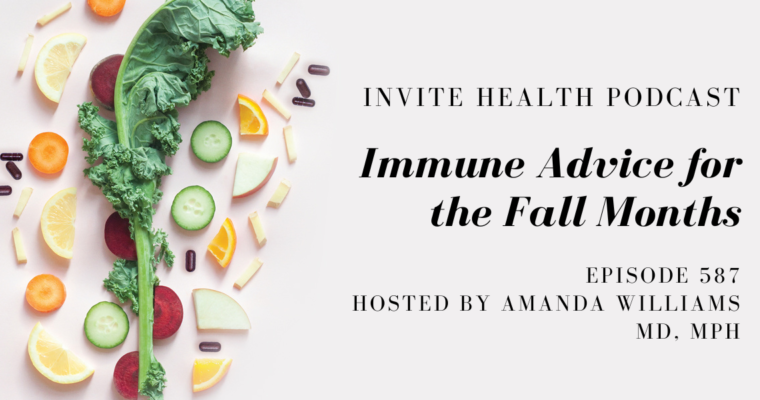
Hosted by Amanda Williams MD, MPH

*Intro music*
InViteⓇ Health Podcast Intro: [00:00:04] Welcome to the InVite Health podcast, where our degreed health care professionals are excited to offer you the most important health and wellness information you need to make informed choices about your health. You can learn more about the products discussed in each of these episodes and all that InVite Health has to offer. At invitehealth.com/podcast. First time customers can use promo code Podcast at checkout for an additional 15% off your first purchase. Let’s get started.† [00:00:34]
*Intro music*
Amanda Williams MD, MPH: [00:00:40] Well, it’s that time of year again. The weather is starting to change. It’s feeling a little colder, a little damper. And maybe you’re looking towards what you can do to change up your supplementation routine and your diet to get through the cold and flu season in the most healthy way possible. We certainly know that there are many different immune boosting foods and to talk about some of those today, as well as talk about some nutrients that we know really pack a punch when it comes to enhancing our immune defenses.† [00:01:11]
[00:01:12] I am Dr. Amanda Williams, scientific director at InVite Health and Immune Boosting Foods. These are the foods that you should really be zeroing in on as the weather starting to change. I talked about the Seasonal Affective Disorder in a podcast just recently, and this is a real deal issue for so many folks. And this is the time when you start to have less daylight and this can really start to affect your appetite, your mood. And we know that there are many different foods that really can be beneficial for allowing our immune system to have a fighting chance to fend off any of those little pesky pathogens that come our way. † [00:01:55]
[00:01:56] We can look at foods like asparagus because we know that asparagus is packed with so many vitamins and minerals, minerals, including the importance of Zinc and Selenium, which we know are key to our immune defenses. And it is a natural source of Quercetin, and I’ve talked extensively about how Quercetin is so beneficial when it comes to the regulation of our immune system, especially in that setting of seasonal allergies. So we can see how things like Zinc and Selenium help to regulate, both are innate and our adaptive immune responses. So including asparagus into your routine is a pretty good idea. We can also look at foods such as garlic. You know, maybe next time you’re at the grocery store, you pick up a clove of garlic and you start to incorporate this into your recipes. Remember, cooking at home is always a better option than getting one of those meals ready to go, unless you are getting those foods from an incredibly healthy source. And we do know that there are different options out there. For those of you who are very busy, you can certainly find healthy choices out there. But it is a little bit more difficult because you really have to watch where they sneak in those ultra processed foods. Mushrooms, this is a big one. I oftentimes will encourage people to get creative in the kitchen, start to incorporate different types of mushrooms into different recipes, because we know that mushrooms pack a punch when it comes to things like vitamin D, key for our immune defenses.. Selenium has the power of those beta glucans, which really can help to enhance our immune system and Zinc.† [00:03:47]
[00:03:48] So there are ways that we can include these nutrients into our daily food intake that can really help to support us in a much better way. Certainly citrus fruits with the power of vitamin C, we know that vitamin C is oftentimes touted during cold and flu season as being your go to vitamin. And it certainly is, but not alone. We also have to look at vitamin D, vitamin E, vitamin A, the Beta Carotene. So get those orange colored fruits and vegetables into your daily routine, the green leafy vegetables, things like spinach, for example, that once again is loaded down with powerful vitamins and minerals and plant based antioxidants that can really help your immune system. And also keep in mind, Whey protein isolate is a really great thing to have on board during cold and flu season because you’re getting that full spectrum of all of those powerful amino acids, which really can help to enhance the release of different immunoglobulins and allow the immune system to have a better means to fending off, as I mentioned, those pesky pathogens.† [00:04:59]
[00:05:00] It’s nice that you’re finally starting to see some of the more mainstream, traditional health sites, that are starting to focus on the importance of food. I mean, think about it. Let food be thy medicine, right? But we definitely can see how even the Mayo Clinic is starting to address this, because I think a lot more people are starting to say, hey, well, maybe the foods that I’m eating make a difference in how I feel and help me stay healthy. And of course, we know this is the case, but when you look at, you know, how they are now talking about, you know, incorporating in foods that are high in vitamin C and Zinc, how these are all very, very beneficial. And, you know, they can come from different sources when you think about vitamin A for the beta carotene. Sweet potatoes, this is a lovely time of year to start to incorporate in sweet potatoes, but spinach and carrots are definitely good options for that as well. And broccoli, broccoli has so many wonderful nutrients contained within it. Vitamin D, we know that when it comes to mushrooms, that’s a really good source for, for that, but also fatty fish. So this is why you want to start to incorporate things like salmon into your routine as well. But when it comes to supplementation, we know that, okay, dietary wise, I need to adhere to a mediterranean diet where I’m getting all these wonderful nutrients that help to support my immune system. But what supplements should I include in? Well, we can look at the basics.† [00:06:26]
[00:06:27] We know, things such as vitamin C, Vitamin D and Zinc are key. So we can look at the Immunity Hx formulation, which is a tablet that includes all three of those, it has vitamin C, vitamin D and Zinc. Then we can take it another step further, we can look at the Black seed with Rosemary and Cordyceps mushrooms. This is a power house of a supplement when it comes to respiratory health, your sinuses, and to really enhance your immune defenses. The power of that black cumin seed extract when it comes to cellular regulation of inflammation is really profound. And then you partner that with Rosemary extract to help regulate histamine and give you those powerful antioxidants. And then it has cordyceps mushroom. And we know that mushrooms pack a punch when it comes to our immune system. So check that formulation out as well. That’s Black Seed with Rosemary and Cordyceps. Then we can look at things like olive leaf extract. The Oleuropein, this powerful constituent that is derived from the olive leaf, is really very supportive and has been studied in terms of having these antimicrobial, antiviral properties to it, as well as also being very beneficial when it comes to blood pressure regulation.† [00:07:47]
[00:07:49] So certainly this is something that I would encourage folks to consider as an add on supplement during the cold and flu season. So that’s the olive leaf extract, been studied so widely for so many different health concerns, for bacterial infections, for viral infections. And the American Clinical Microbial Journal back in 2012, they really looked at how effective the olive leaf extract in that Oleuropein could be, even for targeting staph infections. So it’s a very powerful herbal extract. And the nice thing to add in to your fall winter routine and of course we have the Respiratory Hx which combines Quercetin, it has Nettle leaf extract which we know Nettle is very beneficial for inflammatory regulation in the body. It has Mangosteen extract which has always been touted as kind of the Queen of Fruits because it has so many different vitamins and minerals contained within it. So when you look at things such as Zinc, Magnesium, it has Copper in it, we certainly can see the benefit of the Mangosteen extract when it comes to vitamin C and B vitamins. So this is all within the Respiratory Hx formulation. It’s a combo of vitamin C, Mangosteen extract, Quercetin and Nettle. So it’s very comprehensive for those seasonal allergy flare ups as well as enhancing the immune defenses. during cold and flu season. So remember your foods, they really matter during this time and then also the supplements that you are incorporating into your daily routine. Those also certainly matter. And so check those out. You can go to invitehealth.com/podcast, and you can see all of these different formulations.† [00:09:40]
[00:09:41] And I want to thank you so much for tuning in to the InViteⓇ Health Podcast. Remember, you can find all of our episodes for free wherever you listen to podcasts or by visiting invitehealth.com/podcast. Do make sure that you subscribe and you leave us a review. You can follow us on Facebook, Twitter and Instagram at InVite Health. And we will see you next time for another episode of the InViteⓇ Health podcast. † [00:09:41]
*Exit Music*


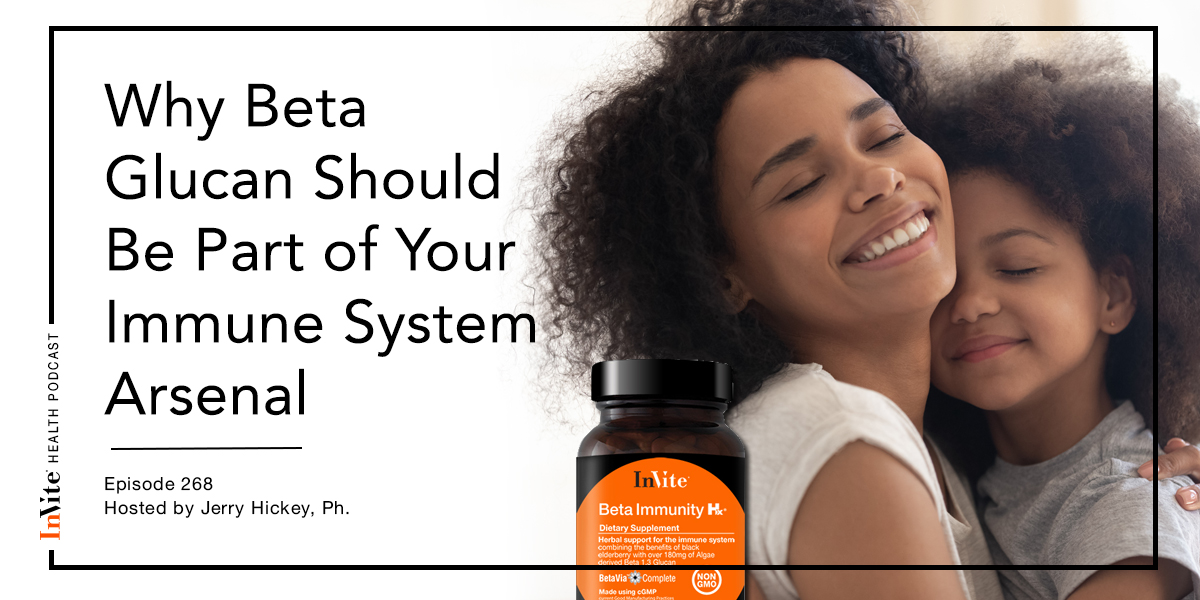
Algae, those plant-like green velvet blankets on the surface of ponds and lakes, holds a vault’s worth of nutrition. One of these algae, called Euglena gracilis, supplies and insoluble fiber that stimulates our immune system whenever we need it. This ingredient is called Beta-1.3-Glucan and it’s very well researched in the support of the immune system.
During cold and flu season and especially during a pandemic, it’s important to know the most beneficial supplements you need when traveling.
multivitamins
Invite Health Podcast, Episode hosted by Jerry Hickey. Ph
Subscribe Today!
There’s mounting evidence that simply taking a well-formed multiple vitamin and mineral supplement throughout the winter can help you get through with a lower likelihood of getting really sick with a virus. This is really, truly important during the time of the COVID-19 pandemic, and the flu is coming up. We’re going to discuss some of the research on multiple vitamins and staying healthy over the winter.
Some data on vitamins and immunity
In a recent report from England, researchers from a number of academic research institutions mostly based in London wanted to see if certain vitamins help protect from respiratory tract infections like influenza or COVID-19. They looked at Vitamin A, Vitamin E, Vitamin D and Vitamin C specifically. The research team published their findings in BMJ Nutrition, Prevention & Health. They looked at data from a large segment of people living throughout the UK. They looked at their Vitamin C intake, their Vitamin D intake, their Vitamin A intake and their Vitamin E intake. They looked at how much they had in their food and if they took supplements. They found that they couldn’t look at Vitamin C because the people who wound up with respiratory tract infections were not taking Vitamin C supplements, so that’s off the board. For Vitamin A and Vitamin E, they found that both nutrients sourced from food and supplements are connected to a lower prevalence of respiratory tract infections in the United Kingdom. They found that Vitamin D from food had no effect on protecting the lungs and the respiratory tract, but Vitamin D from supplements was associated with fewer respiratory tract infections and fewer respiratory tract complaints. This is very interesting data.
Fending Off Blue Light With Multivitamins – InVite Health Podcast, Episode 208. Listen Now >>
Researchers at Oregon State University performed a very small but extremely interesting study in adults aged 55 to 75. It was a three-month-long study. They found that, compared to people who did not take a multivitamin supplement, older adults who took the multivitamin mineral supplement daily were sicker for a shorter period of time with less severe symptoms. The researchers from Oregon State University hypothesized that the daily multivitamin and mineral contains micronutrients essential for your immune system, which I agree with wholeheartedly. They’re pointing specifically at Vitamin C, Vitamin D and Zinc. These nutrients could improve your immune cell function as you grow older. This is in the journal Nutrients.
For more research on how multivitamins and minerals can help your immune system, tune into the full podcast episode.
What to look for in a multivitamin supplement
If you get a good multivitamin, you’ll get beta carotene (the precursor to Vitamin A), but make sure that it’s natural beta carotene. You’ll get Vitamin E, but, once again, make sure it’s natural Vitamin E. The synthetic Vitamin E doesn’t work well and most vitamin companies use synthetic Vitamin E and synthetic beta carotene because they’re much less expensive. But you want to get these nutrients in their natural forms. You want at least 400 units of Vitamin D and make sure it’s Vitamin D3, which is more active than the other form, D2. My recommendation is to get a well-made multivitamin. Make sure they don’t use titanium dioxide. Sometimes when there’s liquid-filled capsules, which is sometimes the case with a multivitamin, they want to make it look nicer and protect the ingredients, they coat the capsule with titanium dioxide. That’s not good. Titanium dioxide is a heavy metal and when you ingest it, it’s been shown to irritate the lining of the intestines and you could develop leaky bowel syndrome, which is not a good thing. It also seems to get into the pancreas and damage the beta cells that release insulin and can increase your risk of developing diabetes. So make sure if you buy any supplement, it does not have titanium dioxide.
Why Multivitamins Are Essential for Immunity – Invite Health Podcast, Episode 167. Listen Now >>
Tune into the full podcast episode to hear more of Jerry’s recommendations.
Thank you for tuning in to the Invite Health Podcast. You can find all of our episodes for free wherever you listen to podcasts or by visiting www.invitehealth.com/podcast. Make sure you subscribe and leave us a review! Follow us on Facebook, Twitter and Instagram at Invite Health today. We’ll see you next time on another episode of the Invite Health Podcast.