Tag: sleep

New Study: GABA Ingredient May Help You Fall Asleep Faster

New Study: GABA Ingredient May Help You Fall Asleep Faster

Gamma-amino butyric acid (GABA) is a chemical messenger, a neurotransmitter, naturally found in the human brain and eyes. Its main function is to reduce the activity level of neurons, which, a new study says, may boost sleep – helping individuals to fall asleep faster. The 

The Link Between Inflammation and Sleep

The Link Between Inflammation and Sleep

The Center for Disease Control (CDC) reports that insufficient sleep is associated with a number of chronic diseases and conditions that especially threaten the health of the U.S. population, as high numbers of the population suffer from diabetes, cardiovascular disease, obesity, and depression. A new 

How Does Light From Electronic Devices Hinder Our Health?

How Does Light From Electronic Devices Hinder Our Health?

Electronic devices like your cell phone, television, iPads, and many other devices do more than just provide endless hours of entertainment and communication. Numerous studies have shown that exposure to the artificial light provided by your favorite electronic devices throw off your biological clock, your circadian rhythm, in charge of regulating your sleep-wake cycle. These electronic devices may also be hampering your health. For instance, you might have experienced dry eyes and back pain while using a mobile phone for hours.

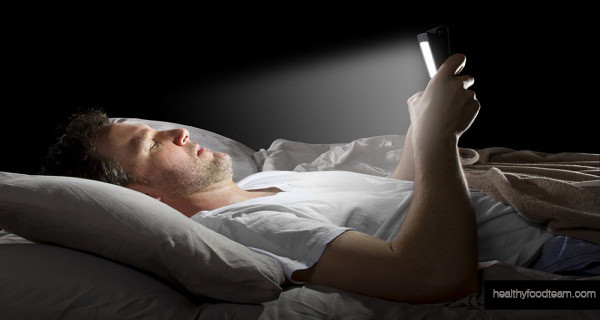
There are other passive harmful effects which you may not notice, and radiations and sleeplessness comes under this category. The light as well the radiations from these electronic devices generally tend to be a cause for concern. However, prolonged usage of electronic devices can hinder your sleep. A new study from the Division of Sleep and Circadian Disorders at Brigham and Women’s Hospital in Boston has found that the blue light exerted by your phone, tablet and TV may do more than take away precious hours of sleep – it may increase your risk of harmful diseases and conditions. A problem, Charles Czeisler, PhD, MD, and the Chief of the division says is a “looming public health crisis.”

Sleep

Each morning when you wake up, your eyes detect light and send signals to your brain to shut off the production of melatonin. Melatonin is a hormone produced in the pineal gland that regulates your body’s 24-hour clock and sleep-wake cycle. [Read more about Melatonin here!] According to Prevention, cells crank up production of the stress hormone cortisol and the hunger-promoting hormone ghrelin. Your body’s
Electronic Devices

temperature and heart rate also increase. A study published in the journal PNAS in January of 2015, found that individuals who read from an e-reader before bedtime took longer to fall asleep, experienced less REM sleep, and were sleepier the next morning than those who chose to read a book before bed instead. Over a 5 day period, the participants nighttime melatonin levels dropped by 55%.

The Study

In a study performed by the Tulane University Center for Circadian Biology, associate director David Blask, PhD, MD, reported that when laboratory animals were subject to light at night with no melatonin signals, researchers found that “tumors develop sooner, grow faster, are more active, and are more likely to metastasize.” Additionally, researches at Ohio State University found that exposing rodents to dim light at night for eight weeks caused their brain to become inflamed and also caused depression. Researchers reported that the rodents stored more fat and even become glucose intolerant.

Though Blask advises that more research is needed to conclude the dangerous side effects of light before bedtime on humans, he does explain that many studies show that those with abnormal sleeping cycles like night-shift workers are “50 to 80% more likely to develop breast cancer and up to three times as likely to develop prostate cancer. With our late-night email checking and Facebook browsing, in a sense, we are all night-shift workers to a degree.”

How to Combat Light-Induced Health Problems

Try taking simple steps to wind down at night and protect your health. Dr. Millie Lytle, ND, CNS, and former Director of Nutrition for InVite® Health, suggests natural remedies may be just what you need to begin getting the sleep your deserve –

“Magnesium is an essential mineral that has relaxing properties. Melatonin may help to re-calibrate your 24-hour biological clock, especially for those who work the night-shift or individuals who experience jet lag. Valerian Root has been used as a sedative for more than 2,000 years and is widely used for inducing sleep and improving sleep quality. California Poppy works as a painkiller and helps to induce sleep, without being habit forming. L-Theanine, an extract from green tea, is excellent for persistent thoughts, anxiety, and relaxation. Chamomile, when taken as a tea or used as an herb, is a well-known, natural sleep remedy.”

As technology advances, more and more bedrooms are becoming filled with screens. You only have to look at the latest cable TV statistics to see how many people are regularly watching TV and there is no doubt that many of those will be watching from their bedrooms. The same goes for tablets and cell phones, which are also frequently used in bed. Be sure to turn off all of your electronic devices at least an hour before bed. Try to go to sleep at a consistent, normal time each night that provides you with at least 7-8 hours of sleep. You can also try listening to soothing music, drinking herbal teas, stretching, or exercising during the day to induce sleep.

For more information, read Dr. Millie Lytle, ND, CNS, full article called “Your Natural Sleep Routine” by clicking here!

FollowUsInVite® Health Current Sale

Not Getting Enough Sleep?

Not Getting Enough Sleep?

According to the Centers for Disease Control and Prevention (CDC), 35% of United States adults do not get enough sleep, an issue that can lead to increased risks of developing a number of diseases and conditions. Sleep is an important part of good health, as 

Your Thyroid May Be The Cause of Your Sleeping Problems

Your Thyroid May Be The Cause of Your Sleeping Problems

Your thyroid is one of the smallest glands in your body, yet it is actually one of the most important. This gland is instrumental in the healthy regulation of functions like proper metabolism, energy levels, burning calories, the creation of body proteins and the reaction 

How to Sleep Better, Longer & Easier

How to Sleep Better, Longer & Easier

Photo by icons8 team on unsplash

Do you find yourself tossing and turning at night on an uncomfortable mattress with no luck of falling asleep? Or do you find yourself having no energy or motivation to get up in the morning? Well, you aren’t the only one. Studies have proven that the more sleep you get per night, the higher your productivity levels are the next day. But what if you can’t just fall asleep or wake up? Here are some tips to help you fall asleep faster and wake up well rested.

Set an alarm – When you wake up the next morning to that blaring sound of your alarm going off, you’ll most likely wish you fell asleep sooner. Setting an alarm to go to bed and to wake up, helps to get your body into a routine.

Skip the glass of water before bed – The more you drink, the more you’ll need to wake up and use the restroom. Skip the glass of water before bed to lower your chances of having to wake up in the middle of the night.

Don’t press your snooze button – Studies show that the snooze button can disturb REM sleep and make us feel very tired when we wake up. Try setting your alarm to the time that you absolutely have to get up. The chances of you bolting out of bed in the morning would be much higher. Just don’t press your snooze button!

For more information on your Natural Sleep Routine, click here!

Keep your bedroom dark – Studies show that even the smallest glow of light (think: the time on your cable box) can disrupt your sleep. Seal up as many light sources as you can for a deeper, less interrupted sleep.

Say no to caffeine – Caffeine is put into products like coffee and energy drinks to keep us awake. So having caffeine before bed, doesn’t exactly make sense. Cut caffeine out of your diet when the afternoon hits. By the time you get into bed that night, the effects of the caffeine should have worn off.

Avoid heavy meals – Your body doesn’t digest well when you are sleeping, so a big meal might keep you up at night. From an upset stomach to acid reflux, a heavy meal (especially a meal heavy in protein) can affect your sleep.

Your mattress is your friend – Nothing is worse than an uncomfortable mattress. While you can guarantee comfort and quality from new mattresses, aging mattresses tend to lose a lot of their comfort. If you turn off all the lights, get rid of caffeine after 5 PM and set your alarm but still wake up at night or can’t fall asleep at all, chances are, your mattress is trying to tell you something. According to Consumer Reports, you should purchase a new mattress every five to ten years. In the event you do get a new mattress, you will need to dispose of your current mattress correctly. As it’s a large household item, disposing of it can be a little tricky as it can’t find in a rubbish bin. You can donate your mattress to homeless shelters and certain charities as well as to animal shelters. If your mattress is too worn, it can be taken to a recycling centre or disposed of by a third party.

Go to bed and wake up early on the weekends – Queue the tortured screams! Sticking to your work-week routine could help you sleep faster and better throughout the night. Staying up late or staying in bed late can shift your body’s alarm clock or throw it completely off. Keep your daily routine. Yes, even on the weekends.

Take a hot bath

A hot shower or bath raises your temperature so when you come out of the hot water, your temperature drops. This is the same thing your brain causes your body to do when it gets ready for sleep. According to a small 1985 study, a warm bath before bed seems to help people fall asleep more quickly.

Source: www.cnn.com

What are some things you do to make sure you get the best rest possible?

INVITE® HEALTH CURRENT SALE