Recent Posts

Bacterial Infections Common for Contact Wearers

Bacterial Infections Common for Contact Wearers

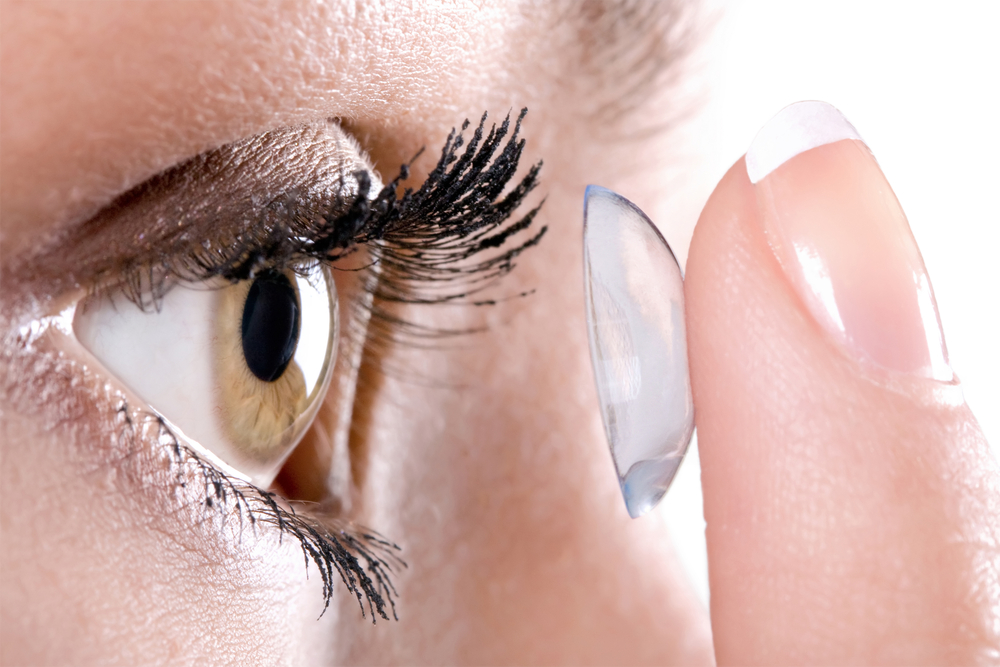
Contacts have become less of a rare commodity and more of a necessity for those with vision problems who do not want to be troubled with wearing glasses every day. But as common as contacts are, so are the bacterial infections they can harbor. Many …

7 Misconceptions about the Brain

7 Misconceptions about the Brain

The brain is commonly referred to as the “command center” of your body, as it serves numerous purposes that are essential to its function. But it can be very difficult to fully understand. Its complexity has helped to create several myths that are commonly believed …

What You Need To Know About Attention Deficit Hyperactivity Disorder (ADHD)

What You Need To Know About Attention Deficit Hyperactivity Disorder (ADHD)

The number of children diagnosed with ADHD, or attention deficit hyperactivity disorder, continues to increase. According to the CDC, in 2003, the rate of children with ADHD was 7.8%. Just eight years later, in 2011, the rate had increased to 11%.

Though the disorder is often shown and diagnosed in children between the ages of 3 and 6, the National Institute of Mental Health reports that this disorder is not just a childhood disease. In fact, ADHD could continue through teenage years and adulthood. But what exactly is ADHD and how is it diagnosed?

There are three types of ADHD, according to the FDA:

  1. Inattentive ADHD: Trouble focusing, following instructions and finishing tasks.
  2. Hyperactive-impulsive: constantly on-the-go, talking excessively and interrupting others.
  3. Combined ADHD: Symptoms of both inattention and hyperactivity-impulsivity.

Child psychiatrist at the Federal Drug Administration (FDA), Tiffany R. Farchione, M.D., reviews drugs that are used to treat ADHD and explains, “The increase can be due to a greater public awareness of the disorder and psychiatric illnesses in general.” For more information on drug-induced nutrient depletions, click here! According to studies performed by the FDA, boys are more likely than girls to be diagnosed with ADHD by 7.6% because boys are more likely to be the hyperactive-impulsive type.

If your child is diagnosed with Attention Deficit Hyperactivity Disorder, don’t panic. The FDA has approved two types of medications – stimulants and non-stimulants. Both medications help to reduce the symptoms of ADHD and may help improve function in children as young as 6 years old. Farchione explains, “It may seem counterintuitive but despite their name, stimulants, which contain various forms of methylphenidate and amphetamine, actually have a calming effect on hyperactive children with ADHD. They are believed to increase brain levels of dopamine – a neurotransmitter associated with motivation, attention and movement.”

Also approved by the FDA are three non-stimulants – Strattera, Intuniv, and Kapvay. These non-stimulants can be a useful alternative for children who may not tolerate stimulants well. The best way to figure out which medication is the best fit for your child is by speaking with a healthcare professional.

There are other ways to treat Attention Deficit Hyperactivity Disorder than with medication. Behavioral therapy is also used to manage symptoms and provide coping skills. If ADHD is left untreated, the American Academy of Child and Adolescent Psychiatry reports that there could be some serious consequences – the child may fall behind academically, encounter difficulties in friendships and have conflicts with loved ones.

But ADHA is not just a child’s disorder – some studies suggest that about 4% of adults have ADHD (FDA). Though the symptoms are commonly similar, they can manifest differently in an adult than a child. The FDA reports that adults with Attention Deficit Hyperactivity Disorder, may have “poor time management skills and trouble with multi-tasking, become restless with downtime and avoid activities that require sustained concentration.”

The University of Maryland Medical Center reports that surveys show parents are using alternative methods, rather than prescription or drug methods to offer support for the symptoms of ADHD. The report mentions dietary changes that may positively impact your child’s ADHD, including concentrating on eating foods that are high in protein and carbohydrates and eliminating sugar. Other methods include vitamins and minerals – Magnesium, Vitamin B6, Zinc, Essential Fatty Acids (Omega-3s), and L-Carnitine. Herbs mentioned in the report include Gingko (Gingko Biloba), Passion Flower and Lemon Balm. For more information on these alternative treatment methods, view The University of Maryland Medical Center’s report by clicking here.

Visit your family’s doctor or pediatrician if you believe you or your child could have Attention Deficit Hyperactivity Disorder. Farchione says, you or your child’s “vision, hearing and anything else that may contribute to inattention should also be checked.”

Nutrigenomics for Prostate Health by Dr. Mille Lytle, ND, MPH, CNS

Nutrigenomics for Prostate Health by Dr. Mille Lytle, ND, MPH, CNS

The field of nutrigenomics is a subfield of epigenetics. These are big words but their concepts are relatively simple. Epigenetics is the study of the behavior of genetic material (RNA and DNA) through variations in the cellular environment. Epigenetics’ fundamental principle states that the cellular …

Prostate Health Through Hormone Balance by Nicole Crane, B.S., NTP

Prostate Health Through Hormone Balance by Nicole Crane, B.S., NTP

Very often, when healthy hormone balance is highlighted, the focus tends to be on women’s hormones. Healthy hormone balance is just as important for men but little attention gets paid until there is a problem. Men’s hormones impact everything – prostate health, sex drive, muscle …

Can Different Skin Tones Pose an Increased Risk of Skin Cancer?

Can Different Skin Tones Pose an Increased Risk of Skin Cancer?

As one of the most common cancers in the United States, skin cancer can be caused by many different factors. While anyone concerned about their risk of skin cancer should consult a dermatologist, there are certain factors that can somebody more likely to develop cancer. The two most common forms of skin cancer are basal cell and squamous cell carcinomas – “highly curable, but can be disfiguring and costly.” A large majority of skin cancer is caused by exposure to ultraviolet (UV) light, invisible radiation that comes from the sun, tanning beds and sunlamps that can penetrate and change skin cells, according to the CDC. And while any one can develop skin cancer on any part of their body, a new study says that certain skin tones are more prone to skin cancer in specific areas. No matter your skin tone, it’s important that you seek out some professional medical help if you have any suspicions regarding skin cancer and your own body.

Here are the areas you should pay a little more attention to when inspecting your body, based on your skin color (according to the American Academy of Dermatology).

Deep to Dark Skin Tones

The American Academy of Dermatology reports that skin cancer is most deadly for African Americans who have a 73 percent, five-year survival rate when compared to a 93 percent survival rate of Caucasians, because it is most often discovered in its later stages. “Squamous cell carcinoma is the most common skin malignancy among African-Americans and Asian Indians. This form of skin cancer occurs mainly on the legs, with the next most common location being the skin around the butt and genitals. Deep skin tones are also at a higher risk in unusual areas, like the palms, soles of feet and underneath the nails,” says Whitney Bowe, M.D., a New York City dermatologist. The Skin Cancer Foundation also reports that depending on your skin tone, certain skin cancers can be caused by factors other than UV exposure, like genetics.

Tan to Olive Skin Tones

Women’s Health Magazine reports that a whopping 89 percent of basal cell carcinomas on naturally brown skin occur on the head or neck. Bowe also explains, “The sides of the neck in men and women, and the back of the neck in men who don’t have longer hair to protect it, are especially prone to basal cell carcinoma.” Also reported in the study, Melanoma (the deadliest form of skin cancer) occurs most often in “Asians, Filipinos, Indonesians, and native Hawaiians in places you’d least expect like palms, soles of feet and underneath the nails.” A great inspection tip to those with tan to olive skin is to inspect your nail without nail polish on to see any changes in the color of your nail beds.skin tones

Medium Skin Tones

Complacency is the biggest risk for those with a medium skin tone because you do not burn as easily as you tan. Bowe explains, “When you have skin that tans evenly, it’s very tempting to keep ‘refreshing’ that healthy-looking glow. It is hardest to convince medium skin tones to stop tanning or switch to safe self-tanning products.” Even if you are sure to apply sunscreen to your body, you may miss areas like your hairline, ears, scalp, eyelids and around your lips that can more commonly develop skin cancer.

Very Fair to Fair Skin Tones

Not surprising for those with fair skin, burning comes easily. You are the most susceptible skin tone for all three forms of skin cancer – basal cell carcinoma, squamous cell carcinoma and melanoma (according to Women’s Health Magazine). Bowe explains that the danger of those with fair skin comes from overlooked areas that you may miss while applying sunscreen – “Common spots that people forget to protect, and that I often diagnose with skin cancer, are the hairline, ears, scalp, eyelids and around the lips.” The good news? Skin cancer is usually curable when detected early. Be on the lookout for moles or any strange additions to your skin. If you see any abnormalities, head to your dermatologist for further investigation.

Source: http://www.womenshealthmag.com

Which skin tone category do you fall under? What skin protecting strategies do you practice all year long? Leave us a comment and join the conversation!

InVite® Health Current Sale