Tag: detox

Kidney Health Part 4

Kidney Health Part 4

Kidney Health Part 4 Dr. Claire Arcidiacono, ND   Dialysis I wanted to talk about dialysis because in my experience it is one of the topics that people have the most questions about. If you can recall in part 1 of kidney health, I talked 

Kidney Health Part 3

Kidney Health Part 3

Kidney Health Part 3 Dr. Claire Arcidiacono, ND   In this blog on kidney health, I will be reviewing polycystic kidney disease (PKD), chronic kidney disease (CKD) and even kidney failure.  The reason I have for putting these 3 disorders in one blog is that 

Kidneys Part 2

Kidneys Part 2

Kidneys Part 2

Dr. Claire Arcidiacono, ND

In the first part of our discussion on kidney health we reviewed basic information such as what the kidneys do for us and tests that can measure our kidney health. (1)  In this blog we will review the things that can go wrong with our kidney health. So, without further ado let’s get into it, shall we?

What are the most common complications that can occur when it comes to our kidney health? Well one of the most well-known complications is the development of kidney stones. Kidney stones are exactly what they sound like, solid masses or rocks that form in the kidneys. These stones are much more common than you might expect. In fact, approximately 1 in 10 people will have a kidney stone sometime in their lifetime. But just what are these stones made of? There are 4 types of stones, and the type is determined by what they are made up of. Calcium-oxalate and calcium phosphate form from a high oxalate or low calcium diet especially when you are not drinking enough water. These are the most common forms of stones. Uric acid stones can form from animal proteins which can increase uric acid. Struvite stones are associated with bacterial infections. Lastly cysteine stones form when you have an inherited condition that makes you form them. One of the most common reasons that kidney stones form in general is NOT drinking enough water. Having a family history of kidney stones also can increase your risk. Diet-wise eating a diet high in meat/ protein, salt and sugar can increase your risk. Taking high dose vitamin C and even certain medications can be a risk factor for stones. Having certain medical conditions or having any stomach/intestinal surgery can also increase the risk for stones. Lastly, having a blockage in your kidney can lead to the development of stones.

When you have kidney stones you may experience nausea/vomiting and fever/ chills. You may feel an urge to urinate but be unable to or if you do urinate there may be pain. Your urine may be bloody, cloudy, or foul smelling. Smaller stones will have fewer symptoms. (2)

Another common complication is the occurrence of kidney infections. Approximately 1 in 2000 people get a kidney infection every year in the US. Risk factors for kidney infections include anything that keeps the urine in the urinary tract and allows bacteria to grow and back up into the kidneys. For example, pressure on the bladder during pregnancy, uterine prolapse, enlarged prostate and even kidney stones. If you have vesicoureteral reflux, it increases the risk of an infection. Certain conditions such as diabetes can increase your risk. The symptoms are the same as listed for kidney stones. (3)

You can also develop kidney cancer. Each year more than 62,000 Americans are diagnosed with kidney cancer. Kidney cancer is approximately 3.7% of all cancers in the US. Risk factors include a family history, radiation therapy, gene mutations and even long-term dialysis. Obesity and high blood pressure are also risk factors. Smoking is another risk factor.  Certain genetic disorders can also increase the risk of cancer. In addition to the symptoms of kidney stones you may have a lump in your kidney area. You may also feel fatigue, an overall feeling of not feeling well, flank or bone pain and even have a loss of appetite and weight loss. You may develop high blood pressure. Lastly you may become anemic. (4)

Another condition you may have heard of is the development of kidney cysts. These are small, fluid filled or solid pouches that form on the kidneys. (5) I will talk more about these when I review polycystic kidney disease in my next blog.

Other conditions that can affect the kidney include diabetes related nephropathy or hypertensive nephropathy. There is also proteinuria and uremia. (1) While there are other conditions that can affect the kidney I wanted to focus on these since they are the most frequently asked about.

Our next blog will be talking about Polycystic kidney disease, chronic kidney disease and kidney failure. For some supplements that are helpful for both the liver and kidneys look at my blog Liver and Kidney intermission. It talks about such supplements as NAC, L Carnosine, Milk Thistle and even Resveratrol!

Sources:

  1. https://my.clevelandclinic.org/health/body/21824-kidney
  2. https://my.clevelandclinic.org/health/diseases/15604-kidney-stones
  3. https://my.clevelandclinic.org/health/diseases/15456-kidney-infection-pyelonephritis
  4. https://my.clevelandclinic.org/health/diseases/9409-kidney-cancer-overview
  5. https://my.clevelandclinic.org/health/diseases/14884-kidney-cysts

Kidney Health Part 1

Kidney Health Part 1

Kidney Health Part 1 Dr. Claire Arcidiacono, ND No conversation about the liver would be complete without talking about the kidneys since one of the functions of the kidneys is to help remove waste from our body. Now I understand that kidney health can be 

Prozyme Digest

Prozyme Digest

Prozyme Digest Dr. Claire Arcidiacono, ND   As a Naturopathic doctor I find myself often recommending that people use a probiotic and a digestive enzyme. These each have many benefits for our health. That is why I have chosen to highlight a product that contains 

Gallbladder: What is it? And what does it do?

Gallbladder: What is it? And what does it do?

Gallbladder: What is it? And what does it do?

Dr. Claire Arcidiacono, ND

In this current series we have mostly focused on liver and kidney health. In this blog we will be taking a left turn and focusing on the gallbladder since the overall health of the gallbladder can and does impact the health of the liver. But just what is the gallbladder and what does it even do for us? Let us get into it shall we?

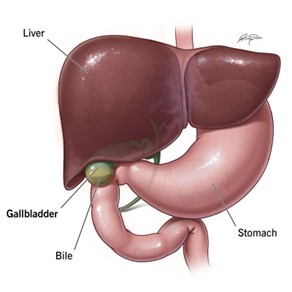
Well, the gallbladder is a small organ that is located under the liver. It is like a pear-shaped balloon. Its job in the body is to store bile and release it when needed. The bile gets is made in the liver and is only stored in the gallbladder.

So how exactly does this process work? Well to put it simply the gallbladder connects to the various parts of your digestive system via the biliary tract (also called bile ducts). You can think of this pathway as a highway for bile to travel. Our liver produces bile and then it goes into the gallbladder for use later. When you eat the gallbladder gets a message to release the bile. Bile travels via the biliary tract to eventually end up in the duodenum where it helps to digest any fats you may have consumed. (1)

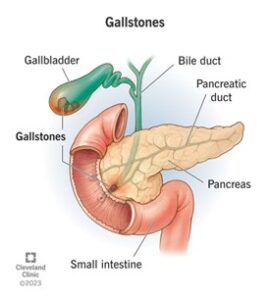
I bet I know what you are thinking, this process seems like such a simple system. What could go wrong? I am glad you asked! The first thing is you may form gallstones. Gallstones are like little rocks of bile that form either in the gallbladder or in the bile tract (bile duct).

Depending on the number of stones and how large they are they may or may not cause symptoms. A large stone can block the biliary tract causing a problem because of the regurgitation of the bile. For example, you may have cholecystitis (gallbladder inflammation), pancreatitis (inflamed pancreases) and cholangitis (bile duct inflammation). Gallstones also increase the risk of hepatitis (inflamed liver). For more information, please see my blog on this topic. Gallstones can also increase the risk of both jaundice and septicemia. (1)

Now what are the signs of gallbladder concerns? Well, you may have upper abdominal pain and nausea. You may have sweating, fever, and a rapid heart rate. Your abdomen may even swell and feel tender. You may have jaundice and even change the color of your urine/stool. (2) The abdominal muscles on the right side of the body may be stiff. Older individuals may have overall weakness and even increased fatigue. (3)  Other signs can include pain after eating a fatty meal. The upper right abdominal pain may radiate to the right shoulder/ back. In addition to the fever, you may have chills. (1) If these sound like the signs and symptoms of hepatitis that is because they are. Remember as I said in my blog on hepatitis it is inflammation in the liver and when you have any inflammation in the gallbladder it increases the risk of inflammation in the liver.

Now what are the most common risk factors for gallbladder concerns? Well, these include being female, being over 40 y/o and being of Hispanic or Native American descent. Pregnancy is also a risk factor. Having high cholesterol, diabetes or obesity are all risk factors. Interestingly losing weight rapidly is also a risk factor. (3)

Gallbladder dysfunction may require surgery. Talk to your doctor about the different options. As for supplements, let us review our options, shall we?

  • Ox bile, shown in studies to help with fat absorption and even digestion. (4) See Pure Digestion GB, available at Invite health!
  • Lipase has been shown to help with poor fat digestion by reducing symptoms such as bloating, gas and even an uncomfortable full feeling after high fat meals. (5) Please see Invite’s Digestive Hx and Prozyme Digest (I’m chewable!)
  • Magnesium, shown to help with symptoms of gallbladder concerns. (6) Please see Invite’s Magnesium citrate, glycinate and BioAvail magnesium!
  • Dandelion, shown to help relieve gallbladder problems and help with symptoms associated with gallbladder problems such as gallstones. (7) Please see Invite’s Hepatox and Daily Detox powder.
  • Castor oil packs can also reduce gallbladder inflammation. Castor oil pack instructions: Apply oil to a clean, soft cloth and place on abdomen. Cover with plastic wrap, place a heat source (hot water bottle or heating pad) over the pack, and let sit for 30 to 60 minutes. For the best results, use it for 3 consecutive days. Apply it to abdomen, especially the gallbladder area, to help reduce swelling. (8)
  • For help with increasing healthy fruits and vegetables in your diet please see Invite’s Greens, Organic Greens as well as our Purples, Oranges and Reds. Studies have found these foods are good for our gallbladder health. (6)
  • For a personalized protocol for overall gallbladder health feel free to reach out Online to schedule a consultation with a nutritionist for an in-depth discussion. https://invitehealth.com/pages/personalized-nutrition


Our product highlight will be Prozyme Digest!

Sources:

  1. https://my.clevelandclinic.org/health/body/21690-gallbladder
  2. https://my.clevelandclinic.org/health/diseases/7313-gallstones
  3. https://my.clevelandclinic.org/health/diseases/15265-gallbladder-swelling–inflammation-cholecystitis
  4. https://www.gastrojournal.org/article/S0016-5085(99)70223-4/fulltext
  5. https://www.mountsinai.org/health-library/supplement/lipase#:~:text=In%20a%20small%20clinical%20study,done%20to%20test%20this%20theory
  6. https://www.mountsinai.org/health-library/condition/gallbladder-disease
  7. https://pubmed.ncbi.nlm.nih.gov/35405251/
  8. https://www.mountsinai.org/health-library/condition/gallbladder-disease