Tag: joint health

Joint Surgery, Part 2 & Supplements That Can Help Post-Surgery.

Joint Surgery, Part 2 & Supplements That Can Help Post-Surgery.

  Written by:  Dr.Claire Arcidiacono, ND For further questions or concerns email me at carcidiacono@invitehealth.com Last week we started a review of different surgical interventions that your doctor may recommend. Today we will complete this topic. We will cover resurfacing surgery, arthrodesis and small joint surgery. 

Magnesium Is The Ignored Mineral For Bone Strength, Invite Health Podcast, Episode 639

Magnesium Is The Ignored Mineral For Bone Strength, Invite Health Podcast, Episode 639

Subscribe Today! Please see below for a complete transcript of this episode. MAGNESIUM IS THE IGNORED MINERAL FOR BONE STRENGTH, INVITEⓇ HEALTH PODCAST, EPISODE 639 Hosted by Jerry Hickey, Ph. *Intro Music* InViteⓇ Health Podcast Intro: [00:00:04] Welcome to the InViteⓇ Health Podcast, where our 

JOINT SURGERY

JOINT SURGERY

Written by:  Dr.Claire Arcidiacono, ND

For further questions or concerns email me at carcidiacono@invitehealth.com

No conversation involving joints and joint health could possibly be complete without talking about healing after having a joint repair surgery. To start with what types of surgeries are done to repair joints. How do I know if I need surgery? And just what should I take after surgery to help the healing process? Since this is a rather large topic, I will be breaking it into 2 parts. In this segment I will be discussing 3 of the 6 common procedures that your doctor may recommend. In this blog we will review the following: joint replacement surgery, arthroscopy, and osteotomy. In our next blog we will review the remaining 3 common procedures which involve resurfacing surgery, arthrodesis and small joint surgery. † (1)

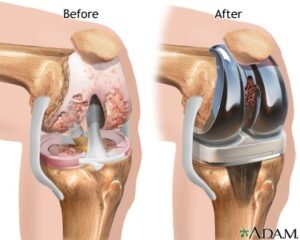
One of the most well-known types of joint repair surgeries is joint replacement surgery. A joint replacement is performed when there is severe pain that does not respond to less invasive procedures. In addition to when there is extreme pain a joint replacement is recommended when a joint is damaged. For example, in osteoarthritis over a long period of time very often most if not all of the cartilage is worn away, this is known colloquially as bone on bone. This is an excellent example of a time when joint replacement is usually recommended by a doctor. Joint replacement is exactly what it sounds like. In this procedure the damaged portion of the joint is replaced with a prosthetic joint.  (2) Please see the following picture for an example of a joint replacement. † (3)


This is commonly performed on the shoulder joints, the knee joints and the ankle joint. Before a joint replacement is performed a complete work up is required. This can involve an ECG as well as certain blood tests. It is also important to review any supplements you may be taking at this time. Most likely your doctor will want you to stop anything that is even potentially a blood thinner. While everyone has a slightly different personal experience in regard to how long a joint replacement will last in general a joint replacement tends to last 10 years or more before it needs to be replaced. In general, a joint replacement surgery is considered a more invasive procedure. It would be remiss of me to not mention that it does have a risk of certain complications. These can include but are not limited to heart attack, stroke, venous thromboembolism, and pneumonia. Due to these possible complications, it is important to work with your doctor before the joint damage gets to this level.  Once it gets to this level it is important to find a doctor you trust to discuss this option. † (4)

The next procedure we will be discussing is arthroscopy. This is considered to be a minimally invasive procedure. This procedure is normally done to treat injuries to the meniscus and AC ligaments. It can also be used to repair various conditions that occur in in the hip joint. In the shoulder it can help with osteoarthritis as well as rotator cuff tears, frozen shoulder, tendonitis, joint instability and even to remove foreign bodies from the joint. In the spine arthroscopic procedures can help treat disc problems, spinal deformity’s and even help in cases of trauma. Arthroscopic procedures have also been used in cases of spinal cancer. Arthroscopy is performed using an arthroscope that is inserted into the joint via a small incision. A camera is used to visualize inside the joint and project the imagine on a screen. In order to work inside the small incision, the doctor uses saline to distend the joint making room for the surgery to occur. Additionally, the doctor will use tools that are made especially small in order to fit into the space. This means that unlike in the joint replacement surgeries the joint doesn’t need to be completely opened up. This means that arthroscopy is less invasive than the previously discussed joint replacement surgery. As a result of being less invasive there is also much less risk of complications. Still just like with any procedure there is still risk of complications and you should discuss them with your doctor to see if this is the best option for you. † (5)

ICYMI: JOINT HEALTH SERIES: LAB WORK>>READ NOW!

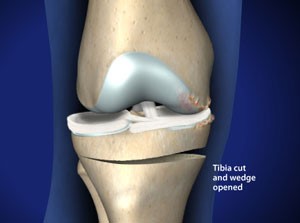
The last procedure we will be discussing today is called osteotomy. This is considered an in between type of procedure. While it is more invasive than arthroscopy it is less invasive than a joint replacement surgery. This procedure can be helpful in cases of RA, psoriatic arthritis, lupus, gout and pseudo gout among other conditions. This procedure involves cutting and reshaping a bone near a damaged joint to minimize the stress on the affected joint. This is normally performed on younger people who are trying to delay a needed joint replacement for as long as possible. Most common complications form osteotomy can include blood clots as well as failure to heal properly.  (6) Please see the attached picture for an example of what this procedure would look like in a joint. † (7)

In our next blog we will finish talking about surgeries and talk about supplements that can help heal after a procedure. †


REFERENCES

  1. https://www.orthomedctr.com/joint-reconstruction.php
  2. Joint Replacement Surgery and You. (April, 2009) In Arthritis, Musculoskeletal and Skin Disease online. Retrieved from http://www.niams.nih.gov/#.
  3. https://medlineplus.gov/ency/article/002974.htm
  4. https://en.wikipedia.org/wiki/Joint_replacement#cite_note-NIAMS-1
  5. Jameson, S. S.; Dowen, D.; James, P.; Serrano-Pedraza, I.; Serrano-Pedraza, Deehan; Reed, M. R.; Deehan, D. J. (October 2011). “The burden of arthroscopy of the knee: a contemporary analysis of data from the English NHS”. The Journal of Bone and Joint Surgery. British Volume. 93 (10): 1327–1333. doi:1302/0301-620X.93B10.27078ISSN 2044-5377PMID 21969430.
  6. https://www.brighamandwomens.org/medical-resources/osteotomy-procedure
  7. https://www.joint-surgeon.com/knee/tibial-osteotomy-open-wedge


Rheumatoid Arthritis, Invite Health Blog

Rheumatoid Arthritis, Invite Health Blog

Written by Dr. Claire Arcidiacono, ND For further questions or concerns email me at carcidiacono@invitehealth.com   Last week we started off our discussion of arthritis with osteoarthritis (OA). This week we will be looking at rheumatoid arthritis (RA). When most people think of RA they 

Krill Oil, or Fish Oils. Pick one and take it. Invite Health Podcast, Episode 624

Krill Oil, or Fish Oils. Pick one and take it. Invite Health Podcast, Episode 624

Subscribe Today!   Please see below for a complete transcript of this episode. KRILL OIL, OR FISH OIL. PICK ON AND TAKE IT- INVITEⓇ HEALTH PODCAST, EPISODE 624 Hosted by Jerry Hickey, Ph. *Intro Music* InViteⓇ Health Podcast Intro: [00:00:04] Welcome to the InViteⓇ Health 

Osteoarthritis

Osteoarthritis


Written by Dr. Claire Arcidiacono, ND

For further questions or concerns email me at carcidiacono@invitehealth.com†

Now that we have gone over joint anatomy and lab work that is important for joint health, it is time to get deeper into our interesting topic. Today we are going to cover osteoarthritis. To start, what exactly is osteoarthritis? Osteoarthritis is a type of joint disease where we see a breakdown of joint cartilage and the underlying bone. (1) While other types of joint disease are caused by a dysfunction of the immune system and can thus affect internal organs in osteoarthritis that is not the case. In other words because osteoarthritis is not an autoimmune condition the damage is limited to the joints.† (2)

Osteoarthritis is what is colloquially called “wear and tear” arthritis. The damage seen in osteoarthritis is caused by anything that leads to mechanical stress on the joint. One of the risk factors for developing osteoarthritis is being overweight since the excess weight puts more stress on the joints than they are designed to handle. Other risk factors include abnormal joint or limb development including those who have limbs of different length, or even previous joint injuries. Those who have very physical jobs may have a higher level of joint stress and have an increased risk of osteoarthritis as a result of that.(3) In individuals with a chronic level of inflammation this inflammation may increase the risk of osteoarthritis.(4) There also appears to be a link between menopause and developing osteoarthritis. Unfortunately as we age the wear and tear of daily living also places stress on the joints and thus advanced age can also be a risk factor for osteoarthritis.  (5) Certain health concerns can also increase the risk of osteoarthritis. These can include Alkaptonuria.  (6) Other chronic diseases that are risk factors include hemochromatosis, Wilson’s disease, ligament deterioration, obesity, joint infection and cognitional disorders. Ehlers-Danlos syndrome is another risk factor. Yet another risk factor is Marfans syndrome. Any other form of arthritis will increase the risk of osteoarthritis. Diabetes appears to increase the risk of needing a joint replacement surgery due to the osteoarthritis. (7)
Osteoarthritis is usually diagnosed with a history and clinical exam as well as an x-ray. Getting an x-ray is very important because it can help us understand how severe the illness has progressed. Someone who has the start of osteoarthritis has a very different protocol than someone who has advanced illness. Very often when we speak of arthritis we use the term ‘bone on bone’. What this basically means is that the cartilage has been worn away and the bone is directly rubbing on another bone. Only your doctor can determine if this is the case. From my clinical experience I can tell you I’ve had clients with bone on bone who can walk with what they describe as mild pain. Others with bone on bone can barely walk. Then again I’ve had individuals who are in the early stages of osteoarthritis and they have severe pain. That is why testing is so important.†
One of the first steps in working with osteoarthritis is to lose weight if necessary. The next step is to treat any underlying conditions such as diabetes or any autoimmune conditions you may have.  Reducing the stress caused by inflammation can also help reduce the risk of osteoarthritis. (8)  A 2015 study showed that water therapy is very helpful for reducing the symptoms of osteoarthritis (9). In addition to any conventional treatments that the doctor may recommend the following have been found in studies to help with osteoarthritis.†

FISH OILS ARE GOOD FOR YOUR JOINTS & KRILL MIGHT BE SUPERIOR- INVITE HEALTH PODCAST, EPISODE 580>>LISTEN NOW!

Dr.Claire’s Recommendations: 

Turmeric has been found in studies to help with the pain and inflammation associated with osteoarthritis. It also has been found to help with overall joint health. (10) Please see Invite’s Biocurcumin 5 Loxin, Turmeric with Ginger and Curcumin blend.†
Ginger has been found in studies to reduce the symptoms of osteoarthritis. (11) Please see Invite’s Turmeric with Ginger!
Collagen has once again been found effective at reducing the symptoms of osteoarthritis in studies! (12)Primary studies indicate that collagen may help to make beneficial changes in the quality of cartilage in osteoarthritis. (13) Please see Invite’s Collagen Hx, Collagex HA, and Cartilage Hx.†
Hyaluronic acid has been found to improve joint lubrication as well as reduce the inflammation found in osteoarthritis. (14) Please see Invite’s Hyaluronic acid with devils claw as well as Invite’s Collagex Ha.†
Glucosamine is very controversial. However while more research is needed it has been found in some studies to help slow the degeneration of the cartilage that occurs during osteoarthritis. (14). Please see Invite’s Glucosamine Chondroitin, Joint Hx and Collagex Ha.†
Omega 3 have been found in newer studies to help reduce the symptoms, for example pain associated with osteoarthritis. (14) Please see Invite’s Fish oil, Krill oil, Biomega and Inflammune.†

Next week we will be talking about Rheumatoid Arthritis!


REFERENCES

1. Arden N, Blanco F, Cooper C, Guermazi A, Hayashi D, Hunter D, Javaid MK, Rannou F, Roemer FW, Reginster JY (2015). Atlas of Osteoarthritis. Springer. p. 21. ISBN 978-1910315163. Archived from the original on 8 September 2017.
“Osteoarthritis”. National Institute of Arthritis and Musculoskeletal and Skin Diseases. April 2015. Archived from the original on 18 May 2015. Retrieved 13 May 2015.
2.Glyn-Jones S, Palmer AJ, Agricola R, Price AJ, Vincent TL, Weinans H, Carr AJ (July 2015). “Osteoarthritis”. Lancet. 386 (9991): 376–387. doi:10.1016/S0140-6736(14)60802-3. PMID 25748615. S2CID 208792655.
3.Berenbaum F (January 2013). “Osteoarthritis as an inflammatory disease (osteoarthritis is not osteoarthrosis!)”. Osteoarthritis and Cartilage. 21 (1): 16–21. doi:10.1016/j.joca.2012.11.012. PMID 23194896.
4.Tanamas SK, Wijethilake P, Wluka AE, Davies-Tuck ML, Urquhart DM, Wang Y, Cicuttini FM (June 2011). “Sex hormones and structural changes in osteoarthritis: a systematic review”. Maturitas. 69 (2): 141–156. doi:10.1016/j.maturitas.2011.03.019. PMID 21481553.
5.Ranganath LR, Jarvis JC, Gallagher JA (May 2013). “Recent advances in management of alkaptonuria (invited review; best practice article)”. J. Clin. Pathol. 66 (5): 367–373. doi:10.1136/jclinpath-2012-200877. PMID 23486607. S2CID 24860734.
https://en.wikipedia.org/wiki/Osteoarthritis#cite_note-23
6.Cibulka MT, White DM, Woehrle J, Harris-Hayes M, Enseki K, Fagerson TL, et al. (April 2009). “Hip pain and mobility deficits–hip osteoarthritis: clinical practice guidelines linked to the international classification of functioning, disability, and health from the orthopaedic section of the American Physical Therapy Association”. The Journal of Orthopaedic and Sports Physical Therapy. 39 (4): A1-25. doi:10.2519/jospt.2009.0301. PMC 3963282. PMID 19352008.
7.Lu M, Su Y, Zhang Y, Zhang Z, Wang W, He Z, et al. (August 2015). “Effectiveness of aquatic exercise for treatment of knee osteoarthritis: Systematic review and meta-analysis”. Zeitschrift für Rheumatologie. 74 (6): 543–552. doi:10.1007/s00393-014-1559-9. PMID 25691109. S2CID 19135129.
8.https://www.ncbi.nlm.nih.gov/pmc/articles/PMC7812094/
9.https://pubmed.ncbi.nlm.nih.gov/11710709/
10.https://pubmed.ncbi.nlm.nih.gov/30368550/
11.https://pubmed.ncbi.nlm.nih.gov/21251991/
12.https://www.ncbi.nlm.nih.gov/pmc/articles/PMC5814393/
13.https://www.mayoclinic.org/drugs-supplements-glucosamine/art-20362874
14.https://www.sciencedaily.com/releases/2011/10/111017111600.htm