Author: Danielle Menke

New Study: GABA Ingredient May Help You Fall Asleep Faster

New Study: GABA Ingredient May Help You Fall Asleep Faster

Gamma-amino butyric acid (GABA) is a chemical messenger, a neurotransmitter, naturally found in the human brain and eyes. Its main function is to reduce the activity level of neurons, which, a new study says, may boost sleep – helping individuals to fall asleep faster. The …

The Benefits of Coffee on National Coffee Day

The Benefits of Coffee on National Coffee Day

Other than water, tea and coffee are the most consumed beverages in the world. It may seem like a cat and mouse game when it comes to studies on coffee; one week a study is published about how bad coffee is for your body and …

Hispanic Heritage Month: Health Spotlight

Hispanic Heritage Month: Health Spotlight

Hispanic Heritage Month, the 30-day period between September 15 and October 15, was created under President Lyndon Johnson to celebrate the histories, cultures, and contributions of American citizens whose ancestors came from Spain, Mexico, the Caribbean, and Central and South America. Celebrating ancestry is so important for people originally from different countries, so this day is very special to many people. Throughout 1930-1940, many people in America and their other territories took a national census that revealed details about their address and job roles. This could be useful information for Americans currently trying to work out their family’s history. Perhaps that could help more people to understand their heritage, maybe some people would be celebrating this Hispanic Heritage Month if they knew more about their ancestors. According to the Library of Congress’ National Hispanic Heritage Month’s website, “The day of September 15 is significant because it is the anniversary of independence for the Latin American Countries Costa Rica, El Salvador, Guatemala, Honduras and Nicaragua. In addition, Mexico and Chile celebrate their independence day on September 16 and 18, respectively.”

During Hispanic Heritage Month, museums and communities throughout the United States come together to celebrate the nations rich cultural Hispanic and Latino heritage through performances, lectures and many family activities. Check out how the Smithsonian is celebrating and how you can get involved by clicking here!

In honor of Hispanic Heritage Month, InVite® Health brings you important health information that affects Hispanics and Latinos in the United States. Here’s what you need to know –

Hispanic & Latino Health in the U.S.

According to the Centers for Disease Control and Prevention (CDC), Hispanics or Latinos are the largest racial/ethnic minority populations in the U.S. – about 1 in 6 people living in the United States are Hispanic. By 2035, this could nearly be 1 in 4 people. But Hispanic and Latino health is a major concern in the United States.

The Hispanic Access Foundation, is a non-profit organization that improves the lives of Hispanics in the U.S. and promotes civic engagement by “educating, motivating and helping them access trustworthy support systems.” Their website states, “Poor health outcomes, unfortunately, are a common reality in the Hispanic community. From a lack of insurance and access to healthcare to high-risk environments, there is a significant need to educate Hispanics on health issues and increase their access to healthcare services.”

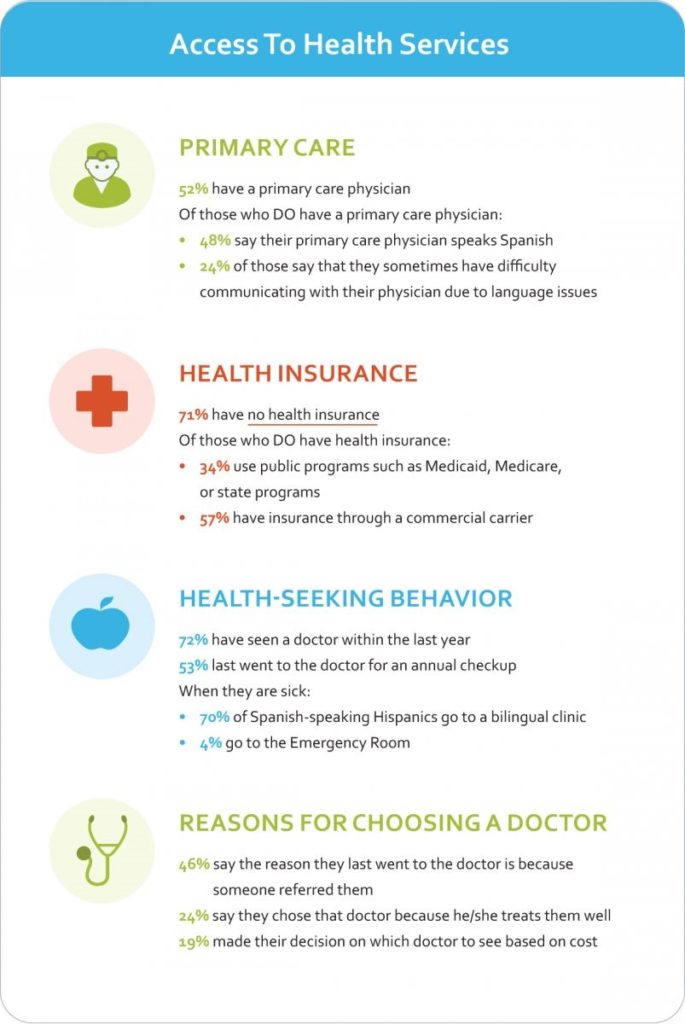
A study performed by the foundation in 2012 found that Spanish-speaking immigrants in communities in Washington and Colorado found that “many people did not have a primary care physician, many were uninsured, and many more reported difficulties communicating with their primary care physician due to language barriers.”

aaaa

* https://hispanicaccess.org/sites/default/files/images/AccessToHealth_R1_0.jpg


Leading Causes of Death for Hispanics

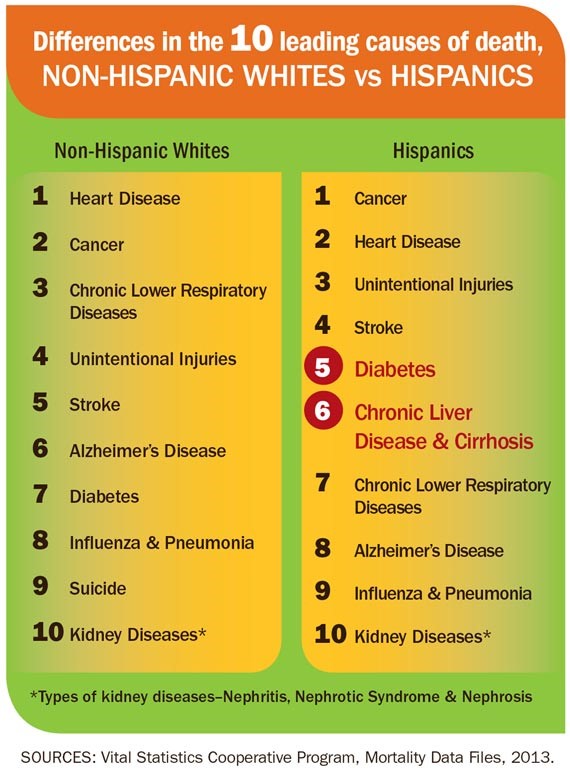
According to the CDC, the Hispanic death rate is 24% lower than whites, but Hispanics are about 50% more likely to die from diabetes or liver disease than whites (“non-Hispanic” whites). Hispanics and Latinos have a higher degree of illness or health risks than whites – 24% more poorly controlled high blood pressure and 23% more obesity.

The top 6 leading causes of death in Hispanics, according to the Vital Statistics Cooperative Program, are –

  1. Cancer
  2. Heart Disease
  3. Unintentional Injuries
  4. Stroke
  5. Diabetes
  6. Chronic Liver Disease & Cirrhosis (a condition where the liver does not function properly due to long-term damage)

sdfsfsf

How can we help lower these numbers?

There are plenty of things that can be done in Hispanic communities to lower the risks of developing these diseases and conditions.

  1. Know your family history. If you have a family history of heart disease or diabetes, visit both a physician and nutritionist to be sure you are doing everything you can to steer clear of developing these conditions.
  2. Know and understand your current medical standing.
  3. If you have one of these conditions or diseases, be sure to keep up with your treatment.
  4. Leverage community health services. The U.S. Department of Health and Human Services (HHS) “recognize the important contributions of promotores in reaching vulnerable, low-income and underserved members of Latino/Hispanic populations and promote increased engagement to support health education and prevention.”
  5. Bring health into your home. Teach your family the importance of nutrition and leading a healthy life by including them in making home cooked meals and encouraging outdoor activities. Check out these “fotonovelas”, a type of comic book that are common in Spanish-language cultures made to promote health and health education for Hispanic audiences.

For more information on how you can get your health back on track, visit www.invite.nyc today!

InVite® Health Current Sale

New Study: Early Exposure to Mercury Blocks Effects of Exercise on the Brain

New Study: Early Exposure to Mercury Blocks Effects of Exercise on the Brain

According to new research funded by the National Institute of Environmental Health Sciences (NIEHS), part of the National Institutes of Health, cognitive function improves with aerobic exercise, but not for people exposed to high levels of mercury before birth. This is one of the first …

New Study: Exercise May Reduce Cancer Risk Brought on by Alcohol

New Study: Exercise May Reduce Cancer Risk Brought on by Alcohol

According to the CDC, nearly 90 percent of Americans report drinking alcohol during their lifetimes, and more than half of adults say they have consumed alcohol in the past month. However, more than half of American adults also do not exercise. A new study suggests …

New Study: Stress Cancels Out Benefits of Healthy Fats

New Study: Stress Cancels Out Benefits of Healthy Fats

Most people know the difference between “good fat” and “bad fat”. You take the time to be sure you are consuming mostly good fats, like avocados or Omega-3s found in fatty fish. But what if your stress level was completely eradicating the positive benefits you should be acquiring from the good fats you are eating?

In this self-proclaimed, “first study to show how stress can cancel out the benefits of eating healthier fats”, professor of psychiatry and psychology at Ohio State University in Columbus, Jan Kiecolt-Glaser, says that this study provides even more evidence that stress matters. The main takeaway point from this is that stress should be minimized whenever possible.

Benefits of Healthy Fats

According to the American Heart Association, dietary fats are essential to provide energy to your body, support cell growth, protect your organs, keep your body warm, absorb nutrients and produce important hormones. Healthy fats, called monounsaturated and polyunsaturated fats, “balance the amount of calories you eat from all foods with the amount of calories that you hurt. These foods include vegetables, fruits, and whole grains like low-fat dairy products, poultry, fish, legumes, and non-tropical vegetable oils and nuts.
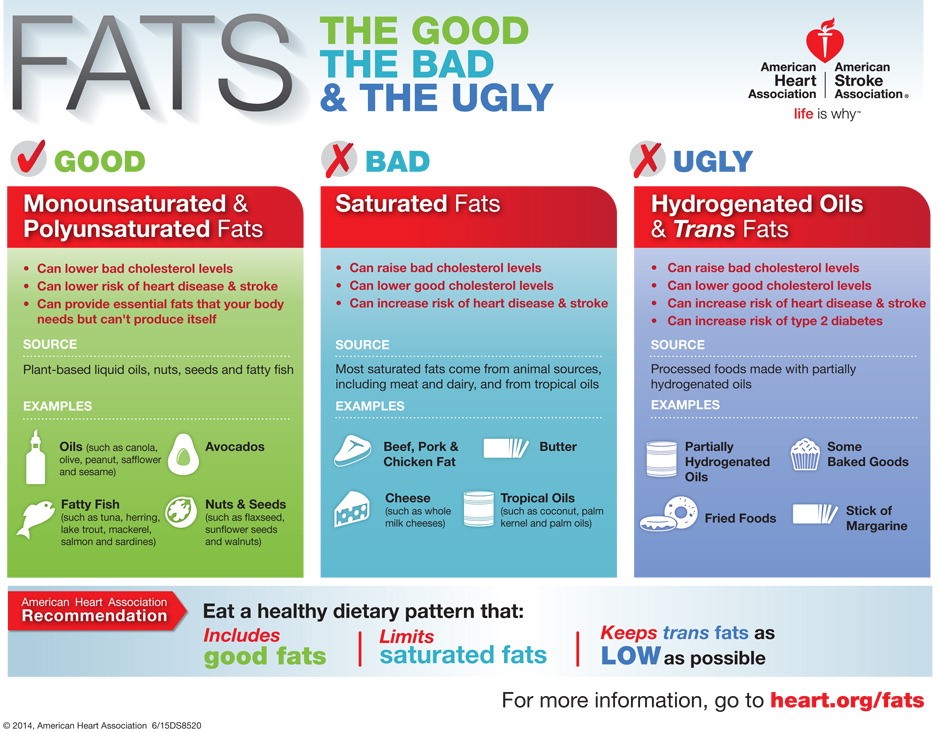
healthy fats, american heart association, heart health

The Study

Researchers focused on 60 women, 38 of whom were breast cancer survivors. The average age being 53 years old. The team wanted to examine the interaction between stress, diet and inflammatory markers that could be measured in the bloodstream.

Participants visited the university for two days, each day being randomly assigned to eat one of two breakfasts – biscuits and gravy with eggs and turkey sausage that was mostly made with saturated fat from palm oil, or an identical breakfast made primary with monounsaturated sunflower oil. To conclude the amount of stress each day, researchers used the Daily Inventory of Stressful Events questionnaire. According to the MID US National Study of Daily Experiences Inventory of Stressful Events (DISE), “The DISE is a semi-structured survey instrument, assessing a wide variety of stressors. The interview consists of a series of ‘stem’ questions asking whether certain types of events (e.g., arguments, home or work events. etc.), have occurred over the past 24 hours, along with a set of guidelines for probing affirmative responses.” The study noted stressful situations, like helping a parent with dementia who resisted help or cleaning up after a child; not “life-shattering events” but relatively stressful, according to Professor Kiecolt-Glaser.

Of the 60 women, 31 had at least one recent stressor at one of the two visited. Twenty one of the 60 women had stressful experiences before both visits, while six did not have any. After multiple blood samples were taken from the women, researchers focuses on C-reactive protein and serum amyloid A, two markers for inflammation. Results showed that women who ate the saturated fat meal had higher readings in all four negative markers, compared with the women who consumed the sunflower oil meal.

According to the study, in the women who had stressful days, this difference vanished, and as such, eating a breakfast with “bad fat” was the same as eating one with “good fat.”

Researchers concluded, “This data shows how recent stressors and a [major depressive disorder] history can reverberate through metabolic alterations, promoting inflammatory and atherogenic responses.”

How to Combat Stress

According to InVite Health’s Nutrition Director, Nicole Crane, B.S, NTP, you can combat stress by clearing stress hormones, building happy, healthy brain chemistry, vamping up daytime energy and supporting deep, restorative sleep. “When relieving stress, the goal is to balance the hormone cortisol, which is released by the adrenal glands. Stress, and the cortisol elevations that follow, have detrimental effects on all of our body systems, but take the greatest toll on the heart and the brain. One category of herbs, called adrenal adaptogens nourishes the adrenal glands and helps the body adapt to stress. They also adapt to the individual using them, offering customized benefits based on what their body requires. One herb, ashwaganda, is a classic Ayurvedic herb used for stress relief, positive mood and healthy brain function. Ashwaganda has been shown to significantly protect brain cells from the harmful oxidative effects of stress, which otherwise disrupts nerve communication, amps up inflammatory responses and causes physical damage to the brain. Research also shows that this powerful feel-good herb supports memory, relaxation and overall cognitive function by regenerating the brains nerve cells. If stress leaves you feeling exhausted, another adaptogenic herb called Rhodiola rosea (a potent Siberian herb) has been shown in a study performed in 2008 to improve stress-related fatigue, showing significant improvement in energy, mood, ability to concentrate, and mental performance in 28 days.”

The important thing is for people to find what they need to relax and unwind after a hectic day. Choosing an activity to help combat the stresses of day-to-day life is unique to each individual which is why this is not a definitive list of options. It is also important to recognise that these activities work best when used alongside a healthy and balanced diet.

Read Nicole Crane, B.S., NTP’s article, “Thriving (Not Just Surviving) with Stress”, by clicking here!

What do you think about this new study on healthy fats and stress? Leave us a comment and join in the conversation!


InVite® Health Current Sale