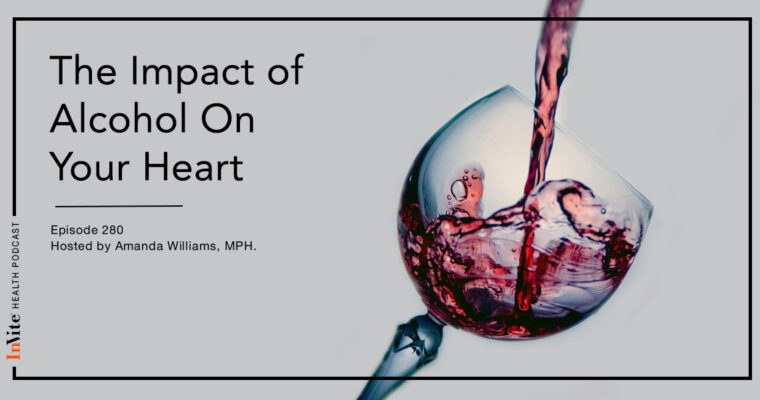
The Impact of Alcohol On Your Heart – InVite Health Podcast, Episode 280
In this episode, Amanda Williams, MPH discusses the true meaning of alcohol consumption, different types of alcohol and the real cardiovascular impacts of alcohol consumption.
Nutrition. Vitamins. You.
In this episode, Amanda Williams, MPH discusses the true meaning of alcohol consumption, different types of alcohol and the real cardiovascular impacts of alcohol consumption.
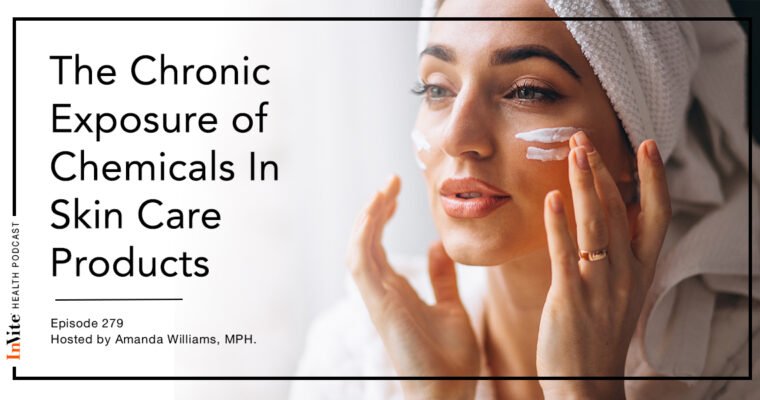
When we think about our skin, we have to realize that this is a really integral part of our overall health. We also have to realize that the skin needs protection from environmental pollutants and harmful chemicals that we commonly apply to our skin.
As we approach the one year mark of facing the COVID-19 pandemic, researchers are learning more and more about what we can be doing to protect ourselves from this dangerous virus. Some of these methods may be as simple as boosting our intake of certain vitamins.
Vitamin D
Vitamin D is an essential nutrient that has only increased in popularity over the past year. Numerous studies have found that Vitamin D levels may play an important role in the body when it comes to fighting COVID-19.
One study published this year in the journal Endocrine looked at Vitamin D levels in patients who had been hospitalized with the virus. Low Vitamin D levels are already associated with bacterial and viral infections, but these researchers found that patients who were hospitalized with COVID-19 often exhibited a deficiency in the nutrient. In fact, they reported that “almost half the infected population” showed a blood level of 25-hydroxyvitamin D that was below 12 ng/mL, which is the threshold for Vitamin D deficiency. The researchers wrote that “such very low levels could have devastating effects upon the host’s ability to contain the required immune response as well as bolster its cellular defense mechanisms,” meaning that people with lower blood levels of Vitamin D may struggle to muster up the immune defenses to fight off COVID-19, as well as other infections.
Vitamin C
Many people know Vitamin C as an immune-boosting nutrient, but it also offers its strengths in the arena of COVID-19. This vitamin is packed with anti-inflammatory, immunomodulating and antioxidant properties, making it an excellent candidate for protecting and fighting against viruses and other infections.
Late last year, a literature review appeared in the journal Nutrients looking at Vitamin C’s abilities to assist with conditions including sepsis, respiratory infections and COVID-19. They shared that Vitamin C deficiency, known as scurvy, is often linked to an increased susceptibility to pneumonia and respiratory infection. The report also shared that one study looked at 21 critically ill COVID-19 patients placed in the ICU. A majority of these patients had “hypovitaminosis C,” another term for Vitamin C deficiency. They wrote that “low Vitamin C levels are common in critically ill hospitalized patients with respiratory infections, pneumonia, sepsis and COVID-19.”
The review goes on to discuss the important role Vitamin C plays within both the innate and adaptive immune systems and also helps to treat acute respiratory infections and inflammation, both of which are extremely common symptoms of COVID-19.
Zinc
This essential trace element plays a vital role in the immune system. It is known to help fight against the common cold, but studies have also found that zinc offers antiviral properties that can be especially relevant during the COVID-19 pandemic.
In 2019, the journal Advances in Nutrition published a study discussing the element’s antiviral impacts. One section looks specifically at the relationship between zinc and various respiratory tract infections, including coronaviruses, the category that COVID-19 falls into. The research showed that zinc had the ability to inhibit the replication of various viruses, including influenza, as well as coronaviruses that caused severe acute respiratory syndrome. The study says that this finding indicates that zinc offers some kind of inhibitory mechanism on various viruses. As these viruses are similar to the SARS-CoV-2 virus that causes the COVID-19 infection, it is possible that zinc can also help inhibit viral replication in COVID-19.
Quercetin
Many patients who have had COVID-19 have faced severe inflammation in the form of inflammatory pneumonia. Quercetin is a flavonoid found in fruits and vegetables that offers anti-inflammatory and antioxidant properties, making it another important nutrient when trying to protect against COVID-19.
The Journal of Inflammation recently shared an article looking at quercetin’s impacts on COVID-19 infections. Researchers wrote that quercetin can help treat the inflammation associated with COVID-19 by suppressing regulators that generate different inflammatory factors like cytokines. This helps to limit damage caused by the virus. The article also shared that quercetin may offer antiviral activities that help to inhibit aspects of the SARS-CoV-2 virus, helping to halt its replication.
Advice from Chief Scientific Officer Jerry Hickey, Ph
These four powerful nutrients can be beneficial for boosting your immune system and your overall health, especially during the COVID-19 pandemic. Our Chief Scientific Officer Jerry Hickey, Ph. has discussed several of them in various podcast episodes and even provided his own recommendations for listeners on how to use these nutrients for their health.
“You want to get your Vitamin D levels above 35,” he said in his podcast episode ‘Update: Vitamin D, Lung Health & the Coronavirus.’ “I would recommend taking about 6,000 units every day with food for seven days. After that, you can go down to 3,000 units a day. This should get you up to a nice sweet level pretty quickly.”
As for Vitamin C, Jerry made the following recommendation in his podcast episode ‘Why Medical Professionals Are Utilizing Vitamin C for COVID Patients, Part 2’: “My recommendation for daily use depends on your health. If you’re a smoker or a diabetic, you need more. I would give a diabetic 1000mg three times a day with their food to saturate their blood with this vitamin. For you and me, 500mg twice a day if you’re not sick should be plenty. If you start to get sick, go up to 1000mg twice a day.”
Jerry also shared his own routine and advice for consumption of zinc in the podcast episode ‘Zinc for Immunity During the Coronavirus,’ saying, “Currently my wife and I are taking an additional 30mg of zinc a day; this is in addition to the 15mg we are already getting in our multiple vitamin. This is plenty because it has had time to build up in our systems. I choose Zinc Picolinate, but lozenges are also a great choice. If you are first developing symptoms of an upper respiratory tract infection use a lozenge and take about 30mg 3 times a day (no more than that).”
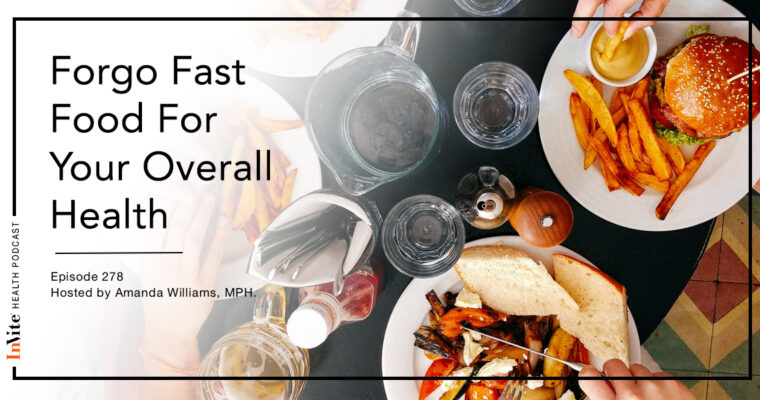
Fast food may be convenient but it is lacking the nutrients that we need in order for our bodies to function properly.

When we look at air pollution in this country and throughout the world, we can see the true harmful long-lasting effect, especially on our heart health.
artificial sweeteners
Invite Health Podcast, Episode hosted by Amanda Williams, MPH
Subscribe Today!


Back in the day, when artificial sweeteners really hit the market, people were really intrigued by them because they were this really unique alternative to sugar. They were basically adding no calories to your diet, so this was very attractive to many people. They thought these sweeteners must be a good thing because they could eat something very, very sweet without adding calories. But there is a really big catch that we have to know about and that is that artificial sweeteners, as the name implies, are artificial. These sweeteners are widely used in a whole variety of different foods, in particular foods that are contained in the Standard American Diet, including processed foods, powdered drink mixes, soft drinks, dairy products and canned foods. There are so many different places where they sneak in these artificial sweeteners, but yet, they market them as safer and healthier alternatives because they have less calories.†
There is a lot of science that we need to go through so that we can debunk this profound misinformation on artificial sweeteners. They really are quite dangerous for our health.†
HOW CINNAMON AND COROSOLIC ACID SUPPORT HEALTHY BLOOD SUGAR LEVELS – INVITE HEALTH PODCAST, EPISODE 144. Listen Now >>
High fructose corn syrup
Let’s look at high fructose corn syrup as a starting point. High fructose corn syrup was really embraced by this country in the mid-1970s. This is when they started to pump high fructose corn syrup as an alternative sweetener into so many different food products, including soft drinks. To this day, we’re still dealing with the ramifications of high fructose corn syrup, which is a liquid sweetener that is an alternative to table sugar. They were using high fructose corn syrup as opposed to table sugar for economic reasons because it could be mass produced at a much cheaper price.†

One of the points that I like to make about this when we look at the history of high fructose corn syrup in the United States is the direct correlation between when high fructose corn syrup was first introduced into our food supply back in the mid-70s and then in the 1980s, there was this really rapid rise in nonalcoholic fatty liver disease in a pediatric population. That is something that should be alarming to anyone. The prevalence of nonalcoholic fatty liver disease in the pediatric population is estimated to be upwards of 10%, which is absolutely astronomical. This means that these children are damaging their livers before they even become teenagers. This rate also has the potential to be even higher because the rate of pediatric obesity is going up and they estimate that as high as 70 to 80% of those children who are categorized as being obese will also have the comorbid issue of nonalcoholic fatty liver disease.†
Learn more about research on this connection by tuning into the full podcast episode.
Saccharin
Now let’s look at saccharin, which is like Sweet’n Low. When it first came out, they originally put a label on it saying that the FDA and the National Cancer Institute that there is this potential that the saccharin could lead to cancer. They were listing it as a carcinogen, but that’s now all changed. In spite of the fact that there is this mounting clinical and laboratory evidence that point to the dangerous health consequences of these artificial sweeteners, the government has now decided that they are Generally Recognized as Safe (GRAS). That should scare the living daylights out of anyone.†
PROTECT YOUR BODY AGAINST SUGAR-INDUCED DAMAGE WITH BENFOTIAMINE – INVITE HEALTH PODCAST, EPISODE 90. Listen Now >>
What can we do moving forward?
In the face of these dangerous yet prominent artificial sweeteners, we have to know what to do. You have to be aware that the sweet foods that you are taking in should be coming from a natural sweetener. If you want something sweet, it should be coming from eating an apple or having a bowl of blueberries. This is a much better option than the aspartame, high fructose corn syrup, saccharin and sucralose. We know that these things can all create different long-term, long-lasting and incredibly detrimental health effects.†
When we use a true sugar alternative, it should be coming from nature, such as stevia or xylitol, which are directly derived from fruit. Those are the only things that we should be choosing if we’re not using direct sugar. Having fruits and vegetables as opposed to processed foods is one step towards avoiding our exposure to these harmful artificial sweeteners. We have to choose the things that we eat and drink wisely.†
Tune into the full podcast episode for more details on the relationship between artificial sweeteners and insulin resistance, obesity and other harmful health conditions.
Thank you for tuning in to the Invite Health Podcast. You can find all of our episodes for free wherever you listen to podcasts or by visiting www.invitehealth.com/podcast. Make sure you subscribe and leave us a review! Follow us on Facebook, Twitter and Instagram at Invite Health today. We’ll see you next time on another episode of the Invite Health Podcast.