
Studies Show This Unique Collagen Eases Inflammation – InVite Health Podcast, Episode 286
UC-IIⓇ is really unique. It’s an undenatured type two collagen. Studies has shown that UC-IIⓇ can help ease inflammation in the body.
Nutrition. Vitamins. You.
UC-IIⓇ is really unique. It’s an undenatured type two collagen. Studies has shown that UC-IIⓇ can help ease inflammation in the body.
There’s been a huge amount of research on Vitamin D coming out over the past several decades, but recently research is booming. Here’s why.
telomere
Invite Health Podcast, Episode hosted by Jerry Hickey. Ph
Subscribe Today!


Our body is made out of cells and cells, like everything else, have a lifespan. How long a cell lives varies from location to location, but the cells should not disappear because if the cell disappears, a part of you is disappearing. You can imagine if you lose a lot of cells, a lot of you is disappearing and that’s not a good thing. To prevent this from happening, cells have to divide into two new cells, called daughter cells. When they do this, they have to share their chromosomes. A chromosome is like a big archive or library that contains your genes and the genes have the blueprint for everything that’s going on inside of you. If the cells don’t split into two new cells and don’t share their chromosomes properly, the cells disappear anyway.
Telomeres to protect chromosomes
To prevent damage to the chromosomes, there are protective N caps called telomeres. When the cells are splitting into new cells at the end of their life cycles, the telomeres shorten a little bit. If they get too short, you lose the cell anyway. However, the beauty of a telomere is that it can regrow to a more healthy length. Certain things can shorten the telomere length, like smoking, and certain things can improve the length of the telomere, including things like a healthy diet, exercise and a good multivitamin.
A famous researcher compared the telomere at the end of your chromosome to that little cap at the end of your shoelace, called an aglet, which prevents the shoelace from unraveling. If that aglet gets broken down, the shoelace unravels and you have to get new shoelaces. Well, you can’t get new cells, so you have to protect the cells you have.
Here’s an example of why telomeres and cell health are so important. Researchers from the University of Leicester and the University of Glasgow took blood samples from 484 men with moderately raised cholesterol and 1058 control subjects who had healthy cholesterol. They compared their telomere length and their white blood cells and then compared that again five years later. Five years later, both the patients and the controls with the shortest telomeres were twice as likely to develop serious heart disease. A reduction in telomere length triggers aging of the cell, called cell senescence, and cell death, called apoptosis, so it’s not a good thing.

Another study in the journal Physiological Genomics is another example of why telomere length is so crucial. It’s from the University of Melbourne, the School of Applied and Biomedical Sciences at the Federation University of Australia and the University of Leicester’s Department of Cardiovascular Sciences. This study says that worldwide, heart disease is public enemy number one. It’s the leading cause of death worldwide. This often results from death of heart cells. Oxidative stress and hypoxia lead to shortening of the telomeres in the heart cells, which leads to a drop in heart function. In contrast, antioxidants, caloric restriction and exercise can help prevent the shortening of the telomeres of heart cells and therefore help prevent the worsening of heart disease.
Listen to the full podcast episode to learn more about how shortening telomeres can impact your health.
Antioxidants and telomeres
Let’s look at some research on antioxidants and telomere length because longer telomeres protect your chromosomes and that’s connected with a longer, healthier life.
Why Carnosine Is An Important Factor For Healthy Aging – Invite Health Podcast, Episode 154. Listen Now >>
A study done by the Georgia Health Sciences University and published in the International Journal of Obesity looked at overweight African Americans. They said that Vitamin D in overweight African Americans protects telomere activity. It improved their activity by 19.2% from the start of the study. Simply giving them 2000 units of Vitamin D3 every day improved their ability to lengthen their telomeres.
There are a lot of studies on Vitamin D. If you want to outlive your neighbor, take some Vitamin D. The best form of Vitamin D is Vitamin D3 because it seems to be more active than Vitamin D2. It’s better absorbed when you take it with food because it’s fatty-soluble.
Here’s selenium and telomere length. This study published in the journal Clinical Nutrition looked at middle age to older adults. Every 20mcg increase in the intake of selenium from your food was associated with a .42% longer telomere length in all the participants. If you’re getting a good amount of selenium a day, like 50mcg or 100mcg, you’d be increasing your telomere length 1 to 2%, which is beautiful.
Learn about additional nutrients that can help promote healthy telomere lengths by tuning into the full podcast episode.
Thank you for tuning in to the Invite Health Podcast. You can find all of our episodes for free wherever you listen to podcasts or by visiting www.invitehealth.com/podcast. Make sure you subscribe and leave us a review! Follow us on Facebook, Twitter and Instagram at Invite Health today. We’ll see you next time on another episode of the Invite Health Podcast.


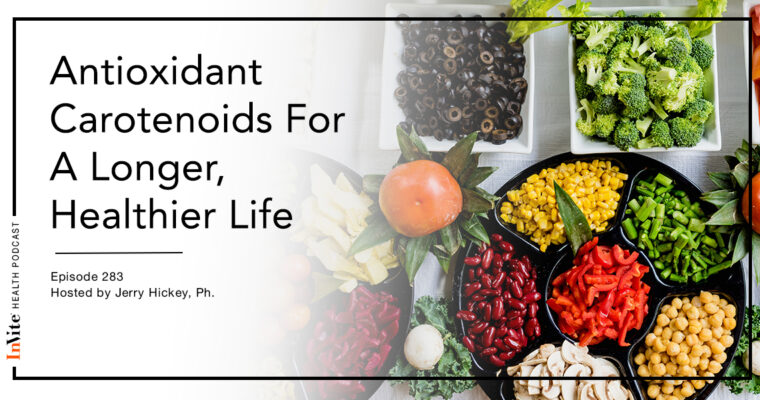
Carotenoids are colorful pigments from plants that are found in fruits and vegetables. Based on reading thousands of studies spanning decades, if you consume a broad variety of these pigments, they lend to a longer and healthier life.
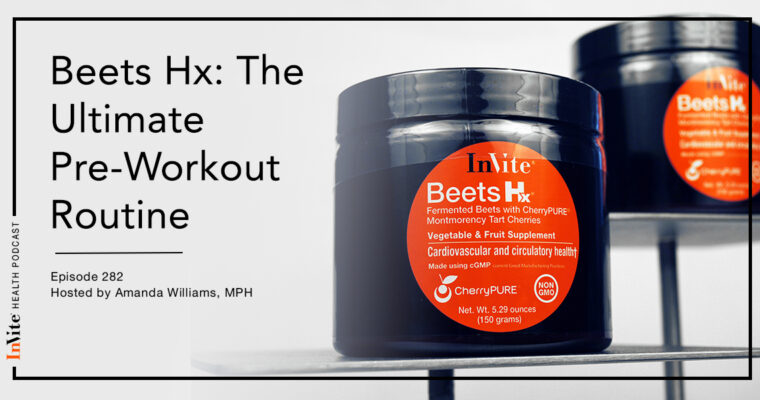
If you’re interested in a superior pre-workout routine, you need to turn to beets! Beets are a powerful superfood that offer support for nitric oxide and lactic acid build up.
NAC
Invite Health Podcast, Episode hosted by Amanda Williams, MPH
Subscribe Today!
Today, I want to do an update on N-acetylcysteine. NAC is an incredibly important and very, very powerful precursor to the making of glutathione, which is one of our endogenous antioxidants. NAC in and of itself has antioxidant properties and it does so much besides just helping to support the natural production of glutathione. It helps to reduce inflammatory cytokines and targets bacterial and viral infections. It can help to downregulate NF-kappa beta, which is one of the master regulators for inflammation in the body. It can also help to enhance insulin sensitivity in the body, so for people who have metabolic disorders including prediabetes and diabetes, NAC can be very helpful. When it comes to different areas of the body where oxidative stress is more pronounced, for example, after exercise, NAC can be very, very beneficial. I want to talk about NAC and revisit it because a lot of researchers have been looking at this nutrient in the setting of COVID-19 as a potential treatment option.†
N-acetylcysteine is the precursor for the primary endogenous antioxidant in the body, glutathione. We have known for a very long time that NAC can help to loosen thick mucus in the lungs when people have COPD and other respiratory issues, so for a lot of people who deal with seasonal allergies, oftentimes adding NAC into their routine during that time can be very beneficial. Not only can it help with the thinning of the mucus, but it is also targeting those inflammatory pathways, which is important because we are typically facing inflammation when we are dealing with seasonal allergies or any type of respiratory issue. NAC can help to tamper that down. Many people know NAC as being the antidote when people take too much acetaminophen. If you overdose on acetaminophen, the way to try to save the liver so you don’t go into acute liver failure is to give a high dose of NAC.†
How To Support Respiratory Health During A Pandemic – InVite Health Podcast, Episode 253. Listen Now >>
NAC is also working within the immune system and that is clear when we look at the way that N-acetylcysteine can help to regulate different genes. Researchers have been able to specifically assess the way that NAC is able to target H. pylori, which we know is that very miserable bacterial infection that is the number one cause for the peptic and duodenal ulcers, as well as gastric cancers.†
N-acetylcysteine is also very targeted when it comes to different viruses. Researchers have certainly looked at influenza and they found that NAC treatment of influenza significantly decreased the frequency, as well as the severity and duration. When looking at the nutrient in that regard, researchers decided to also look at it in regards to COVID-19 patients.†
In October 2020, there was an overview published in the Medical Hypotheses journal talking about NAC as a potential therapeutic agent for COVID-19. In this overview, they discussed how lowered immune function led to an increase in the risk of disease severity and looking at high levels of inflammatory markers such as TNF alpha, interleukin 6 and interleukin 10. When we get an overproduction of these in the body, we have that cytokine storm. Being that experts know that NAC can target these different mechanisms by which inflammation is driven up in the body, they started to really look at NAC as a potential treatment option for COVID-19.†
In this particular study, they were hypothesizing that N-acetylcysteine could actually act as a therapeutic agent in the treatment of COVID-19 through a variety of mechanisms, including increasing the glutathione, improving T-cell response and modulating inflammation. I think it’s quite notable that NAC isn’t just for making glutathione, it’s doing many other things.†
How NAC Supports Healthy Hearing – InVite Health Podcast, Episode 211. Listen Now >>
The Department of Health Sciences at the University of Genoa in Italy looked at the rationale for using NAC for not only the prevention but also the treatment of COVID-19. Through their research, they focused a lot on the cytokine storm and this systemic inflammatory response that is brought on by an overreaction in the immune system due to COVID exposure. Looking at the oral administration of NAC, they said that it is likely to attenuate the risk of developing COVID-19. This would be because we’re lessening inflammation in the body and at the same time we’re heightening the immune system’s ability to be at the ready. This is another area where they have shown that N-acetylcysteine really does have this power about it.†
Thank you for tuning in to the Invite Health Podcast. You can find all of our episodes for free wherever you listen to podcasts or by visiting www.invitehealth.com/podcast. Make sure you subscribe and leave us a review! Follow us on Facebook, Twitter and Instagram at Invite Health today. We’ll see you next time on another episode of the Invite Health Podcast.
Tune into the full podcast episode for more information about the benefits of NAC.