Recent Posts

The Link Between Cocoa, Diabetes and Insulin Sensitivity – InVite Health Podcast, Episode 269

The Link Between Cocoa, Diabetes and Insulin Sensitivity – InVite Health Podcast, Episode 269

Diabetes is a plague on our society. For years, clinical studies have focused on the link between cocoa and healthy blood sugar levels. Here’s what you need to know.

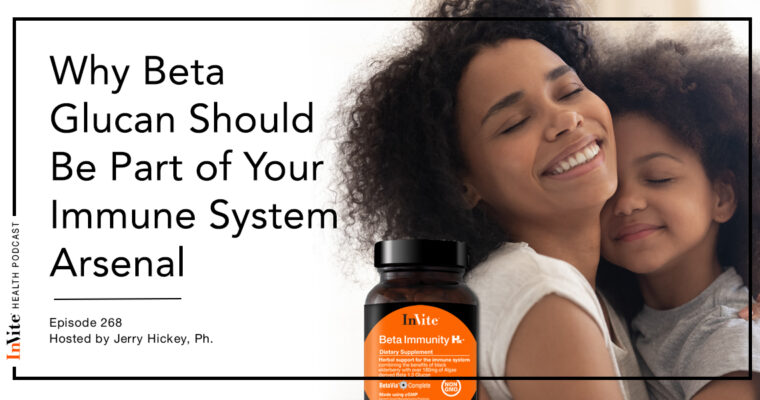
Why Beta Glucan Should Be Part of Your Immune System Arsenal – InVite Health Podcast, Episode 268

Why Beta Glucan Should Be Part of Your Immune System Arsenal – InVite Health Podcast, Episode 268

Algae, those plant-like green velvet blankets on the surface of ponds and lakes, holds a vault’s worth of nutrition. One of these algae, called Euglena gracilis, supplies and insoluble fiber that stimulates our immune system whenever we need it. This ingredient is called Beta-1.3-Glucan and it’s very well researched in the support of the immune system.

The Cold Weather Nutrient Support You Need – InVite Health Podcast, Episode 267

The Cold Weather Nutrient Support You Need – InVite Health Podcast, Episode 267

cold

Invite Health Podcast, Episode hosted by Amanda Williams, MPH

Subscribe Today!

Apple PodcastsGoogle PodcastsiHeartRadioSpotify

What is it about cold weather that makes us more susceptible to coming down with the common cold? Of course, you can get a cold throughout any time of the year, but we know that during the winter months when it’s cold outside is when we’re certainly more prone to exposure, as well as to contracting and exhibiting symptoms of the common cold. I want to talk today a little bit about why that actually occurs and what you can be doing to make sure that your immune system is ready to fend off all of the pesky bugs that are circulating around, especially during the winter.†    

Colds in the wintertime

Why is it that we see this generally greater spike when it comes to the pathogens that are circulating around in the winter? Certainly, we know that the temperature can play a significant role into that, but we also have to look at why it is that these viruses seem to thrive in what we would look at as kind of inclement weather. There are roughly about 200 different viruses that can trigger cold symptoms, so these can include things like rhinoviruses, coronaviruses and parainfluenza viruses. We have to really see what it is that makes them the most prevalent in the winter.†     

First and foremost, we can look at the lack of sunlight and the natural absorption of Vitamin D coming from the sun that occurs during the winter. We have shorter daylight and people are generally inside, so you’re not going to have as high an amount of exposure to Vitamin D coming from the sun, which we certainly know can impact your overall Vitamin D status. This is why generally, in the winter months, people will see a rapid decline in their serum Vitamin D levels, which is why it’s quite advantageous to make sure that during the winter, you are definitely taking Vitamin D.†     

How to Manage The New Covid-19 Mutations – InVite Health Podcast, Episode 266. Listen Now >>

Let’s go beyond that and think about people being inside more. When you’re outside and you have more space in between you out in the open air, the transmission rate of these different viruses tends to go down significantly. We know that when you are indoors, we can have a greater facilitation of the spread of viruses from person to person. We can also look at that shift in terms of humidity and understand that that lower humidity and forced heat, which can dry everything out, certainly can create an environment that allows these different viruses to live longer. Generally speaking, most of these viruses are going to thrive in a drier condition.† 

invite health podcast offer

Learn more about the process by which these viruses are spread by listening to the full podcast episode. 

Supporting the immune system

Our immune system certainly can have seasonal changes as well, so it’s not just the external, environmental factors such as temperature, sunlight and dryness. We also have to look at how that is impacting the innate and adaptive immune systems. We can look at how, even within the sinuses, when we look at the mucociliary action, we see a variation between seasons, meaning that perhaps your nasal passages are more prone to dryness in the winter, making them more likely to become a happy resting home for viruses. This is why it’s so incredibly important to make sure that you are doing the right things leading into the cold months. So, what does that entail? We know that people will have chicken noodle soup in the winter to fend off a cold. There’s a reason for that. We can look at all of the beneficial immune-boosting nutrients that are derived from that bone broth. This is what heightens our ability to fend off the attacks from these many different types of viruses that are quite high during the winter months.†

We can also look at really powerful flavonoids, such as the Cocoa Hx. Taking a scoop of that Cocoa Hx and warming it up is like having a cup of hot cocoa, but it’s packed with all of these powerful antioxidants. In the event that we do happen to breathe in some of these nasty little bugs, then the immune system is more at a ready, set, go stage with its antioxidant defenses.†

Certainly we know that Vitamin D is going to play an integral role in this, as well, and that link between Vitamin D deficiency or insufficiency and that increased susceptibility to infection. We know that there is a strong association between seasonal variations in Vitamin D and the incidence of various infectious diseases. We’re clearly seeing that going on with COVID-19.†   

COVID-19 Research Recommends Vitamin D Supplementation – InVite Health Podcast, Episode 251. Listen Now >>

We can also look at melatonin and understand that melatonin, which is a very powerful natural hormone, also participates in immunomodulatory roles. Melatonin is stimulating the production of natural killer cells and it helps to balance your T-helper cells. This is all very, very important because we understand that seasonal changes of the immune function have been observed in these different factors.†

Tune into the full podcast episode for more details on the benefits of these and other nutrients for your immune health.       

Thank you for tuning in to the Invite Health Podcast. You can find all of our episodes for free wherever you listen to podcasts or by visiting www.invitehealth.com/podcast. Make sure you subscribe and leave us a review! Follow us on Facebook, Twitter and Instagram at Invite Health today. We’ll see you next time on another episode of the Invite Health Podcast.


invite health podcast disclaimer

amanda williams invite health

How to Manage The New Covid-19 Mutations – InVite Health Podcast, Episode 266

How to Manage The New Covid-19 Mutations – InVite Health Podcast, Episode 266

By now, we’ve all heard that there are new strains of the COVID-19 virus. Here is what you need to know about these covid mutations and why this can be incredibly problematic.

Specific Foods and Nutrients That Promote Healthy Sleep – InVite Health Podcast, Episode 265

Specific Foods and Nutrients That Promote Healthy Sleep – InVite Health Podcast, Episode 265

One of the most underestimated factors in our overall wellness is sleep. But foods and nutrients can really support a restful night of sleep?

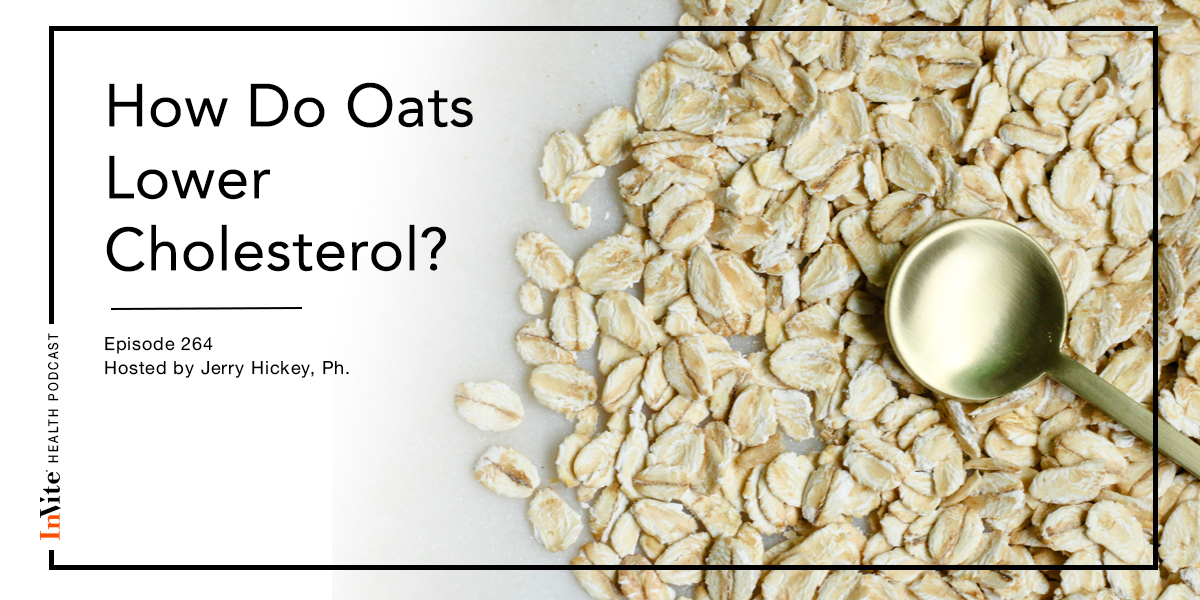
How Do Oats Lower Cholesterol? – InVite Health Podcast, Episode 264

How Do Oats Lower Cholesterol? – InVite Health Podcast, Episode 264

oats

Invite Health Podcast, Episode hosted by Jerry Hickey. Ph

Subscribe Today!

Apple PodcastsGoogle PodcastsiHeartRadioSpotify

Recently, on one of my radio programs, a caller asked how oats lower cholesterol. Why are they heart healthy? I thought this might be a good topic to cover quickly on one of these episodes. You can tune into our new web radio show right on our website from 10AM-11AM every week day. If you have a question you’d like to have answered, call 888-831-3279.

The importance of fiber in oats

Oats are loaded with fiber. There’s the husk, which has a very high concentration of fiber. This is the outer shell of the oat seed. Right below that, the first layers that are edible are the bran. That’s also loaded with fiber. They’re loaded with different kinds of fiber, including both insoluble fiber and soluble fiber.   

So, how does this lower cholesterol? Soluble fiber and insoluble fiber help absorb the cholesterol and the saturated fats that are in your foods. One way oats have value is they help lower the amount of cholesterol that can be absorbed, like a sponge. They’ll absorb some of the cholesterol that’s in the bowels.  

Policosanol: Nature’s Secret Weapon in Targeting Cholesterol – InVite Health Podcast, Episode 254. Listen Now >>

They also have a second activity. You can’t absorb many fibers and those are the insoluble fibers. Your body and digestive system don’t know this. How do you break down fats to absorb them? You release bile acids and cholesterol is a major component of bile acids. When you eat fiber throughout the day, you’re releasing bile acids to break it down, yet that’s not working, so you keep on releasing bile acids. These acids have to be replaced and this is done by taking cholesterol out of the system and devoting it to making more bile acid. One way you’re blocking cholesterol is by actually inhibiting the absorption in the intestines. A second way is you’re taking cholesterol out of the bloodstream. Beta glucans help do that also.

invite health podcast offer

Beta glucans are very interesting. You find beta glucans in mushrooms, where they’re more involved with stimulating the immune system. The beta glucans in oats are different. The beta glucans in oats are not immune system stimulants. They’re more involved with removing cholesterol.          

How to consume oats 

You need a good serving of oats. Whole oats, like steel cut oats, need to be cooked. If you’re using instant oatmeal, that’s like eating sugar. Oats should take about 20 minutes to cook.

Oat bran can be eaten raw. Oat bran is part of a healthy diet. In fact, we add it to one of our products called Sterols Plus Hx. This supplement has red yeast rice, which helps inhibit the manufacturing of cholesterol by your liver, as well as sterols, a type of fat from plants that helps block the absorption of cholesterol from your food, and oat bran, which basically takes the cholesterol out of your bloodstream. It’s the oat bran that’s high in beta glucans.   

Helping The Heart Stay Healthy – InVite Health Podcast, Episode 244. Listen Now >>

Listen to the full podcast episode to learn more about why it’s so important to eat fiber.

Thank you for tuning in to the Invite Health Podcast. You can find all of our episodes for free wherever you listen to podcasts or by visiting www.invitehealth.com/podcast. Make sure you subscribe and leave us a review! Follow us on Facebook, Twitter and Instagram at Invite Health today. We’ll see you next time on another episode of the Invite Health Podcast.
invite health podcast disclaimer

jerry hickey invite health podcast