Recent Posts

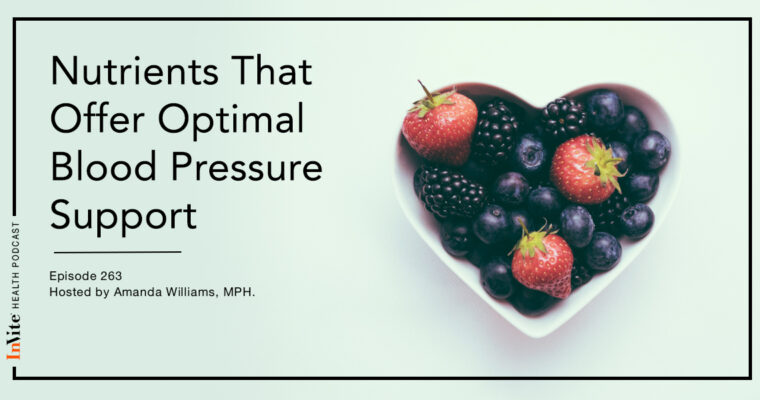
Nutrients That Offer Optimal Blood Pressure Support – InVite Health Podcast, Episode 263

Nutrients That Offer Optimal Blood Pressure Support – InVite Health Podcast, Episode 263

Every single year, a half a million Americans die due to hypertension. We can link a lot of this to diet and lifestyle choices. The good news is that there are some ways that you can support healthy blood pressure in a natural way.

The Unspoken Danger Of Prescription Medication On Important Nutrients – InVite Health Podcast, Episode 262

The Unspoken Danger Of Prescription Medication On Important Nutrients – InVite Health Podcast, Episode 262

Did you know that over 65% of the adults in the United States take a prescription medication? Oftentimes, a prescribed medication is warranted and required, but they also increase the potential for drug-induced nutrient depletion. Oftentimes, doctors overlook this because their focus is never on nutrition, vitamins or minerals.

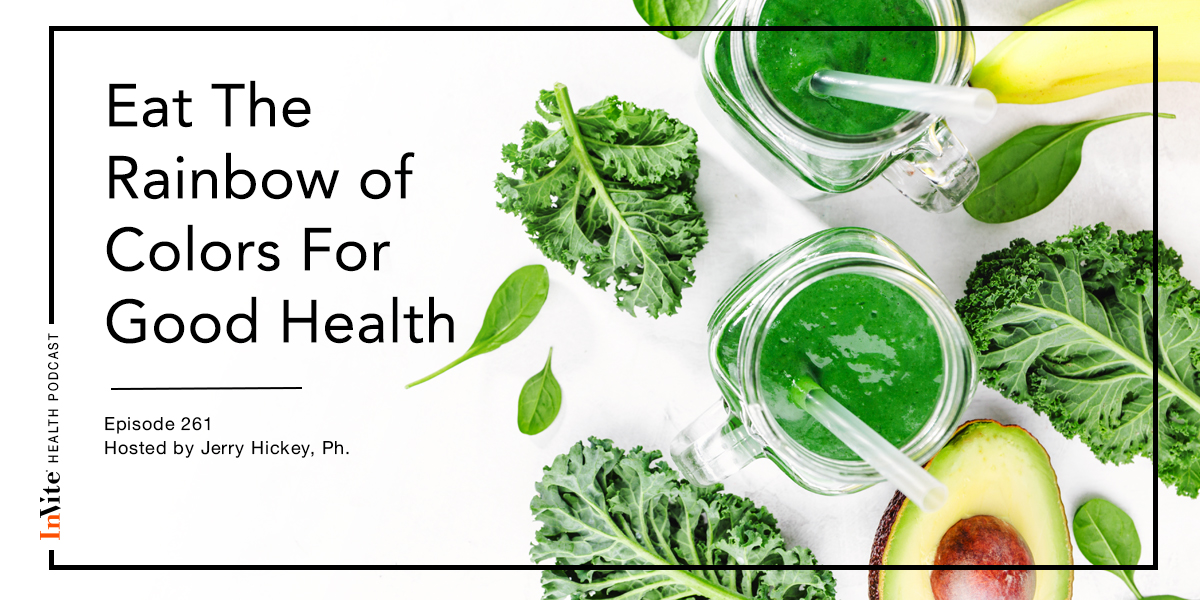
Eat The Rainbow of Colors For Good Health – InVite Health Podcast, Episode 261

Eat The Rainbow of Colors For Good Health – InVite Health Podcast, Episode 261

fruit

Invite Health Podcast, Episode hosted by Jerry Hickey. Ph

Subscribe Today!

Apple PodcastsGoogle PodcastsiHeartRadioSpotify

To maintain our health and for better health, we need to focus on consuming the entire rainbow of colors offered by vegetables and fruits. More colors on our plates from fruits and veggies leads to better health. Additionally, we need to reduce our intake of salt, saturated fat and refined carbohydrates. We need to watch our red meat intake and when we do eat red meat, we need to remove any visible fat. 

Why colorful foods are essential for your health

Foods should not be monotone. That’s really important. You have to introduce a range of plant-based colors. This gives your body protection. It’s the phytonutrients in the colors, which are the pigments in plants that have a lot of activities. Some of these are polyphenols, like resveratrol and silymarin. Others are carotenoids, like lycopene and lutein

These nutrients are linked with a reduced risk of diabetes, some cancers, coronary heart disease, Alzheimer’s disease, poor immune system function and likely also autoimmune diseases. In general, they keep us healthy. They’re also connected to stronger bones, healthier skin and better vision. The list just goes on and on.† 

Superfoods Offer Healthy Alternative To Fruit Juice – InVite Health Podcast, Episode 252. Listen Now >>

Focus more on the veggies with some fruit intake. Vegetables are low in sugar. Of course, some of them do have sugar like sweet potatoes, but they certainly have the benefits from the pigments in there. Fruits, in general, have more sugar, so I tell people you really want to have a plant-based diet focused more on vegetables and salads and then have a couple of servings of fresh fruits, especially citrus fruits, apples, pears and berries. They’re super healthy.      

invite health podcast offer

Some important and nutritious fruits, vegetables and pigments

Let’s look at some fruits vegetables that offer important and powerful pigments: 

  • Carrots: Carrots come in purples, reds and oranges, but they are typically seen as orange in the grocery store. That’s the beta carotene. Beta carotene is very important because it is converted into Vitamin A, which is important for the auditory processing part of the brain. Vitamin A is also needed to create barriers to infection. Beta carotene is needed for your skin, vision, immune system and red blood cell formation as well.†  
  • Green Veggies: Green veggies in general offer ingredients that help you detoxify. If you look at broccoli, cabbage or cauliflower, they have indole carbinols that are broken into diindolylmethane that has antiviral activity against things like herpes viruses. It also has some ability to protect sexual organs in women and men. Green vegetables also contain ingredients that stimulate the production of glutathione, which is the mother of all antioxidants in the body.†
  • Yellow Veggies: Yellow veggies are really important for your vision and memory. You get zeaxanthin in yellow vegetables. Zeaxanthin is responsible for how quickly your brain processes information and it interacts with another carotenoid pigment called lutein to help you maintain your memory and great vision.†
  • Reds: The reds in tomatoes, ripe guava, ripe papaya and strawberries come from lycopene, a very deep red pigment. Hundreds of studies have shown that lycopene is involved with lowering the risk of many cancers. It has also been shown to help prevent the age-related swelling of a man’s prostate and is great for keeping the arteries in the heart clean of plaque. Lycopene is also unbelievably protective for the skin, helping prevent damage from the sun’s ultraviolet radiation. There are also other reds, like the red in beets that comes from betacyanins and betalains. These are very powerful antioxidants that help restore circulation to an aging brain and are protective of the heart and circulatory system. Tart red cherries are full of anthocyanins and are remarkable for circulatory health.†
  • Yellow/Oranges: You can get these pigments in butternut squash and cantaloupe. That’s a combination of lutein and zeaxanthin. These pigments are responsible for healthy vision and for memory functions.†
  • Purples: You get purple pigments from berries. Ellagitannins, punicalagins and anthocyanins are really important for your brain health. They have antiviral activity, help protect you from radiation and are great for your circulation. Those purples like the blueberries, blackberries and raspberries are very important.† 
  • Cocoa: There are flavanols in cocoa that have been shown to help restore circulation to an aging brain. It’s good for your memory, mood and heart.† 
  • Green Tea: Green tea has catechins that have been shown to slow down the aging process. Older people that drink green tea have shown a decreased risk of developing frailty syndrome.†
  • Whites: White foods can be confusing. There’s Mother Nature’s whites, including cauliflower, parsnips and white asparagus, that are loaded with good ingredients, but the man-made white processed foods, like instant oatmeal, white bread and white rice, are stripped of nutrients.†     

How Superfoods Activate Antioxidant Pathways – InVite Health Podcast, Episode 247. Listen Now >>

Tune into the full podcast episode to learn more about these important nutrients and when it’s time to supplement.

Thank you for tuning in to the Invite Health Podcast. You can find all of our episodes for free wherever you listen to podcasts or by visiting www.invitehealth.com/podcast. Make sure you subscribe and leave us a review! Follow us on Facebook, Twitter and Instagram at Invite Health today. We’ll see you next time on another episode of the Invite Health Podcast.

invite health podcast disclaimer

jerry hickey invite health podcast

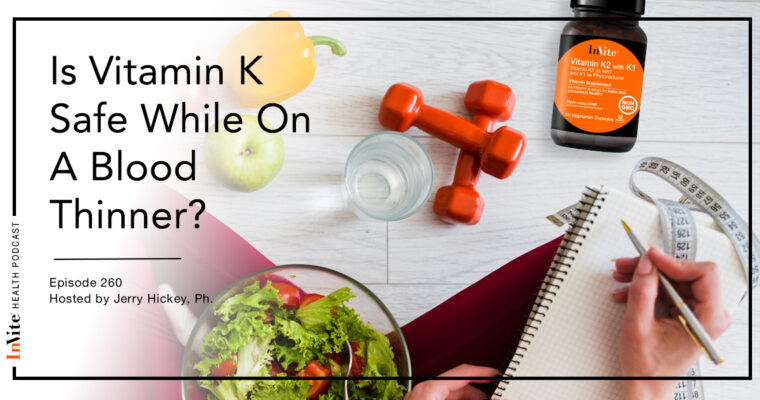
Is Vitamin K Safe While On A Blood Thinner? – InVite Health Podcast, Episode 260

Is Vitamin K Safe While On A Blood Thinner? – InVite Health Podcast, Episode 260

Is it safe to eat Vitamin K-rich foods while you’re on a blood thinner? Can you take your multivitamin if it has Vitamin K in it? The answer is absolutely yes.

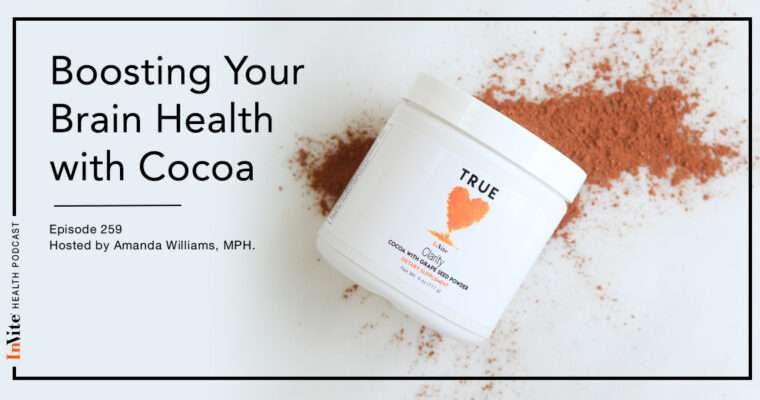
Boosting Your Brain Health with Cocoa – InVite Health Podcast, Episode 259

Boosting Your Brain Health with Cocoa – InVite Health Podcast, Episode 259

We want to make sure that as we get older, we have the full functionality of our brain. The good news is that cocoa can really support brain-boosting ability. 

What To do About Bursitis, A Painful Joint Condition – InVite Health Podcast, Episode 258

What To do About Bursitis, A Painful Joint Condition – InVite Health Podcast, Episode 258

bursitis

Invite Health Podcast, Episode hosted by Jerry Hickey. Ph

Subscribe Today!

Apple PodcastsGoogle PodcastsiHeartRadioSpotify

Bursitis is a painful condition near your joints. It has to do with these small, squishy, fluid-filled sacs called bursa. Bursa cushion the bones, tendons, muscles and skin near your joints. This prevents rubbing between your bones, tendons, muscles and skin. When they’re injured or they’re overused, like if you’re playing tennis and you have that repetitive tough motion, the bursa can collect extra fluid because they got inflamed. Over time, their walls may thicken and it can be quite painful and disruptive for your lifestyle. When the sacs get inflamed around your joints, they may feel stiff and they can hurt to move the joint in a normal way. It’s linked to certain injuries and diseases, however the cause of your case may be unclear.    

What causes Bursitis?

The most common causes of bursitis are repetitive motions or positions that put pressure on the bursa around the joints, like throwing a baseball, lifting something over your head repeatedly, painting your ceiling, leaning on your elbows for a long time and extensive kneeling. Sports that repeat the same motion are a common cause, like tennis. It could also be caused by a bacterial infection. That’s nasty and you really have to see a doctor. Diabetes is connected to an increased risk and so is the blood issue gout, where you build up uric acid crystals in your blood. Arthritis, especially rheumatoid arthritis or psoriatic arthritis, injury from a fall and also walking style may be connected. If you have an uneven gait, like if one leg is shorter than the other, this may contribute to bursitis.

Don’t Accept Joint Pain As A Regular Part of Aging – InVite Health Podcast, Episode 220. Listen Now >>

Symptoms vary, depending on where the bursitis is affecting you. You might feel achy and stiff at the joint. It’ll hurt more when you move it or press on it. It’ll look swollen and red. If it hurts directly around the joint when you move or bend it, it could be a sign of acute bursitis. That’s bursitis that comes on fairly rapidly. Pain levels vary according to the type of bursitis. 

Tune into the full podcast episode to learn more about the various symptoms and types of bursitis.

invite health podcast offer

Treatment of Bursitis

There are lifestyle changes that can protect your bursa. First of all, you have to avoid motions that are going to cause pain, because pain is a warning from the body that something’s wrong. If you’re using your knees, use pads or cushions to protect your knees or your butt if you sit or kneel a lot. Get socks that are highly insulated, like the socks they use for running or tennis, because that gives you extra cushioning. You can put cushions in your shoes. You can get pads to protect your elbows so that fluid doesn’t build up again.† 

You can use ice or heat. Ice can help get rid of the pain. Never ice for more than 22 minutes because then it becomes negative. This is especially for areas closer to the surface of the skin like the kneecap, heel and elbow. For deep bursitis in your shoulder, inner knee or hip, heat might work better. Apply the ice to reduce the swelling for the first 48 hours, especially after symptoms occur and, once again, no more than 22 minutes at a shot. Apply dry or moist heat, such as a heating pad, or you can take a warm bath.†

Maintain a healthy weight. Being overweight really places a lot more pressure and stress on your joints. Every pound puts two pounds of pressure on your knee joint when you’re walking and it’s worse when you’re running. If you’re 50 pounds overweight, with every step, you’re putting an extra 100 pounds of pressure on your knees. The best remedy if you have arthritis in your knees is losing weight, but if you have bursitis in your legs, you also want to lose that extra weight.†

The Power of Glucosamine & Chondroitin For Joint Health Support – InVite Health Podcast, Episode 194. Listen Now >>

Exercise strengthens your muscles and helps protect your affected joint. Warming up and stretching before stretching, as well as physical therapy, are very important. Physical therapy will help strengthen the muscles and tissues around the affected joint and help prevent future damage.†                 

There are herbs that help a great deal with inflammation, the first one being the turmeric plant. Turmeric is poorly absorbed, so you want to get a turmeric with improved absorption, like the Curcumin Blend with Bioperine or the BioCurcumin. Those are better absorbed curcumins. You want to get the full plant. Everyone talks about curcumin, but curcumin is only one of the ingredients from the turmeric plant. Boswellia serrata is an herb known as frankincense that has ingredients in it that are great for inflammation in the body. Perna canaliculus is a green mussel that is very high in fish oil-type fatty acids, but it has some additional fatty acids that you don’t get in a regular fish oil capsule that are terrific for pain and inflammation.†  

Learn more about methods for treating bursitis by listening to the full podcast episode.  

Thank you for tuning in to the Invite Health Podcast. You can find all of our episodes for free wherever you listen to podcasts or by visiting www.invitehealth.com/podcast. Make sure you subscribe and leave us a review! Follow us on Facebook, Twitter and Instagram at Invite Health today. We’ll see you next time on another episode of the Invite Health Podcast.


invite health podcast disclaimer

jerry hickey invite health podcast