Why Vitamin D is Essential For Lung Health – Invite Health Podcast, Episode 59
In today’s episode, Jerry Hickey, Ph. focuses on the importance of Vitamin D for the health of your lungs and your overall respiratory health.
Nutrition. Vitamins. You.
In today’s episode, Jerry Hickey, Ph. focuses on the importance of Vitamin D for the health of your lungs and your overall respiratory health.

According to The Council for Responsible Nutrition UK, the ongoing threat of the Coronavirus could increase the potential for deficiencies in key nutrients, supporting the immune system.
Invite Health Podcast, Episode hosted by Amanda Williams, MPH
Subscribe Today!


On today’s episode, I am going to be discussing how to manage stress while dealing with the everyday changes occurring during COVID-19. This is something that is impacted each and every one of us pretty much throughout the globe. To be able to maintain your sanity through of all this uncertainty, often times it comes down to being able to manage stress. Today we will get into different techniques you can try to utilize, as well as different nutrients that may be very beneficial.
How COVID-19 is impacting our mental health
Every time we put on the news it seems there is more bad news. This virus is impacting us across the globe and it seem to be getting worse every day. For me, this means not seeing my parents on a regular basis. And I know I am not alone in that. Maybe you are at home now and you are not able to work. This could also be a big cause of stress. Maybe you know someone who has tested positive for COVID-19 and you have concerns for them, as well as for yourself and your family.
The good news is that there are things you can be doing on an everyday basis that can really help navigate through all of the changes that we are all going through. To be able to use the right tools throughout our day can ensure that we are not weakening and lowering our immune defenses because of our heightened level of stress.
Stress Relief Techniques
You have to find different outlets for your stress. For some, this includes learning yoga inside. For others, that could mean having virtual dance parties. These are wonderful ways for you to release some of those daily stressors. I certainly encourage everyone to find whatever niche works for you. This could be meditation, reading a book or stretching every few hours.
Why Multivitamins are so Critical in Today’s World. Listen now >>
It is also extremely critical for you to eat the right foods. At I know this can be challenging because I was at my local grocery store recently and it’s hard to find what you need; the shelves are getting wiped out, the produce aisle isn’t as abundant. But you still have the ability to make smart choices. And I encourage you to do so. Our bodies are engines, and just like when you put bad fuel into a car, putting bad food into our body will give you the same results. You will continue to deplete important vitamins, minerals and antioxidants, which will set your body up for lowered immunity.
Nutrition During COVID-19
Foods matter and right now, people are not getting the best selection of food from their grocery stores. A good option it to adhere to a Mediterranean Diet, as this is packed with the most vitamins, minerals wonderful antioxidants that can really help to fend off all of the free radicals that the body can be bombarded by, especially under states of stress.
Invite Health offers really wonderful superfoods that, during this time, might be a good idea to have on hand, especially when it comes to fruits and vegetables.
Reds Hx and Greens Hx are packed with antioxidants, plus a Probiotic blend. When you are getting adequate fruits and vegetables, oftentimes people will feel like they feel better and that is because the body has the capability to handle oxidative stress, as well as physical and emotional stress that is brought on by certain situations. And there is no greater situation than what we are dealing with now with COVID-19.
Seventy-six percent of Americans do not meet the recommended daily amount for fruit consumption, which is just two cups a day. You are supposed to be getting three cups of vegetables a day and, alarmingly 87% of Americans are not meeting that requirement either.
Other beneficial nutrients:
Thank you for tuning in to the Invite Health Podcast. You can find all of our episodes for free wherever you listen to podcasts or by visiting www.invitehealth.com/podcast. Make sure you subscribe and leave us a review! Follow us on Facebook, Twitter and Instagram at Invite Health today. We’ll see you next time on another episode of the Invite Health Podcast.

Your liver has hundreds of important jobs and is extremely resilient in order to deal with things like toxins and bacteria. In today’s episode, Jerry Hickey, Ph. explains its function and important nutrients to maintain a healthy liver.
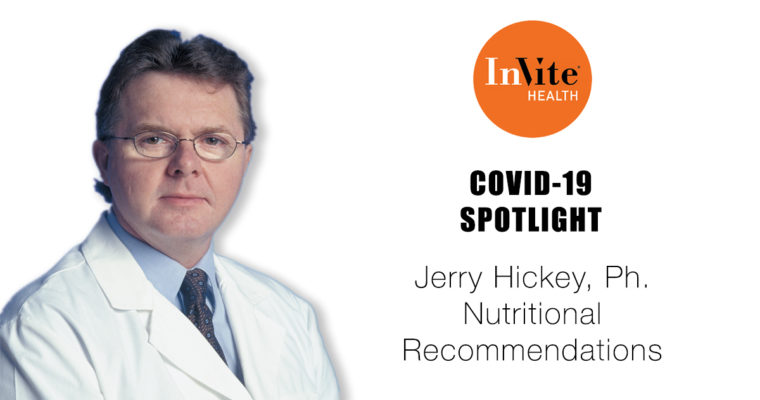
With so much information available on COVID-19 and immune health in general, it may be difficult to fully understand what is going on around us today. Here is some important immune health information and some of my nutritional recommendations to keep yourself safe and healthy.
Invite Health Podcast, Episode hosted by Jerry Hickey. Ph
Subscribe Today!
Anyone can have a bad nights sleep, but when it is persistent and beyond your control it is called insomnia. Sleep is a cure-all, but insomnia is just the opposite; it can damage your health and sometimes shorten your life.
The Impact Insomnia Has On Your Health
Insomnia is the inability to fall asleep or stay asleep for as long as you need. Poor quality sleep, or not having enough, impacts exercise, your work performance, sexual function and more. It can also overtime permanently effect your health.
Not enough sleep can contribute to weight gain, poor ability to exercise, an a heightened risk of diabetes. Lack of sleep effects your brain; it leads to poor mental performance and depression. In fact, people with insomnia are five times more likely to develop depression. Poor sleep also impacts your heart, and puts you at risk for high blood pressure, heart disease, heart attack and stroke.
Being sleepy also causes accidents; the National Highway Traffic Safety Administration estimates that fatigue is a cause in 100,000 auto crashes a year in the United States. Lack of sleep impairs your attention, alertness, concentration, memory, reasoning and your problem solving.
Lack of sleep also ages your skin. Many people have experiences puffy eyes after a few nights of missed sleep. But it turns out that chronic sleep loss can lead to lackluster skin, fine lines (which are the start of wrinkles), and dark circles under the eyes. Excess cortisol in your bloodstream can break down the Collagen in your skin. Collagen makes up 70% of your skin and it is the protein that keeps your skin smooth, elastic and wrinkle free.
When you don’t get enough sleep, your body less human growth hormone. During aging, human growth hormone helps increase your muscle mass, thickens your skin, and strengthens your bone.
What about Drugs for Sleep?
Drugs are dangerous. You have heard about the opioid crisis and have heard about the number of people who overdose or have become addicted to opiates. Issues with sleep medications are right behind that in number. You just aren’t hearing about that because opioid issues are dominating the airwaves.
Lifestyle Changes to Improve Sleep Duration and Quality
Did you know there is a sleep and exercise connection? Insomnia has been shown to improve with regular exercise. So, adding exercise to your daily routine can improve the quality and length of your sleep.
Make sure you are powering down your electronic devices. The soft blue light from a cell phone, a tablet, a digital clock in your bedroom, even that light from your cable box can keep you awake and impact sleep. Turn off your electronic devices about an hour before you go to bed.
You can set your body clock by going to sleep and waking up at the same time every day, even on weekends. This is extremely important now that we are all practicing social isolation and even quarantine – it may be hard to get your body on track to waking up and falling asleep, but try to push yourself to keeping a similar sleep/wake schedule every day. This can help you reset your circadian rhythm, which is your body’s clock.
Look for hidden caffeine and stimulants in food and beverages. Besides coffee, tea and chocolate (the obvious sources of caffeine), some sodas, ice creams, and certain medications for coughs, colds, fevers and weight loss contain stimulants.
Be careful with alcohol. It can at first put you to sleep, but later in the night it has been connected to poor sleep quality and waking up multiple times.
Natural Remedies to Improve Sleep
If you are stressed out or your brain is just overly active, you have to shut down your brain and prepare it for sleep. A way to do that is using L-Theanine. This is an interesting supplement that comes from the tea plant. Before sleep I recommend about 200mg. In the daytime, if you take 100mg of L-Theanine it is excellent for stress, staying focused, it helps you be a little creative. It has been shown to relieve the effects of stress hormones, which can make you jittery and unfocused. At night, if you are releasing stress hormones, the hormones can keep you awake. This can be counteracted by L-Theanine. This is a non-habit forming, very gentle supplement.†
Melatonin can also help. A recent review from MIT showed that when researchers analyzed human clinical trials on Melatonin and sleep, they concluded that Melatonin can improve your quality of sleep. It can also decrease the sleep onset latency (falling asleep faster) and make you sleep deeper and longer. Melatonin has also been shown to reset your body’s clock, or your circadian rhythm.†
Thank you for tuning in to the Invite Health Podcast. You can find all of our episodes for free wherever you listen to podcasts or by visiting www.invitehealth.com/podcast. Make sure you subscribe and leave us a review! Follow us on Facebook, Twitter and Instagram at Invite Health today. We’ll see you next time on another episode of the Invite Health Podcast.
