Winter and Heart Health
Dr. Claire Arcidiacono, ND
Wintertime, as we all know, can have negative effects on our immunity, mood and even our heart health. But how exactly can the cold of winter impact our heart health? What can you do to protect your heart? Let us get into it, shall we?
If you are watching the news after a storm, you may notice that it is common to hear about people having a cardiac event after shoveling snow. This can happen for a number of reasons. Lifting snow is exercise. This type of exercise can put an added strain on your heart. This extra hard work and stress on your heart can trigger a cardiac event. As you can imagine this is especially true in those who do not regularly exercise or who are elderly and /or have any underlying heart conditions. This makes sense if you think about it. Have you ever used a muscle that you do not normally use? It tends to hurt and feel strained, right? Well, the heart is a muscle and if you suddenly start exercising just like any other muscle the heart can be overworked. If you go from no heavy lifting in the summer to heavy weightlifting aka shoveling snow your heart will feel it just like any other muscle.
Another reason winter can have a negative impact on heart health is the cold. When it comes to blood flow and heat the body will prioritize the core organs. For example, your lungs are more important to your body than your skin. I know what you are thinking, what does this mean and how does the body prioritize heat? It means that the body makes sure that your organs that keep your alive stay warm by clamping down on the blood vessels that lead to the skin making them narrower. This affects the heart because the heart must work harder to pump blood through the narrow passages. In fact, studies have found that for every 10 degrees drop in temperature there is a 5-10% increase in the risk of heart attacks. (1) Chilly weather can also affect blood pressure. As we all know, high blood pressure is a risk factor for both heart attacks and strokes.
Something else that may be unexpected but that comes up often in the winter is the issue of dry heat. For some people, this dry heat can lead to nosebleeds. For others it can lead to dehydration. This dehydration can increase the blood, increasing the risk of blood clot formation.
And while some people exercise more in the winter due to activities like snow shoveling others find themselves staying inside their homes and as a result exercise less. In some cases, this decrease in activity can lead to an increase in heart disease risk factors.
The risk of other heart related conditions can increase in winter. For example, you are at an increased risk of angina, irregular heartbeat, and even chronic heart disease in the winter. This can be due to the combination of wintry weather, temperature changes, reduced physical activity and seasonal stress all putting a strain on your heart. (2)
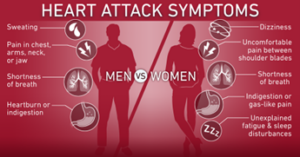
It’s important to seek medical help if you suspect you are having a heart attack. Please see the attached diagram for the symptoms of a heart attack. While the most common signs of a heart attack include chest pain, weakness/lightheadedness, and a squeezing sensation in the chest there are other signs that you may not expect. (1) Men and women can have slightly different symptoms, so I have included the signs of a heart attack usually experienced by men and by women. (3)
Now what can you do to improve heart health?
- Exercise regularly! We all know exercise is good for us but sometimes we forget how regular exercise can help keep our heart healthy.
- Make sure you dress warm enough. Personally, I like to dress in layers. This way you are warm enough outside, but when you get where you are going you can remove some layers and not overheat (this is important for us ladies of a certain age range if you get my drift!). (1)
- Follow a healthy diet complete with fruit, vegetables, and lean protein. Do not forget those healthy fats too! Invite Health has an extensive line of powders that can help with filling in the gaps in your diet. For example, Invite Health Organic Greens Plus Hx is a tasty powder full of berries, fruits and vegetables. You do not have to mix it in a shake or water. You can mix it with apple sauce or yogurt. Other helpful powders include Reds, Purples, Oranges and even Greens Hx. Do not forget the protein which is available in Whey Protein and Plant protein. You can mix them in a smoothie, yogurt, oatmeal (cook it first then mix in the powder) and even in pancake mix!
- Manage your stress! Stress has a significant impact on our heart. (2) L Theanine has been found to help reduce stress levels. Magnesium is also helpful for stress as well! (4, 5) Please see Invite’s L Theanine and our extensive line of magnesium products!
- Coq10 is a powerhouse for our heart health! (6) Please see Invite’s Coq10 Ubiquinol in 60mg and 120mg! For a chewable option see Oral Q10.
- Resveratrol is amazing for heart health. Resveratrol, studied and found to have numerous benefits when it comes to heart health. For example, it has been found to help with the symptoms of heart failure and to help with coronary artery disease. (7) Please see Invite’s Resveratrol Hx and Resveratrol Max.
- The next items I want to mention are Ribose Complex and Beets Hx. Since I already did a product highlight on these items I will simply direct you to my blogs on them.
- For more information on healthy heart supplements feel free to contact any Invite nutritionist!
Sources:
- https://www.ynhhs.org/articles/cold-weather-heart-health
- https://www.merillife.com/blogs/heart-risk-during-winter
- https://www.templehealth.org/about/blog/heart-attack-symptoms-men-women-differences
- https://pmc.ncbi.nlm.nih.gov/articles/PMC6836118/
- https://pmc.ncbi.nlm.nih.gov/articles/PMC7761127/
- https://pmc.ncbi.nlm.nih.gov/articles/PMC4620231/#:~:text=A%20number%20of%20controlled%20pilot,evaluation%20in%20additional%20large%20studies.
- https://www.ncbi.nlm.nih.gov/pmc/articles/PMC6413130/