Recent Posts

Constipation: easy treatments that are safe, Invite Health Podcast, Episode 659

Constipation: easy treatments that are safe, Invite Health Podcast, Episode 659

Subscribe Today! Please see below for a complete transcript of this episode. CONSTIPATION: EASY TREATMENTS THAT ARE SAFE, INVITEⓇ HEALTH PODCAST, EPISODE 659 Hosted by Jerry Hickey, Ph. *Intro Music* InViteⓇ Health Podcast Intro: [00:00:04] Welcome to the InViteⓇ Health Podcast, where our degreed health 

Collagen & The Brain, Invite Health Podcast, Episode 658

Collagen & The Brain, Invite Health Podcast, Episode 658

Subscribe Today! Please see below for a complete transcript of this episode. COLLAGEN & THE BRAIN, INVITEⓇ HEALTH PODCAST, EPISODE 658 Hosted by Jerry Hickey, Ph. *Intro Music* InViteⓇ Health Podcast Intro: [00:00:04] Welcome to the InViteⓇ Health Podcast, where our degreed health care professionals 

ALZHEIMER’S DISEASE, Part 2, Invite Health Blog

ALZHEIMER’S DISEASE, Part 2, Invite Health Blog

Written by: Dr. Claire Arcidiacono, ND

For further questions or concerns email me at carcidiacono@invitehealth.com†


In our last blog we started talking about Alzheimer disease. We began our discussion with talking about what it is, how it affects the brain and also what are the signs and symptoms you should look out for? Today we will cover the risk factors for developing the disease as well as how it is diagnosed. In our very last blog, we will review methods to help with symptoms management/reduce the risk factors. †

One of the most important risk factors for developing Alzheimer’s disease (AD) is age. After age 65 the risk of developing AD increases each year. Unfortunately, it doubles every 5 years after you reach 65. This means that by the time you reach age 85 the risk of developing AD is as high as 1 in 3! (1) Another risk factor is having a family history of the disease. The more family members that have the disease the greater the risk of developing it. Without getting too complicated, there are basically 2 “types” of genes. Those that determine if you get a disease without outside influence and those that increase the risks of a disease but are influenced by environmental factors. AD has been found to be associated with genes in both categories. (2) Race has also been found to increase the risk of developing AD. While it is not exactly understood why studies show that older Latinos are 1 1/2X more likely to develop AD than whites. African Americans are about twice as likely to develop the disease. (1) Now while these risk factors may be unchangeable it is still important to recognize them. †

ICYMI: ALZHEIMER’S DISEASE, PART 1, INVITE HEALTH BLOG>>READ NOW!

RISK FACTORS 

While some risk factors such as age are unchangeable, others can be influenced. For example, receiving head injuries when younger does increase the risk of developing AD as you age.  (3) Newer studies have linked heart health to AD. The risk of AD increases in those with any disease that affects the blood vessels. These include but are not limited to heart disease, diabetes, stroke, high blood pressure and high cholesterol. † (4)

AD is also believed to occur when certain proteins such as Tau proteins build up in the brain. AD is also believed to occur when abnormal amyloid beta peptides begin to accumulate and build up into amyloid plaques. This plaque leads to changes in the normal function of the brain. While it is not completely understood why this build up occurs it is believed that it may be related to age as well as brain cholesterol. (5) The presence of these plaques is a big risk factor, and it is being considered as one of the causes of AD.†

Another risk factor is the presence of oxidative stress which leads to chronic inflammation. Spirochete infections have been linked to this inflammation. (6) Sleep changes have also been linked to the inflammation in AD. While previously sleeping changes were seen as a symptom of AD in more recent time studies have suggested they are actually a risk factor for the disease. † (7)

Another possible risk factor is the balance/ homeostasis of the minerals copper, zinc and iron in the body. (8) Smoking is a huge risk factor for developing AD. (9) Along a similar pathway exposure to air pollution is also a huge risk factor. (8)  A 2018 study found an association between celiac disease and AD. (10) Obesity as well as any disease that promotes chronic inflammation may also increase the risk of AD. † (11)

At this time AD can only be diagnosed completely with an autopsy. Clinical diagnoses are therefore classified as “possible” or probable. This diagnosis is based on medical history, history from relatives as well as behavioral observations. Additionally, there are neurological and neuropsychological changes that are not explained by other conditions. (12) If you recall the blog on brain tests, you will recall that the tests can include CT scans, SPECT and PET scan which can all be used to help rule out forms of dementia including AD. Lastly as you might recall the neuropsychological tests used include the mini mental state examination. The Montreal cognitive assessment and the mini cog exam. While testing for AD may include other rule out tests, I will refer you to my blogs on brain tests. As I’ve said before it is important to always follow up with your doctor if you feel something isn’t right with your body. †

In our next blog we will be reviewing supplements that can help with known risk factors as well as review some supplements that studies show can be help with AD and dementia. These will include some you may not expect such as Turmeric! †

ALZHEIMER’S DISEASE, IMPORTANT NEW STRATEGY. INVITE HEALTH PODCAST, EPISODE 595>>LISTEN NOW!


REFERENCES

  1. https://www.alz.org/alzheimers-dementia/what-is-alzheimers/causes-and-risk-factors
  2. https://www.alz.org/alzheimers-dementia/what-is-alzheimers/causes-and-risk-factors/genetics
  3. https://www.alz.org/alzheimers-dementia/what-is-dementia/related_conditions/traumatic-brain-injury
  4. https://www.alz.org/alzheimers-dementia/what-is-dementia/types-of-dementia/vascular-dementia
  5. Wang H, Kulas JA, Wang C, Holtzman DM, Ferris HA, Hansen SB (August 2021). “Regulation of beta-amyloid production in neurons by astrocyte-derived cholesterol”. Proceedings of the National Academy of Sciences of the United States of America. 118 (33): e2102191118. Bibcode:.11802191W. doi:10.1073/pnas.2102191118. PMC 8379952. PMID 34385305.
  6. Sinyor B, Mineo J, Ochner C (June 2020). “Alzheimer’s Disease, Inflammation, and the Role of Antioxidants”. Journal of Alzheimer’s Disease Reports4(1): 175–183. doi:3233/ADR-200171. PMC 7369138. PMID 32715278.
  7. Irwin MR, Vitiello MV (March 2019). “Implications of sleep disturbance and inflammation for Alzheimer’s disease dementia”. The Lancet. Neurology. 18 (3): 296–306. doi:1016/S1474-4422(18)30450-2. PMID 30661858. S2CID 58546748.
  8. Breijyeh Z, Karaman R (December 2020). “Comprehensive Review on Alzheimer’s Disease: Causes and Treatment”. Molecules (Review). 25 (24): 5789. doi:3390/molecules25245789. PMC 7764106. PMID 33302541.
  9. Knopman DS, Amieva H, Petersen RC, et al. (May 2021). “Alzheimer disease”. Nat Rev Dis Primers. 7 (1): 33. doi:1038/s41572-021-00269-y. PMC 8574196. PMID 33986301.
  10. Makhlouf S, Messelmani M, Zaouali J, Mrissa R (March 2018). “Cognitive impairment in celiac disease and non-celiac gluten sensitivity: review of literature on the main cognitive impairments, the imaging and the effect of gluten free diet”. Acta Neurologica Belgica (Review). 118 (1): 21–27. doi:1007/s13760-017-0870-z. PMID 29247390. S2CID 3943047.
  11. Heneka MT, Carson MJ, El Khoury J, Landreth GE, Brosseron F, Feinstein DL, et al. (April 2015). “Neuroinflammation in Alzheimer’s disease”. The Lancet. Neurology. 14 (4): 388–405. doi:1016/S1474-4422(15)70016-5. PMC 5909703. PMID 25792098.
  12. Gauthreaux K, Bonnett TA, Besser LM, et al. (May 2020). “Concordance of Clinical Alzheimer Diagnosis and Neuropathological Features at Autopsy”. J Neuropathology Exp Neurol. 79 (5): 465–473. doi:1093/jnen/nlaa014. PMC 7160616. PMID 32186726.

Collagen Known for Joint & Skin Health, Is Also Good for Muscle, Invite Health Podcast, Episode 657

Collagen Known for Joint & Skin Health, Is Also Good for Muscle, Invite Health Podcast, Episode 657

Subscribe Today! Please see below for a complete transcript of this episode. COLLAGEN KNOWN FOR JOINT & SKIN HEALTH, IS ALSO GOOD FOR MUSCLE, INVITE HEALTH PODCAST, EPISODE 657 Hosted by Jerry Hickey, PH *Intro Music* InViteⓇ Health Podcast Intro: [00:00:04] Welcome to the InViteⓇ 

Don’t Be Fooled by Ozempic, Turn to Nature for Weight Loss Support, Invite Health Podcast, Episode 656

Don’t Be Fooled by Ozempic, Turn to Nature for Weight Loss Support, Invite Health Podcast, Episode 656

Subscribe Today! Please see below for a complete transcript of this episode. DON’T BE FOOLED BY OZEMPIC, TURN TO NATURE FOR WEIGHT LOSS SUPPORT, INVITE HEALTH PODCAST, EPISODE 656 Hosted by Amanda Williams, MD, MPH. *Intro Music* InViteⓇ Health Podcast Intro: [00:00:04] Welcome to the 

Alzheimer’s Disease, Part 1, Invite Health Blog

Alzheimer’s Disease, Part 1, Invite Health Blog

Written by: Dr. Claire Arcidiacono, ND

For further questions or concerns email me at carcidiacono@invitehealth.com†


In our last blog we discussed dementia. Today we will be talking about Alzheimer’s disease.   As I stated last time Alzheimer’s disease (AD) is one of the many causes of dementia. In this blog we will review what is Alzheimer’s disease? Exactly how does it affect the brain? Be prepared to refer to my blog on anatomy if you need to. Since this is such an important topic, I WILL be breaking it down into two parts with the next blog concentrating on known risk factor for developing Alzheimer’s as well as how is it diagnosed and what you can do to mitigate the risks. Lastly in our next blog we will review what you can do to help with symptom management. †

Alzheimer’s disease is a neurodegenerative disease. (1)  What this literally means is that there is both structural and functional damage to the neurons. This neuron damage eventually leads to the neuron or cell death. This leads to structural changes we can actually see in the brain. (2)  Please see the attached picture! (3)
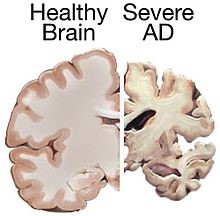
 

Now if you want to bring up the anatomy blog now would be a great time! If you remember it that is fantastic! Well as I said then, the information presented there would be relevant now. Alzheimer’s as I’ve stated leads to the loss of neurons. This occurs in the cerebral cortex. It also occurs in the temporal lobe, the parietal lobe and the frontal cortex. AD affects each of these parts of the brain and thus has symptoms that occur due to the dysfunction of these parts of the brain. (4) I know you might be thinking what about the amyloid plaque? Isn’t that something I’ve heard of that is related to how AD affects the brain? This is an important topic however since its presence is more of a risk factor for developing the disease, I’ll talk about it more when I get into those details. †

BRAIN HEALTH & MEMORY, PART 2: BRAIN ANATOMY>>READ NOW!

Everyone knows that AD affects memory. The signs and symptoms of the disease typically worsen as the disease progresses; hence it is broken into 3 stages. These are the early/mild, moderate and late/severe stages. The disease starts by affecting the short-term memory. In practicality this means that there is trouble remembering things you just learned or even just trouble in recalling new information. As the disease progresses long term memory begins to become affected as well. Early signs of the disease can also include problems with activities of daily living. These can include problems with attention, planning, flexibility and abstract thinking. Having difficulty with semantic memory can also start to occur.  In these first or early stage, there is the beginning of apathy and depression. (5) While in most people with AD the early-stage memory changes and difficulty learning is what leads you to going to the doctor for help and eventually a “diagnosis” in a small percentage where there are other more prominent symptoms. These include language difficulties and problems with executive functions, perception and execution of movement. (6)  The way that AD affect language includes a decrease in vocabulary as well as a decrease in word fluency. While certain movement coordination and planning difficulties may be present, they are usually not severe at this stage. (5) As I’ve previously mentioned in the early-stage, short-term memory is affected first with older memories and implicit memory (this is the body’s memory of how to do things such as use a fork) are not affected until the disease progresses. † (7)

As the disease progresses to moderate, the symptoms become more severe. For example, speech becomes more difficult due to the problems with vocabulary. Reading as well as writing skills also deteriorate as the disease progresses. Due to the decrease in coordination, the risk of falling also increases over time. It is during this stage that long term memory begins to become impaired. It is at this time that the individuals may fail to recognize close relatives. Behavioral and psychiatric changes also start to occur at this stage. These include wandering, irritability, emotional lability and aggression. (8)  AD is associated with a phenomenon known as sun-downing, which is basically where symptoms become worse as the natural sunlight begins to decline. (9). Approximately 30% of people with AD experience delusional symptoms. Lastly in this stage, incontinence can start to develop. † (9)

The last stage is also known as the final stage. In this stage an individual can no longer perform activities of daily living and thus must rely on a care giver. Language is reduced to very simple phrases or even simple words. In time verbal language is entirely lost. Although aggression may still occur more commonly, apathy is seen at this stage. At this point muscles have deteriorated to the point where an individual is bed ridden and unable to feed themselves. Usually, death occurs due to an outside source such as bed sores. † (10)

In summary, in those that are over 65 or have a family history of Alzheimer’s disease it is important to watch out for any changes in memory, behavior, mood and even their ability to communicate. If you notice any changes or “just don’t feel right” it is important to get help. †

DEMENTIA, INVITE HEALTH BLOG>>READ NOW!

In our next blog we review risk factors/ tests as well as any natural treatments that have been studied and found to help with mitigating these risks and the symptoms of Alzheimer’s. †

REFERENCES

  1. “Dementia Fact sheet”. World Health Organization. September 2020.
  2. Pereira, TMC; Côco, LZ; Ton, AMM; Meyrelles, SS; Campos-Toimil, M; Campagnaro, BP; Vasquez, EC (20 November 2021). “The Emerging Scenario of the Gut-Brain Axis: The Therapeutic Actions of the New Actor Kefir against Neurodegenerative Diseases”. Antioxidants. 10 (11): 1845. doi:3390/antiox10111845. PMC 8614795. PMID 34829716.
  3. https://en.wikipedia.org/wiki/Neurodegenerative_disease#/media/File:Alzheimers_brain.jpg
  4. Wenk GL (2003). “Neuropathologic changes in Alzheimer’s disease”. The Journal of Clinical Psychiatry. 64 Suppl 9: 7–10. PMID 12934968.
  5. Bäckman L, Jones S, Berger AK, Laukka EJ, Small BJ (September 2004). “Multiple cognitive deficits during the transition to Alzheimer’s disease”. Journal of Internal Medicine. 256 (3): 195–204. doi:1111/j.1365-2796.2004.01386.x. PMID 15324363. S2CID 37005854.
  6. Förstl H, Kurz A (1999). “Clinical features of Alzheimer’s disease”. European Archives of Psychiatry and Clinical Neuroscience. 249 (6): 288–290. doi:1007/s004060050101. PMID 10653284. S2CID 26142779.
  7. Carlesimo GA, Oscar-Berman M (June 1992). “Memory deficits in Alzheimer’s patients: a comprehensive review”. Neuropsychology Review. 3 (2): 119–169. doi:1007/BF01108841. PMID 1300219. S2CID 19548915.
  8. Carlesimo GA, Oscar-Berman M (June 1992). “Memory deficits in Alzheimer’s patients: a comprehensive review”. Neuropsychology Review3(2): 119–169. doi:1007/BF01108841. PMID 1300219. S2CID 19548915.
  9. Volicer L, Harper DG, Manning BC, Goldstein R, Satlin A (May 2001). “Sundowning and circadian rhythms in Alzheimer’s disease”. The American Journal of Psychiatry. 158 (5): 704–711. doi:1176/appi.ajp.158.5.704. PMID 11329390. S2CID 10492607.
  10. Frank EM (September 1994). “Effect of Alzheimer’s disease on communication function”. Journal of the South Carolina Medical Association. 90 (9): 417–423. PMID 7967534.