Recent Posts

Poor Circulation to the Legs? These Nutrients Can Help – InVite Health Podcast, Episode 475

Poor Circulation to the Legs? These Nutrients Can Help – InVite Health Podcast, Episode 475

If you’re experiencing pain or cramps in your legs, there’s a chance you are having issues with circulation to your legs. The good news is that there are nutrients that can help.

Steroid Drugs Deplete These Nutrients, Part 2 – InVite Health Podcast, Episode 472

Steroid Drugs Deplete These Nutrients, Part 2 – InVite Health Podcast, Episode 472

Did you know that steroid drugs can lower your levels of important nutrients such as Vitamin C, Vitamin D and folate? This can cause havoc in your body by impacting your immune system, energy levels, respiratory health and more.

Steroid Drugs Deplete These Nutrients, Part 1 – InVite Health Podcast, Episode 471

Steroid Drugs Deplete These Nutrients, Part 1 – InVite Health Podcast, Episode 471

steroid drugs

InViteⓇ Health Podcast, Episode hosted by Jerry Hickey, Ph.

Subscribe Today!

Apple PodcastsGoogle PodcastsiHeartRadioSpotify

Today, I’d like to talk to you about corticosteroid drugs, which are commonly called steroids. We’re not talking about sex steroids here, we’re talking about the ones used for inflammation. They’re very powerful anti-inflammatory drugs. Some examples of steroid drugs that you could be prescribed are hydrocortisone, prednisone and methylprednisolone. They’re typically used to treat inflammatory-related diseases such as rheumatological diseases, asthma, severe allergic reactions, severe muscle pain and more. A major issue with these drugs when they’re used for an extended time period is that they have a bundle of side effects. Today, I’m going to talk about the more common ones. Many important nutrients are depleted by these steroid drugs, but this is not really talked about by doctors and pharmaceutical companies. This can have serious health consequences.†

How do corticosteroids work?

Corticosteroids are made in labs. They closely resemble our own hormone, cortisol. That’s a hormone that’s made by the adrenal glands. In the body, we release our own steroid hormones for a variety of activities. We release cortisol and epinephrine to wake up in the morning. They squeeze your blood vessels and make your heart race a little bit and beat faster, which allows blood to reach your brain and muscles and increase your blood sugar. This is good, but you can imagine long-term, if you’re releasing these hormones inappropriately, how bad it would be for your system.†

CHEMICALS THAT HARM YOUR HORMONES & HEALTH – INVITE HEALTH PODCAST, EPISODE 140. Listen Now>>

The same thing can happen with steroid drugs. They work by decreasing inflammation and reducing the activity of your immune system. It’s calming down the white blood cells. The problem is that sometimes the body’s own immune system is attacking and damaging its own tissues. You get this in arthritis with joint damage and severe pain, with asthma in your lungs and more. Over time, severe inflammation can destroy tissues. The steroids reduce the chemicals that cause this inflammation. This helps keep the tissue damage to a minimum.†

The negative impacts that accompany steroid drugs

If it’s a low dose of a steroid, generally there aren’t problems. For instance, if you’re using prednisone at 5mg, it doesn’t usually cause a problem. But if you’re using higher doses, the longer you use it, the more likely it is that you will have problems.†

Here are some common side effects of steroid drugs:†

These drugs can also impact nutrient levels in the body. They can cause your sodium to build up and lose potassium in your urine. These two changes can cause swelling and can also impact the heart and blood pressure levels.†

POTASSIUM FOR HEALTHY BLOOD PRESSURE – INVITE HEALTH PODCAST, EPISODE 33. Listen Now>>

In this episode, Jerry Hickey, Ph. begins a conversation about corticosteroids. He explains how steroid drugs work in the body and also details many of the side effects that commonly come with them. Stay tuned for Part 2 of this episode, coming soon!†

Key Topics:

  • What are rheumatological diseases?
  • Examples of steroid drugs
  • Why are steroids prescribed?
  • Dealing with fungal infections
  • Common side effects of steroid drugs

Thank you for tuning in to the InViteⓇ Health Podcast. You can find all of our episodes for free wherever you listen to podcasts or by visiting www.invitehealth.com/podcast. Make sure you subscribe and leave us a review! Follow us on Facebook, Twitter and Instagram at InViteⓇ Health today. We’ll see you next time on another episode of the InViteⓇ Health Podcast.


 

How to Help Trigger Finger – InVite Health Podcast, Episode 470

How to Help Trigger Finger – InVite Health Podcast, Episode 470

Have you heard of trigger finger? This is a type of tendonitis that impacts your fingers and can cause them to lock up. Many times, patients use NSAID drugs to help with this discomfort, but the good news is that there are powerful nutrients that can act as safe, effective alternatives.

Arthritis Drugs Toxicity and Proven Alternatives – InVite Health Podcast, Episode 469

Arthritis Drugs Toxicity and Proven Alternatives – InVite Health Podcast, Episode 469

Are you taking NSAID drugs like ibuprofen to help with your arthritis pain? These drugs can be toxic to your body and negatively impact your health. Turn to nutrients that have been clinically studied for their ability to promote joint health and comfort.

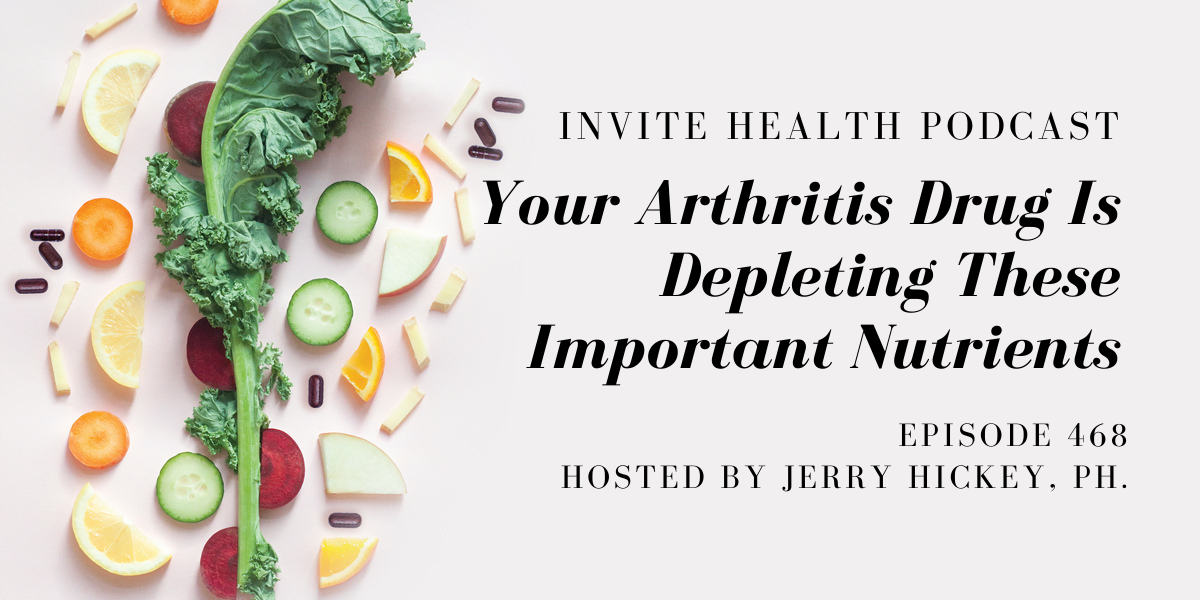
Your Arthritis Drug Is Depleting These Important Nutrients – InVite Health Podcast, Episode 468

Your Arthritis Drug Is Depleting These Important Nutrients – InVite Health Podcast, Episode 468

arthritis

InViteⓇ Health Podcast, Episode hosted by Jerry Hickey, Ph.

Subscribe Today!

Apple PodcastsGoogle PodcastsiHeartRadioSpotify

NSAIDs are extremely popular drugs. They’re used every day by millions and millions of Americans. They have a wide range of indications and that’s why they’re so popular.†

NSAIDs do work and they’re typically used for arthritic joint pain, back pain, muscle pain, tendonitis, headaches, autoimmune disease management, fevers and more. They do have many side effects and toxicities, but these are frequently downplayed. However, arthritis drugs also deplete these nutrients and this has consequences. This will have consequences unless you replete these nutrients.†

CHOLESTEROL-LOWERING STATIN DRUGS AND NUTRITIONAL SUPPLEMENTS – INVITE HEALTH PODCAST, EPISODE 441. Listen Now>>

Common NSAIDs

Here’s a short list of some NSAID drugs:

  • Indomethacin (Indocin)
  • Sulindac
  • Ibuprofen (Motrin, Advil, Nuprin)
  • Naproxen and Naproxen Sodium (Aleve, Naprosyn, Anaprox)
  • Diclofenac (Voltaren)
  • Celecoxib (Celebrex)
  • Aspirin
  • Diflunisal (Dolobid)

How arthritis drugs impact other nutrients

Here are the nutrients that these NSAID arthritis drugs can deplete. We’ll start with folate, which stands for all the different forms of this very important B-vitamin. We use methyltetrahydrofolate, the active form of folate, in our multivitamins. There is also folate found in vegetables like broccoli and spinach, but it can be hard to get out of plants. You need folate to create DNA and for amino acid metabolism, such as SAMe, homocysteine and methionine. That’s really important because you need this to create healthy tissue.†

A second nutrient, which is a hormone, that arthritis drugs like Advil and Aleve deplete the body of is melatonin. Melatonin is known as a sleep hormone. It sets the body up for sleep by lowering your body temperature and lowering your nighttime blood pressure. This is important. In the morning, to wake up, the adrenal glands release adrenaline and the stress hormone cortisol. These make your blood pressure go up so more blood can reach your brain and muscles and they increase your blood sugar. The problem is, if your blood pressure didn’t drop at night and it’s elevated in the morning, that additional increase in blood pressure can lead to a heart attack or stroke. You also need melatonin for the digestive tract and the immune system.†

STUDIES SAY MELATONIN MAY LOWER THE RISK OF SOME CANCERS – INVITE HEALTH PODCAST, EPISODE 302. Listen Now>>

Besides the folate and the melatonin, these arthritis drugs including Advil, Aleve and aspirin can also deplete you of zinc. That’s a problem. Your pancreas, which releases enzymes to digest your food, relies on zinc. If you even lack zinc a little bit, you’re not digesting your food well because you’re not going to release those enzymes. The pancreas also needs zinc to help control your blood sugar.†

The other nutrient that these drugs deplete is iron. With iron, you create myoglobin, which is the red stuff in your muscles. It allows the muscles to use oxygen, but it also breaks down nitric oxide in the muscle, which stimulates energy production in the human body. You also need iron for the health of your brain, organs, tissues and immune system.†

If you’re on NSAIDs to help with arthritis or any other issues, you have to pay attention to folate, melatonin, zinc and iron.†

In this episode, Jerry Hickey, Ph. explains how many medications commonly used for arthritis can impact the body’s levels of important nutrients. He discusses four key nutrients that are depleted by NSAIDs and indicates why those nutrients are needed by the body.†

Key Topics:

  • What are NSAID drugs?
  • Folate’s role in the body
  • The importance of proper methylation
  • How the body regulates blood sugar

Thank you for tuning in to the InViteⓇ Health Podcast. You can find all of our episodes for free wherever you listen to podcasts or by visiting www.invitehealth.com/podcast. Make sure you subscribe and leave us a review! Follow us on Facebook, Twitter and Instagram at InViteⓇ Health today. We’ll see you next time on another episode of the InViteⓇ Health Podcast.