Author: Danielle Menke

World Health Day 2016: Diabetes

World Health Day 2016: Diabetes

InVite® Health is celebrating World Health Day – a day where the World Health Organization (WHO) calls for education and action on diabetes. In a new release announced on April 6, 2016, WHO reports that the number of people living with diabetes has almost quadrupled …

Happy National Walking Day!

Happy National Walking Day!

In honor of National Walking Day, InVite® Health is urging you to start walking! Whether you head to the park for a stroll or dust off that treadmill for a slow walk, any physical activity is better than no physical activity. To get you moving, …

How Incorporating Cultural Lifestyle Changes Can Benefit Your Health

How Incorporating Cultural Lifestyle Changes Can Benefit Your Health

According to the CDC, 39.4% or 78.6 million U.S. adults are obese. This may be due to numerous reasons including sedentary lifestyles and accessibility to fast food. Obtaining calories is effortless; many beverages and foods average the amount of calories the body should consume in a full day in just one serving. Not to mention that the high-calorie, low-nutrition fast food is much cheaper than organic, healthy options. Many Americans seem to follow unhealthy habits – the first meal of the day is a bagel and a large cup of extremely sugar-filled coffee, lunch is a quick drive-thru run to the burger place right down the street, and dinner is many times just a quick defrost away. So what are other parts of the world doing to stay ahead of the curve and how can incorporating cultural lifestyle elements into your diet contribute to your overall health?

Cultural Lifestyle of Japan

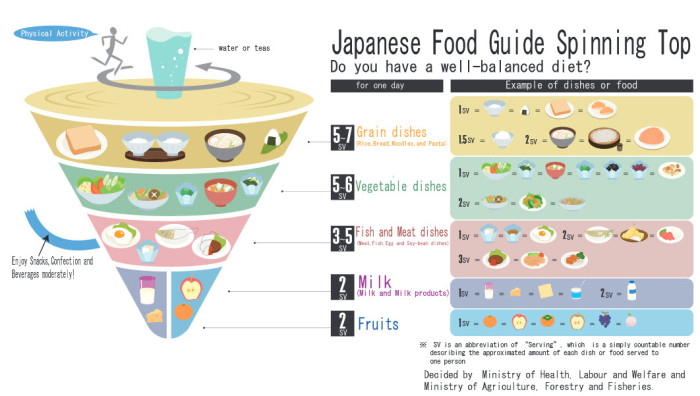
Take Japan for example – a team of researchers led by Kayo Kurotani at the National Centre for Global Health and Medicine in Tokyo, set out to examine the association between lower health risks and Japanese dietary guidelines. According to the study, in 2005 the Japanese government developed a food guide, commonly called “the spinning top”, which, they believe, illustrates the balance and quality of food in the daily Japanese diet.
Cultural Lifestyles

Data from detailed food and lifestyle questionnaires comprised of 75,944 participants between the ages of 45 and75 were used. Researchers found that both men and women with higher scores on the food guide (better adherence) had a 15% lower total mortality rate over 15 years. “Our finding suggest that balanced consumption of energy, grains, vegetables, fruits, meat, fish, eggs, soy products, dairy products, confectionaries, and alcoholic beverages can contribute to longevity by decreasing the risk of death, predominantly from cardiovascular disease, in the Japanese population”, researchers reported.

Cultural Lifestyle of European Countries

In a study published in the journal Public Health in 2003, researchers concluded that “European countries with the highest levels of walking and cycling have much lower rates of obesity, diabetes, and hypertension than the United States. The Netherlands, Denmark, and Sweden, for example, have obesity rates only a third of the American rate, while Germany’s rate is only half as high. Moreover, the average healthy life expectancies in those 4 European countries are 2.5 to 4.4 years longer than in the United States.” This could be for a variety of reasons, including their diet and non-sedentary cultural lifestyle. In the Netherlands, for example, cycling is the main method of transportation.

Cultural Lifestyle in The Mediterranean

According to an article entitled, “The Mediterranean Diet: A History of Health” published in the Iranian Journal of Public Health, a cultural lifestyle diet followed by those in the Mediterranean originates from ancient civilizations stretching throughout the valley of the Nile River – the Mediterranean diet. Authors of the study report, “From this study emerged clearly, as the populations that had adopted a diet based on the Mediterranean Diet presented a very low rate of cholesterol in the blood and, consequently, a minimum percentage of coronary heart disease. This was mainly due to the plentiful use of olive oil, bread, pasta, vegetables, herbs, garlic, red onions, and other foods of vegetable origin compared to a rather moderate use of meat.” In a 2011 study performed by the American College of Cardiology, the Mediterranean diet proved beneficial for metabolic syndrome, and individual components including waist circumference, HDL-cholesterol levels, triglycerides levels, blood pressure levels and glucose metabolism.

From diets, to exercise to lifestyle changes, throughout the world every culture has proved to provide numerous methods of staying ahead of the health curve.

What do you do to stay ahead of yours? Leave us a comment to join the conversation!

FollowUs

InVite® Health Current Sale

How Does Light From Electronic Devices Hinder Our Health?

How Does Light From Electronic Devices Hinder Our Health?

Electronic devices like your cell phone, television, iPads, and many other devices do more than just provide endless hours of entertainment and communication. Numerous studies have shown that exposure to the artificial light provided by your favorite electronic devices throw off your biological clock, your …

Hormones 101: What You Need To Know

Hormones 101: What You Need To Know

We’re heard the term “hormones” since our early teens. Many individuals associate hormones with the reason you start to get acne as a teen or the reason women go through menopause. But, you need to answer the questions, what are they exactly, and what do …

Typical Skin Care Products Contain Damaging Chemicals

Typical Skin Care Products Contain Damaging Chemicals

In the United States, products like soap, makeup, perfume, and hair care products mostly consist of chemicals that can cause damage to your body. The extent of the damage seems to be an ongoing investigation – until now.

A new study, published in Environmental Health Perspectives, from the University of California, Clinica de Salud del Valle de Salinas (a local health clinic), and the Health and Environmental Research on Makeup of Salinas Adolescents (HERMOSA) (a collaborative project between the university and the Chamacos Youth Council), found that typical personal care products overload the body with large amounts of endocrine.

skin, skin careThe Study

Participants of the study, 100 teen girls, stopped using their typical personal care products for three days and, instead, used products that were labeled “free of toxic chemicals”. Lead author Kim Harley, stated that young women were the target of this study because “women are the primary consumers for many personal care products [and] they may be disproportionately exposed to these chemicals. Teen girls may be at a particular risk, since it’s a time of rapid reproductive development, and research has suggested that they use more personal care products per day than the average adult women.”

Results

After the three day study period, researchers collected urine samples fromeach participant and found that “halting the use of typical personal care products led to a significant decrease in endocrine – disrupting chemical levels”. Metabolites of diethyl phthalate (found in perfumes) decreased by 27 percent; methyl and propyl parabens (found in cosmetics) dropped by 44% and 45%, respectively; and triclosan (found in antibacterial soaps and toothpaste) and benzophenone-3 (found in sunscreen) fell by 36%.

“One of the goals of our study was to create awareness among the participants of the chemicals found in everyday products, to help make people more conscious about what they’re using,” said Maritza Cárdenas, one of the teen researchers who is now an undergraduate student at UC Berkeley. “Seeing the drop in chemical levels after just three days shows that simple actions can be taken, such as choosing products with fewer chemicals, and make a difference.”

So, this new development begs the question – what should you look for in skin care and hair care products? Naturopathic Doctor, Mariesette Zeyl, of InVite® Health, advises to look for these natural ingredients in your skincare products: Vitamin C, Vitamin A, Aloe Vera, Shea Butter, and Mango Butter. Dr. Mariesette Zeyl’s rule of thumb: if you can’t pronounce it, then it probably isn’t good for you!

Read Dr. Mariesette Zeyl, NDs, full article on skin care, entitled, “The Dirt on Skin Care Products” here!

Source: http://www.medicaldaily.com/FollowUs

InVite® Health Current Sale