Recent Posts

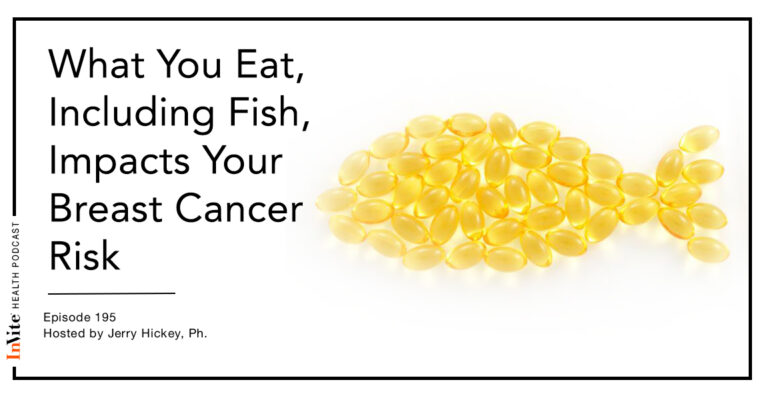
What You Eat, Including Fish, Impacts Your Breast Cancer Risk – InVite Health Podcast, Episode 195

What You Eat, Including Fish, Impacts Your Breast Cancer Risk – InVite Health Podcast, Episode 195

For many decades, we’ve known that lifestyle and eating habits can affect your risk of developing cancer. A good diet and exercise decrease the risk and a poor diet and obesity increase the risk. So, what about breast cancer? There’s a lot of data showing that what you eat can affect the risk.

The Power of Glucosamine & Chondroitin For Joint Health Support – InVite Health Podcast, Episode 194

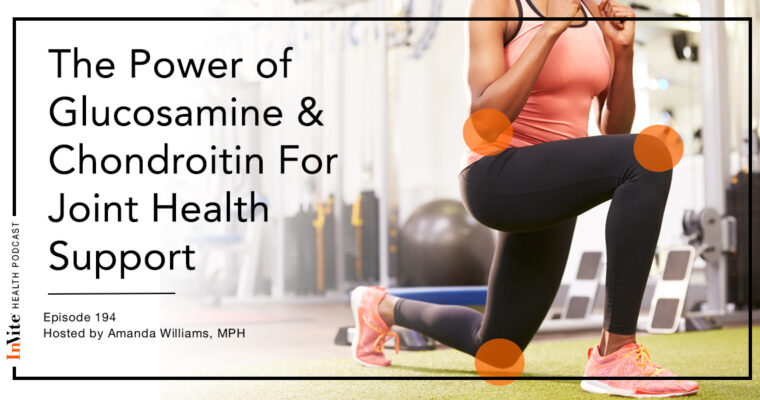
The Power of Glucosamine & Chondroitin For Joint Health Support – InVite Health Podcast, Episode 194

Chondroitin is this major component of cartilage that helps to retain water, supporting mobility. Glucosamine is found within healthy cartilage, particularly found within the fluid around the joints. This is why they have been studied in supplement form to be a strong supporter for joint health.

How To Boost Your Seasonal Immune Support – InVite Health Podcast, Episode 193

How To Boost Your Seasonal Immune Support – InVite Health Podcast, Episode 193

Invite Health Podcast, Episode hosted by Amanda Williams, MPH

Subscribe Today!

Apple PodcastsGoogle PodcastsiHeartRadioSpotify

When you think about different things that can trigger your immune system, there is something that so many people deal with every single year, but they just kind of accept it. I want to talk about what you can be doing as far as diet and nutrients that can support your health much better when it comes to seasonal changes. Many people experience the runny nose, the sneezing, the itchy ears, the itchy throat. All of these things that we know can be brought on because of seasonal changes and different pollens in the air. I want to talk about what nutrients specifically, that are actually coming from nature, that can be beneficial when it comes to optimizing the way that your body responds to these different immunological changes.   

Obviously, foods matter. During this time, if you are more prone to the impact of those seasonal changes, you want to make sure that you are definitely adhering to a Mediterranean diet, which is going to be anti-inflammatory. The more we do to abate the actual inflammation throughout the airways as well as the sinuses, the better off we are. If you’re following the Standard American Diet, this is actually going to drive up the inflammation and it can really exacerbate many of those symptoms that you can experience during those seasonal changes

The Proven Health Benefits of Omega-3s for Respiratory Health – InVite Health Podcast, Episode 187. Listen Now >>

Nutrients to boost your seasonal immune support

Mangosteen extract has been around for a really long time. They date this back to the 1600s and they have coined it “the food of the gods” or even “the queen of fruits.” Mangosteen is a fruit that is really rich in terms of energy, protein, carbohydrates, and fiber. It has all these wonderful blends of different vitamins and minerals, which we know are very important when it comes to our immune system. Mangosteen extract contains things like magnesium, potassium and zinc. We also know that it has a high amount of things such as Vitamin C, Vitamin B6, Vitamin B12, and Vitamin A, all of which are important for maintaining our overall health. Mangosteen’s vitamins, minerals and antioxidants actually provide this barrier to allow the body to better fend off all of the harmful effects from all of these different pollutants. It is a tropical fruit, but when we are utilizing it in its extracted form, it’s really very powerful.† 

invite health podcast offer

There was a study that was done many years ago and published in the Biological and Pharmaceutical Bulletin where they looked at the inhibition of histamine release, as well as prostaglandin E2 synthesis, via the utilization of mangosteen. They looked into the indigenous medicine that has been practiced for hundreds of years in Thailand and what they were able to determine was that the mangosteen extract actually inhibited immunoglobulin E (IgE), which mediated histamine release.† 

Another nutrient called quercetin is also beneficial to our bodies. It is a powerhouse when we think about bioflavonoids, which support our oral health at a cellular level. It is also helpful for endothelial health and our immune system. Quercetin is primarily derived from things like citrus fruits but also comes from things like onions, parsley and tea, so you can see how this trends towards the Mediterranean diet. Quercetin helps support a healthy seasonal immune response, as well as the lining of the blood vessels and healthy cholesterol levels.† 

We can also look at stinging nettle. Nettle root extract has been around for an incredibly long time and we know it’s very beneficial when we look at allergic rhinitis. The Journal of Phytotherapy talked about how nettle root extract could inhibit these key inflammatory events that cause the symptoms of seasonal allergies.†

Health Tips To Help You Deal With Fall Allergies – Invite Health Podcast, Episode 177. Listen now >>

Vitamin C also plays a really critical role. It is an essential antioxidant that really targets the histamine release, so we know that it’s naturally impeding or hindering the histamine pathway.†

When we have these 4 nutrients in particular, it really gives a power punch for those seasonal changes. Our Respiratory Hx® formulation contains these powerful nutrients all combined together. Even if you don’t fall into the category of having seasonal allergies, you can still benefit from these nutrients in terms of immune system support and easing inflammation in the body.  For more information about nutrients that can help support your immune system during seasonal changes, tune into the full podcast episode.† 

Thank you for tuning in to the Invite Health Podcast. You can find all of our episodes for free wherever you listen to podcasts or by visiting www.invitehealth.com/podcast. Make sure you subscribe and leave us a review! Follow us on Facebook, Twitter and Instagram at Invite Health today. We’ll see you next time on another episode of the Invite Health Podcast.


invite health podcast disclaimer

amanda williams invite health

Ask Your Doctor: Vitamin C for Cellular Health – InVite Health Podcast, Episode 192

Ask Your Doctor: Vitamin C for Cellular Health – InVite Health Podcast, Episode 192

There is data that provides evidence that certain nutrients and lifestyle habits, like exercise, getting enough sleep and a great diet, lower the risk of cancer. Here is the latest research on Vitamin C and its impact on cellular health.

New Study: Positive COVID-19 Rates Associated with Low Vitamin D Levels

New Study: Positive COVID-19 Rates Associated with Low Vitamin D Levels

A new study performed by Quest Diagnostics and Boston University suggests that individuals with insufficient levels of Vitamin D are more likely to test positive for SARS-CoV-2, which is the coronavirus that causes COVID-19.

The Importance of Plant Sterols for Healthy Cholesterol – InVite Health Podcast, Episode 191

The Importance of Plant Sterols for Healthy Cholesterol – InVite Health Podcast, Episode 191

Invite Health Podcast, Episode hosted by Amanda Williams, MPH

Subscribe Today!

Apple PodcastsGoogle PodcastsiHeartRadioSpotify

We’ve all heard the impact that high cholesterol can have on our overall health and how it can put us at a greater risk for heart disease, which is the leading cause of death within the United States. We have to understand what high cholesterol is, when it becomes problematic, and the difference between elevated levels of VLDL, LDL, and HDL. When we look at American society as a whole, we know that well over 30% of the population has high cholesterol. We also recognize that it has been directly linked to being a major indication for cardiovascular events later on in life.

A recent study released by the University of Maryland School of Medicine discusses how having high cholesterol levels early in life can lead to heart problems by middle age. Having high cholesterol in your teen years or in your early 20s increases your risk of having a heart attack, stroke, or other cardiac event during the middle ages.   

The Benefits of Taurine On Your Heart – InVite Health Podcast, Episode 189. Listen Now >>

Good vs. bad cholesterol

We need to have cholesterol in our bodies. We need it as part of our brain chemistry. The absence of good cholesterol can lead to cognitive decline, as well as an increase in risk for a cardiovascular event. We want to take care of and maintain our good cholesterol because it is actually cardioprotective. LDL, which is your low-density lipoproteins, is the so-called “bad” cholesterol. An LDL level of over 100mg/dL is generally considered elevated. When someone has elevated LDL, this can really be an indication of extensive damage that is occurring that can’t even be seen or recognized. That’s why lowering your cholesterol can really reduce your risk of having a heart attack.   

invite health podcast offer

Why Food and Supplementation Matters

Oftentimes, people turn to pharmacotherapies to treat cholesterol issues. This includes statin drugs and other medications that are used to try to regulate someone’s cholesterol. Certainly, there are times where statin drugs are warranted in certain situations, and certain types of statins may be better for some patients than other types of statins. A lot of our problem when it comes to endothelial dysfunction and cardiovascular risk comes down to our diet

A single-blind trial published in the Journal of the American Medical Association tested the impacts of an improved diet on people with elevated cholesterol. These patients also had elevations in different markers for inflammation, so they kind of fell into the category of metabolic syndrome. The subjects followed a Mediterranean diet and received detailed advice from the researchers as to how to increase their daily consumption of fruits and vegetables and how to include olive oil into their routines. This helped them reduce their intake of bad carbohydrates and bad fats. The researchers found that after 2 years, patients who followed the Mediterranean-style diet did significantly better in terms of their overall levels when it came to blood sugar, total cholesterol, and inflammation markers. This is why foods do matter.  

How Sterols Support Your Heart & Healthy Cholesterol – Invite Health Podcast, Episode 107. Listen Now >>

You can also help your body in terms of supplementation. We know that high-antioxidant nutrients, like Vitamin C and Vitamin E, are helpful. But we can also look at sterols. Plant sterols have been around for a really long time and really can promote a significant amount of support when it comes to the way that the body manages cholesterol transport. This is why having a diet that is high in plant sterols really yields a significant amount of advantageous benefits to the way that your body is reacting to those elevations or fluctuations. Taking plant sterols as a supplement can also really yield you that benefit. InVite® Health Sterols is a really wonderful product to have as part of your cholesterol-targeting arsenal.  Tune into the full podcast episode for studies looking at the impacts of plant sterols on cholesterol levels. There’s a lot of things that people can be doing on their own to optimize their overall cardiovascular health, but it starts with the choices that you make. Always keep that in mind. 

Thank you for tuning in to the Invite Health Podcast. You can find all of our episodes for free wherever you listen to podcasts or by visiting www.invitehealth.com/podcast. Make sure you subscribe and leave us a review! Follow us on Facebook, Twitter and Instagram at Invite Health today. We’ll see you next time on another episode of the Invite Health Podcast.
Questions about how plant sterols can benefit your heart health? Leave us a comment below to discuss!

invite health podcast disclaimer

amanda williams invite health