Recent Posts

How To Boost Your Seasonal Immune Support – InVite Health Podcast, Episode 193

How To Boost Your Seasonal Immune Support – InVite Health Podcast, Episode 193

Many people experience runny nose, sneezing, itchy ears and itchy throat due to seasonal changes and different pollens in the air. Let’s discuss what nutrients that can be beneficial to optimize your seasonal immune support.   

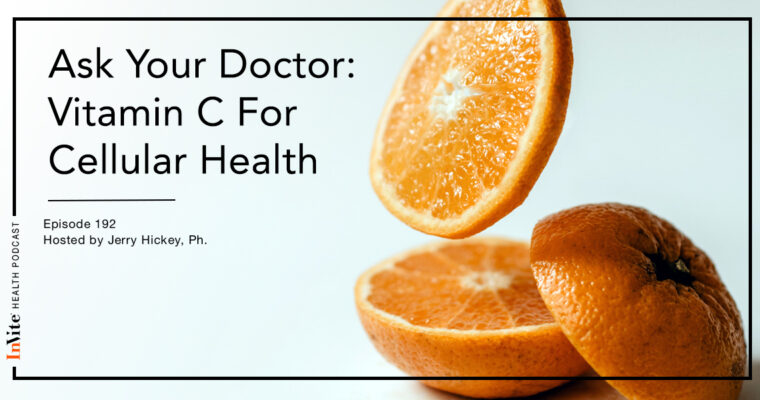
Ask Your Doctor: Vitamin C for Cellular Health – InVite Health Podcast, Episode 192

Ask Your Doctor: Vitamin C for Cellular Health – InVite Health Podcast, Episode 192

There is data that provides evidence that certain nutrients and lifestyle habits, like exercise, getting enough sleep and a great diet, lower the risk of cancer. Here is the latest research on Vitamin C and its impact on cellular health.

New Study: Positive COVID-19 Rates Associated with Low Vitamin D Levels

New Study: Positive COVID-19 Rates Associated with Low Vitamin D Levels

Written by Antonia Brogna
Nutritional Copy Writer, InVite® Health

_____________

Some researchers are noting that Vitamin D levels can play an important role when it comes to COVID-19. 

A new study completed by Quest Diagnostics and Boston University, published in the journal PLoS ONE, suggests that people with insufficient levels of Vitamin D are more likely to test positive for SARS-CoV-2, which is the coronavirus that causes COVID-19. In fact, these researchers found that people with a Vitamin D level below 20 ng/mL (considered the benchmark for deficiency) had a 54% higher chance of testing positive for the virus than people with sufficient levels of the nutrient. 

This is not the first time that scientists have linked low levels of this vitamin to COVID-19, but this data is helping shed more light on the topic.

“Our findings provide further rationale to explore the role of vitamin D supplementation in reducing the risk for SARS-CoV-2 infection and COVID-19 disease,” the researchers wrote in their study. “If controlled trials find this relationship to be causative, the implications are vast and would present a cheap, readily-available method for helping prevent infection, especially for those with vitamin D deficiency. In the interim, the authors recommend responsible vitamin D supplementation based on personal needs, risk factors, and from personal physicians in accordance with existing Endocrine Society Guidelines.” 

More Information on Vitamin D

Vitamin D, often called the sunshine vitamin, helps regulate nutrients such as calcium and phosphate, which are needed to ensure the health of the bones, teeth, and muscles. It is typically formed through a chemical reaction that takes place between the sun’s UV rays and the cholesterol on the skin, but approximately 70% of people living in North America are actually deficient in the vitamin. According to numerous studies, low Vitamin D levels can cause depression, bone and back aches, bone and hair loss, and frequent infections.†

Raising your Vitamin D levels can be as easy as making some changes to your daily routine. For instance, levels in the body can be increased by spending time in the sun with at least 40% of your body exposed to the UV rays. It can also be increased by eating fatty fishes and seafood, as well as mushrooms. 

But for people who are trying those options and not seeing results, or are already so low in Vitamin D levels that they need an additional boost, supplementation may be a good option. These supplements are often relatively affordable and readily available, as the researchers stated in the paper. Speak with your doctor to have your Vitamin B blood levels tested and a certified healthcare professional on how to get started with supplementing with Vitamin D.†

VITAMIN D INFORMATION FROM CHIEF SCIENTIFIC DIRECTOR, JERRY HICKEY, PH.

Studies also show that Vitamin D plays a role in lung health and overall immune health, as Chief Scientific Officer Jerry Hickey, Ph., said in his podcast episode, ‘Update: Vitamin D, Lung Health & The Coronavirus.‘

“Vitamin D literally unites your immune system and mounts a better defense against infections,” he said. “It also helps your immune system work in a more balanced way, making it very important during cough and cold season and in the protection of your lungs.” He also said that Vitamin D “helps the immune system work appropriately so it is a strong enough fight against the infection, allowing just enough defense to protect you, while preventing the immune system from becoming out of control.” Jerry provided his own recommendations for listeners as well. “You want to get your Vitamin D levels above 35,” he said. “I would recommend taking about 6,000 units every day with food for seven days. After that, you can go down to 3,000 units a day. This should get you up to a nice sweet level pretty quickly.”

You can find the full study by clicking here or visiting https://journals.plos.org/plosone/article?id=10.1371/journal.pone.0239252.

For more information about Coronavirus, as well as other nutrients that can benefit your immune system, make sure to tune into the InVite® Health podcast, available anytime on our website. 

invite health podcast disclaimer

The Importance of Plant Sterols for Healthy Cholesterol – InVite Health Podcast, Episode 191

The Importance of Plant Sterols for Healthy Cholesterol – InVite Health Podcast, Episode 191

We’ve all heard the impact that high cholesterol can have on our overall health. Well over 30% of the U.S. population has high cholesterol. But did you know that plant sterols should be an essential part of your cholesterol-targeting arsenal?

Experiencing Brain Fatigue? L-Tyrosine Can Help! – InVite Health Podcast, Episode 190

Experiencing Brain Fatigue? L-Tyrosine Can Help! – InVite Health Podcast, Episode 190

We’ve all experienced the feeling of staying out late but still having to get up early for work or class the next morning. If you’ve ever burnt the candle at both ends like this, L-Tyrosine may help!

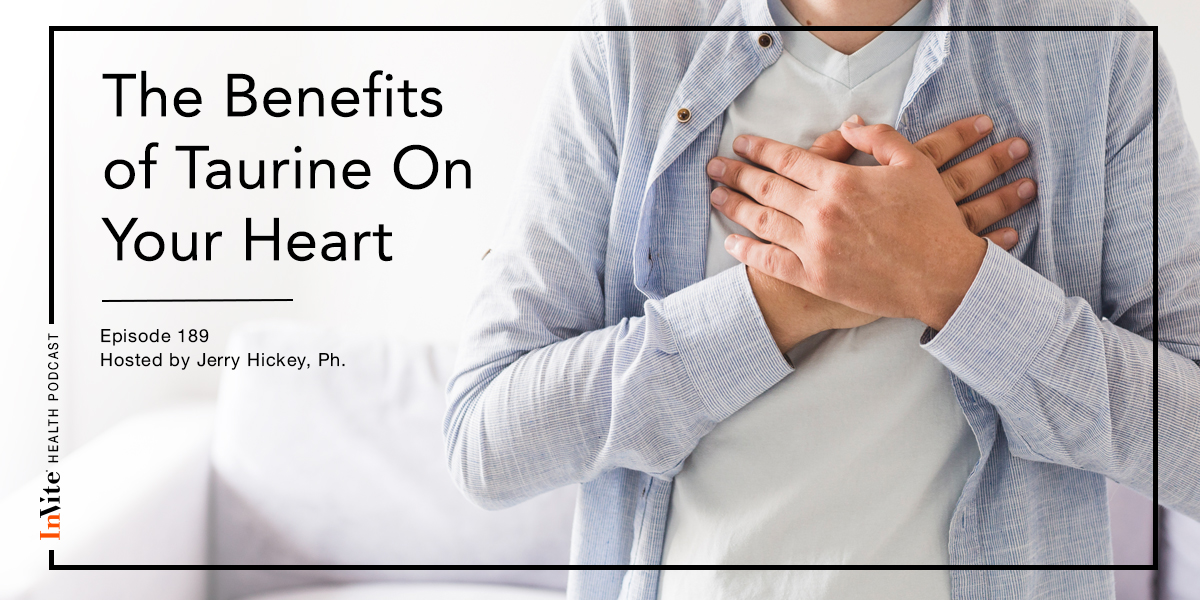
The Benefits of Taurine On Your Heart – InVite Health Podcast, Episode 189

The Benefits of Taurine On Your Heart – InVite Health Podcast, Episode 189


Invite Health Podcast, Episode hosted by Jerry Hickey. Ph

Subscribe Today!

Apple PodcastsGoogle PodcastsiHeartRadioSpotify

Today we’re discussing the benefits of taurine on your heart, blood vessels, and blood pressure.  

What is taurine?

Taurine is a unique amino acid. When you eat protein, it is broken down into amino acids, which are then arranged in chains in different combinations and used for the structure and function of our organs and systems in our body. Amino acids are combined to create enzymes, neurotransmitters, some hormones such as insulin, and also structural components of the body. Taurine is different. It is not combined with other amino acids. It works alone. Taurine is a free amino sulfonic acid found in many of our tissues. For instance, it is used in our bile to break down fats from food so we can absorb them. We also use taurine also to detoxify chemicals in our kidneys and liver. It also plays an important role in the functioning of our heart, our muscles, our eyes, our brain, and certain blood cells called platelets.†

How Cinnamon and Corosolic Acid Support Healthy Blood Sugar Levels – Invite Health Podcast, Episode 144. Listen Now >>

There are certain foods that contain the nutrient. Here are some options:

  • The dark meat of chicken and other poultry 
  • Fish and shellfish, like mussels 
  • Eggs 

invite health podcast offer

You can also make taurine. It can also be synthesized in our body from the commonly-absorbed amino acid L-Cysteine. Vegetarians and vegans can have lower levels of taurine due to their diet. I commonly recommend some taurine to vegetarians along with several other supplements they may be lower in. Taurine is guilty by association because it is often added as a protective ingredient to energy drinks. It helps protect the body from the jittery effects of excessive caffeine intake. It is not a stimulant.†

Heart Health Benefits

A lot of data from all over the globe indicates that taurine helps lower our risk of developing heart disease or suffering with a stroke or heart attack. Studies performed in overweight or obese patients indicate that it may reduce triglycerides and improve lipid metabolism, increase adiponectin levels, and decrease inflammation and lipid peroxidation. In diabetics, it may help reduce the risk of kidney damage, also known as diabetic nephropathy.†

Helpful Tips To Support Cardiovascular Health – Invite Health Podcast, Episode 126. Listen Now >>

Taurine is a conditionally essential amino acid, meaning we can usually make enough to meet our body’s needs. Under certain circumstances, however, we cannot make enough, so supplementing becomes important. This is true in people with high blood pressure and in patients with congestive heart failure. Studies show it reduces blood pressure in people with hypertension. It may reduce blood pressure by decreasing the levels of plasma epinephrine, also known as adrenaline, which is the fight or flight neurotransmitter. When you release epinephrine, it squeezes your blood vessels and makes your heart beat faster, which then raises your blood pressure. Taurine can help block excessive release of epinephrine.† 

Research strongly links higher taurine levels and significantly lower rates of dying from heart disease or suffering with a stroke or heart attack. Taurine seems to work very well with the addition of the mineral magnesium for heart health and blood pressure control. Tune into the full podcast episode for more details about how taurine can help the body.†

Questions about how this important nutrient can benefit the health of your heart? Leave us a comment below to join the discussion now!

Thank you for tuning in to the Invite Health Podcast. You can find all of our episodes for free wherever you listen to podcasts or by visiting www.invitehealth.com/podcast. Make sure you subscribe and leave us a review! Follow us on Facebook, Twitter and Instagram at Invite Health today. We’ll see you next time on another episode of the Invite Health Podcast.

invite health podcast disclaimer

jerry hickey invite health podcast