Recent Posts

Eating a Good Breakfast Keeps Weight Gain Away

Eating a Good Breakfast Keeps Weight Gain Away

Photo by Ivan Timov on Unsplash Weight management is a challenge. Technology has led to a sedentary lifestyle; instead of physical activity, a large majority of Americans spend their time in front of a screen, lending to an unhealthy epidemic – obesity. A new study …

New Products are Now Available at InVite®!

New Products are Now Available at InVite®!

NEW PRODUCTS ARE NOW AVAILABLE Led by our Scientific Director, Jerry Hickey, R. Ph., InVite® Health actively develops new products to help our customers enhance their health and wellness. Our product line includes a wide selection of vitamins, supplements, beauty and skincare products, and other …

Children’s Eye Health and Safety Month: Vision Screenings & Eye Exams

Children’s Eye Health and Safety Month: Vision Screenings & Eye Exams

In honor of Children’s Eye Health and Safety Month, vision screenings and a eye exam for children are more important than you think. Thought the vision system is not fully formed in babies or young children, according to the American Academy™ of Ophthalmology reports that equal input from both eyes is necessary for the brain’s vision centers to develop normal. If they do not develop normally, “the child’s eyes cannot send clear images to the brain and his or her vision may become limited in ways that cannot be corrected later in life.”

Types of Vision Screenings

Vision screenings are eye tests that identify visual impairments and eye conditions that can lead to more damaging and permanent issues, like vision loss. The object of the test varies, as there are a number of methods used to screen the eyes.

The first is a physical inspection of the eye, pupils and red reflex. “An examiner uses a flashlight to inspect the eyes for abnormality of shape or structure and to detect irregularity in pupil shape.”

Photoscreening is a special camera that uses the red reflex (a reflection from the lining of the inside of the eye that causes the pupil to look red in photographs), to help identify risk factors for poor vision.

A corneal light reflex test can be performed using a penlight. The child focuses on the penlight and the examiner watches the position of the light reflection from cornea of the eye.

Another common test is a cover test, which detects misalignment of the eyes.

A visual acuity test should be performed on children three years or older. It uses a modified adult eye chart with the child being tested 10 feet away. “Symbols and shapes are used in place of letters. Testing with both eyes open initially is performed before carefully covering one eye at a time with a patch to test each eye separately.”

When should you have your child’s vision tested?

According to the American Academy™ of Ophthalmology, it is essential to check your child’s vision when they are first born and again during infancy, preschool and school years. The earlier a vision problem is detected, the better the chance to obtain maximum vision through appropriate treatment.

Vision Screening vs. an Eye Exam

A vision screening is an effective test performed periodically through childhood. “Only about 2 to 4% of children have an eye problem that requires treatment, so it’s not practical to perform a comprehensive eye examination on every child.” The American Academy™ of Ophthalmology advises parents to seek a comprehensive eye exam if:

  • Their child fails a vision screening.
  • Vision screening is inconclusive or cannot be performed.
  • Referred by a pediatrician or school nurse.
  • Their child has a vision complaint of observed abnormal visual behavior, or is at risk of developing eye problems. Children with medical conditions or a family history of cataracts or glaucoma are at higher risk for developing pediatric eye products.
  • Their child has a learning disability, developmental delay, neuropsychological condition or behavioral issue.

Supplements for Eye Health

Many eye health vitamins are extremely beneficial for ocular and vision health. Several human clinical trials have indicated that supplementing with a combination of specific, powerful antioxidants, minerals and herbal constituents can have a very positive effect on eye and vision health and overall function.

During our youth, there is a hearty supply of available antioxidants to help protect the eyes – organs which consist of many smaller, delicate organs – from damaging effects of an unstable type of oxygen called free radicals. As we age, the pool of available antioxidants decreases, exposing the eyes to the harmful impact of these free radicals. As a natural reaction to protect itself, the eye is very selective in what it allows inside the cells. The activity of vision production alone releases a large volume of free radicals that can contribute to ocular aging. Many scientific studies have shown the benefits of eye health supplements to support visual acuity and stamina.

According to former Director of Nutrition for InVite Health, Nicole Crane, BTS, NP, there are select vitamins and supplements that have been shown to support healthy vision.

For more information on which supplements support eye health, click here.

Sources:
https://www.aao.org/eye-health/tips-prevention/children-eye-screening
https://www.aapos.org/terms/conditions/107

Questions about your child’s eye health and screenings? Leave Jerry Hickey, R.Ph a comment!

INVITE® HEALTH CURRENT SALE

The InVite® Difference: Superfoods

The InVite® Difference: Superfoods

It can be difficult to incorporate healthy foods into your diet, so we have designed superfoods to include into your nutritional routine.

Harvard: 11 Foods That Lower LDL-Cholesterol

Harvard: 11 Foods That Lower LDL-Cholesterol

It is easy to eat your way to high cholesterol levels. But it may also be easy to lower LDL-cholesterol by changing the foods that you eat.

New Study: 90% of Men, 80% of Women, and 50% of Children are Overfat

New Study: 90% of Men, 80% of Women, and 50% of Children are Overfat

Researchers have labeled the presence of excess body fat that poses a danger to your health as ‘overfat’. This excess body fat, especially in the abdominal region, is commonly associated with an increased risk of chronic diseases, morbidity, mortality and reduced quality of life.

Overfat Statistics

A recent article, published in the journal Frontiers in Public Health, suggests it to be even more prevalent in English speaking countries, like the United States and New Zealand; up to 90% of adult males and 50% of children may suffer from being ‘overfat’. In these countries, 80% of women fall into this category.

Earlier this year researchers Philip Maffetone, Ivan Rivera-Dominguez and Paul B. Laursen reported to the same journal that up to 76% of the world’s population may be ‘overfat’. This epidemic can be linked to the recent rise in the incidence of abdominal adiposity (the unhealthiest form of excess body fat) in both adults and children. This can negatively impact the body’s insulin-resistance (converting and storing carbohydrate foods as fat).

The common method of determining the amount of fat in the body has been to step on a scale or to calculate your BMI (Body Mass Index). Researchers thought this ineffective and, instead, measured waistlines (at the level of the belly button) and compared it to the height. The waist measure, according to the study, should be less than half a person’s height.

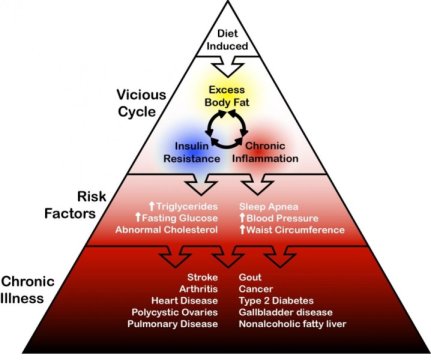
overfat
Quote/Photo source: Maffetone, Rivera-Dominguez and Laursen; CC BY

“Rather than thinking of these disorders as separate, individual clinical problems, it might be best to consider the relationships between overfat, its various risks, and its associated downstream diseases as a spectrum or progression where the vicious cycle of overfat, insulin resistance and chronic inflammation lies at one end, (constituting the population with early measurable abnormality), while the presence of chronic conditions resides at the other end.”

Three Natural Approaches to Weight Loss, according to June Wang, MS, of InVite® Health

  1. Dietary Behavior Approach:

Going on a diet and consistently monitoring what you eat are two different methods. The first – a diet – is a short-term method to eating healthy. The other – constantly monitoring what you eat – is a long-term, lifestyle change. In order to monitor your dietary intake, record your food intake, count calories, cut calories, and avoid going longer than 4-5 hours between healthy meals.

  1. Physical Activity Approach

Physical activity is a must for weight loss and management. Thirty minutes of moderate-intensity aerobic activity daily (150 min/week) is recommended to reduce chronic disease risk and 60 minutes of moderate daily activity (300 min/week) is recommended to prevent weight gain in adulthood.

  1. According to Jun Wang, MS, there are three main supplements that may help support weight management.

White kidney beans supply a carbohydrate blocker that inhibits the enzyme amylase from breaking starches down into sugar; absorbing less sugar from foods such as bread, potato, pasta or rice helps reduce your intake of calories.

Probiotics are live bacteria that support the activity of the body’s healthy bacterial population. They help burn calories by releasing the appetite-reducing hormone GLP-18. They decrease body fat by increasing levels of the protein ANGPTL4. Probiotics can also reduce inflammation and may improve gut health. A meta-analysis of 17 randomized clinical trials in humans indicates that probiotics help treat obesity.

CLA (Conjugated linoleic acid) made from safflower oil helps reduce body fat by inhibiting the activity of the enzyme lipoprotein lipase which normally would transfer fats from the bloodstream into fat cells. CLA also promotes carnitine palmitoyltransferase, which helps burn fat, improving energy. A meta-analysis of 18 randomized, double-blind, placebo-controlled clinical trials (the gold-standard of clinical trials) concluded that taking 3.2g/d of CLA effectively reduces body fat in humans.

What do you think about this new study? Do you think these new statistics will motivate individuals to pay more attention to their weight?

Questions for Jerry Hickey, R.Ph about being ‘overfat’ or about weight management? Leave a comment now!


INVITE® HEALTH CURRENT SALE