Electronic devices like your cell phone, television, iPads, and many other devices do more than just provide endless hours of entertainment and communication. Numerous studies have shown that exposure to the artificial light provided by your favorite electronic devices throw off your biological clock, your circadian rhythm, in charge of regulating your sleep-wake cycle. These electronic devices may also be hampering your health. For instance, you might have experienced dry eyes and back pain while using a mobile phone for hours.
There are other passive harmful effects which you may not notice, and radiations and sleeplessness comes under this category. The light as well the radiations from these electronic devices generally tend to be a cause for concern. However, prolonged usage of electronic devices can hinder your sleep. A new study from the Division of Sleep and Circadian Disorders at Brigham and Women’s Hospital in Boston has found that the blue light exerted by your phone, tablet and TV may do more than take away precious hours of sleep – it may increase your risk of harmful diseases and conditions. A problem, Charles Czeisler, PhD, MD, and the Chief of the division says is a “looming public health crisis.”
Sleep
Each morning when you wake up, your eyes detect light and send signals to your brain to shut off the production of melatonin. Melatonin is a hormone produced in the pineal gland that regulates your body’s 24-hour clock and sleep-wake cycle. [Read more about Melatonin here!] According to Prevention, cells crank up production of the stress hormone cortisol and the hunger-promoting hormone ghrelin. Your body’s
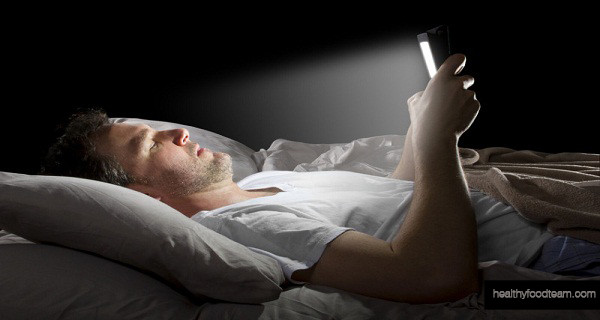
temperature and heart rate also increase. A study published in the journal PNAS in January of 2015, found that individuals who read from an e-reader before bedtime took longer to fall asleep, experienced less REM sleep, and were sleepier the next morning than those who chose to read a book before bed instead. Over a 5 day period, the participants nighttime melatonin levels dropped by 55%.
The Study
In a study performed by the Tulane University Center for Circadian Biology, associate director David Blask, PhD, MD, reported that when laboratory animals were subject to light at night with no melatonin signals, researchers found that “tumors develop sooner, grow faster, are more active, and are more likely to metastasize.” Additionally, researches at Ohio State University found that exposing rodents to dim light at night for eight weeks caused their brain to become inflamed and also caused depression. Researchers reported that the rodents stored more fat and even become glucose intolerant.
Though Blask advises that more research is needed to conclude the dangerous side effects of light before bedtime on humans, he does explain that many studies show that those with abnormal sleeping cycles like night-shift workers are “50 to 80% more likely to develop breast cancer and up to three times as likely to develop prostate cancer. With our late-night email checking and Facebook browsing, in a sense, we are all night-shift workers to a degree.”
How to Combat Light-Induced Health Problems
Try taking simple steps to wind down at night and protect your health. Dr. Millie Lytle, ND, CNS, and former Director of Nutrition for InVite® Health, suggests natural remedies may be just what you need to begin getting the sleep your deserve –
“Magnesium is an essential mineral that has relaxing properties. Melatonin may help to re-calibrate your 24-hour biological clock, especially for those who work the night-shift or individuals who experience jet lag. Valerian Root has been used as a sedative for more than 2,000 years and is widely used for inducing sleep and improving sleep quality. California Poppy works as a painkiller and helps to induce sleep, without being habit forming. L-Theanine, an extract from green tea, is excellent for persistent thoughts, anxiety, and relaxation. Chamomile, when taken as a tea or used as an herb, is a well-known, natural sleep remedy.”
As technology advances, more and more bedrooms are becoming filled with screens. You only have to look at the latest cable TV statistics to see how many people are regularly watching TV and there is no doubt that many of those will be watching from their bedrooms. The same goes for tablets and cell phones, which are also frequently used in bed. Be sure to turn off all of your electronic devices at least an hour before bed. Try to go to sleep at a consistent, normal time each night that provides you with at least 7-8 hours of sleep. You can also try listening to soothing music, drinking herbal teas, stretching, or exercising during the day to induce sleep.
For more information, read Dr. Millie Lytle, ND, CNS, full article called “Your Natural Sleep Routine” by clicking here!







 The Study