exercise
InViteⓇ Health Podcast, Episode hosted by Amanda Williams, MPH
Subscribe Today!
So you’re ready to get fit and you have questions as to what you should be taking when it comes to your pre- and post-workout routines. This is a question that comes up often and many times, people are not exactly sure what they should be doing. Should they be taking creatine before or after I workout? Should I be taking my protein powder before or after I workout? Today, I’m going to give you a basic overview of what you can be doing when it comes to your exercise routine to really optimize your cellular energy, as well as support skeletal muscle growth.†
There is so much research out there showing that there are very targeted natural nutrients, such as creatine, carnitine, glutamine and Vitamin D, that can all be very supportive. Researchers have done studies with NHL players, NFL players, college basketball players (both male and female) and college football players where they looked at Vitamin D insufficiencies and deficiencies and how that impacts their performance overall. If you have a Vitamin D insufficiency or deficiency, it’s going to slow your recovery time from any type of skeletal muscle injury.†
WHY VITAMIN D IS ESSENTIAL FOR SURVIVAL – INVITE HEALTH PODCAST, EPISODE 285. Listen Now>>
The relationship between energy and exercise
We don’t just think in terms of endurance athletes, marathon trainers and Olympic athletes. We have to think about all of us and what we should be doing when it comes to staying fit and staying healthy. We have to make sure that we have this ability to regenerate any of the energy that is expended. Each cell has its own motherboard, the mitochondria, that generates energy called ATP and we have to make sure that we can recover that. We also have to make sure that we have enough energy in the beginning to be able to exercise.†
We can look at the different things that we know can help to restore and replenish our mitochondrial energy ATP. We can look at things like ATP itself, which is a fabulous supplement that we offer. Many folks who are into working out on a regular basis utilize ATP and will take it just before they exercise. Taking ATP allows the cells within the skeletal muscle to really be more vibrant and allows for quicker recovery and repair.†
We can also look at things like ubiquinol and carnitine, both of which we know help to generate cellular ATP production. Rhodiola can also be beneficial. This is a wonderful adrenal adaptogenic herb that so many endurance athletes have used for a very long to not only help give them that extra boost during exercise, but also for that rapid recovery post-workout.†

When should I take each of these nutrients?
We may know which nutrients help promote exercise performance, but the big question is often when they should be taken. This can really vary. It’s going to depend on each individual person.†
When we look at post-exercise nutrition, the whole goal is to repair that muscle tissue that has potentially been damaged and to replenish our glycogen stores. In older individuals, this is often the area where they need more support. I usually tell people who are of older age that they should take their protein powder and creatine after they exercise because that is when their body will really want more. Maybe you take your rhodiola before you exercise and then post-exercise, you use your whey protein isolate along with creatine monohydrate.†
WHEY PROTEIN: MORE THAN JUST MUSCLES – INVITE HEALTH PODCAST, EPISODE 198. Listen Now>>
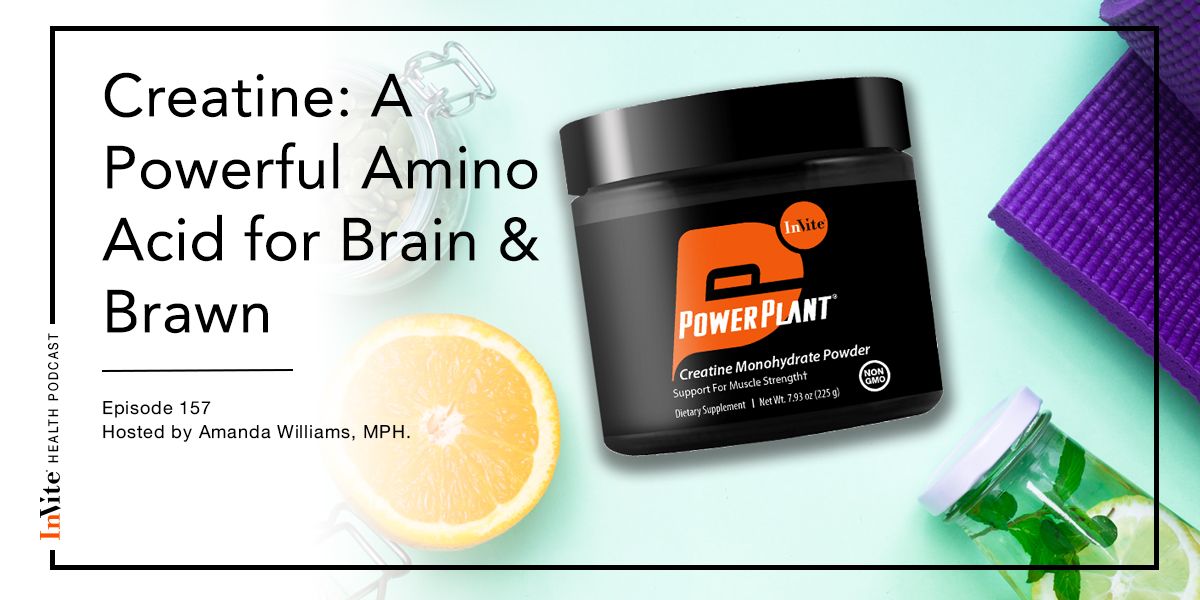
Creatine has been shown to help promote healthy blood glucose and cognitive function in addition to muscle mass. But when do we take this? Once again, it really depends on the individual person. For many people, they will find that utilizing creatine post-exercise really seems to potentiate the most positive benefits.†
We can look at L-carnitine, which is a little amino acid that can generate so much power and energy production. It helps to enhance our energy output and also works as a free radical scavenger. It might be a good idea to use this nutrient after exercise because we know that we generate free radicals in our body just from exercising alone. If we want to be able to lower those free radicals, using carnitine post-exercise may potentiate a greater benefit.†
Glutamine is another amino acid that falls into that category when we think about exercising. It is very important when it comes to recovery, even when it comes to falling ill or dealing with stress. When we workout, this is effectively a stressor, which causes our glutamine stores to go down. It’s always wise to make sure we’re putting extra glutamine back in. I look at glutamine as being one of the nutrients that you would take before you workout. This is because we recognize that glutamine levels may already be at that low end, so if we put some in and then we use it up during the workout, then we still have some leftover.†
In this episode, Amanda Williams, MPH discusses nutrients that can support workout performance. She details why it is so important to get physical activity regularly and also recommends which nutrients to take prior to your workout and which to take following your exercise.†
Key Topics:
- Variables in exercise performance
- Why exercise is important
- The importance of diet and lifestyle together
Thank you for tuning in to the InViteⓇ Health Podcast. You can find all of our episodes for free wherever you listen to podcasts or by visiting www.invitehealth.com/podcast. Make sure you subscribe and leave us a review! Follow us on Facebook, Twitter and Instagram at InViteⓇ Health today. We’ll see you next time on another episode of the InViteⓇ Health Podcast.