Tag: fish oil

Fatty Liver Disease Is on the Rise – InVite Health Podcast, Episode 349

Fatty Liver Disease Is on the Rise – InVite Health Podcast, Episode 349

The incidence of non-alcoholic fatty liver disease is on the rise due to poor dietary intake and lack of exercise. This disease puts people at risk of developing additional medical issues and also severely impacts the body’s primary detoxifying organ.

Heart Failure Is Scary But It Can Be Helped, Part 2 – InVite Health Podcast, Episode 320

Heart Failure Is Scary But It Can Be Helped, Part 2 – InVite Health Podcast, Episode 320

In part 1 Jerry Hickey, Ph. discussed the symptoms of heart failure and factors that can increase your risk. Now let’s review the nutritional side of heart health.

Nutrients To Help Mitigate The Impact of Stress – InVite Health Podcast, Episode 182

Nutrients To Help Mitigate The Impact of Stress – InVite Health Podcast, Episode 182

Invite Health Podcast, Episode hosted by Jerry Hickey. Ph

Subscribe Today!

Apple PodcastsGoogle PodcastsiHeartRadioSpotify

What are the long-term impacts of stress and how can you manage your stress in a much more efficient way? So many people deal with stress on a daily basis. It can come in different forms and be caused by a variety of things. Let’s talk about what you can be doing to help mitigate its impact. 

STRESS, ANXIETY AND YOUR BODY

In the United States alone, there are over 40 million adults who experience some form of anxiety. Anxiety disorders on a whole are highly treatable, yet only about a quarter of these people are actually receiving proper treatment or therapy to manage their anxiety. People with anxiety disorders are 3 to 5 times more likely to see a physician and 6 times more likely to be hospitalized for different psychiatric disorders. Anxiety disorders develop from a complex set of different risk factors, including brain chemistry, life events, and genetics. It is not uncommon for someone who has stress and anxiety to also suffer from issues such as depression. Panic disorders, social anxiety disorders, and generalized anxiety disorders are all very common. There are people who have specific phobias, as well as people who have issues with PTSD, OCD, depressive disorders, and depressive episodes. These issues activate internal stressors in the body, which can really impact our overall wellness. The occurrence of anxiety can also be heightened in people with certain health conditions. For example, people with irritable bowel syndrome, sleep disruption, insomnia, and fibromyalgia, amongst other medical issues, often experience a comorbid condition of anxiety.

MANAGING STRESS THROUGH COVID-19 – INVITE HEALTH PODCAST, EPISODE 58 >>

invite health podcast offer

Regardless of the cause, we have to know how to best manage the chronic stress that we can be under for years. Chronic stress can affect the hypothalamic-pituitary-adrenal (HPA) axis, which then impacts many important hormones in the body. For instance, their adrenal gland can be overrun, causing it to excrete excess cortisol. This can then affect the pancreas and insulin levels, as well as the blood sugar. Chronic stress can also impact focus, attention, and memory. This is why it is so imperative to learn to manage it. 

HOW CAN YOU MANAGE YOUR ANXIETY AND STRESS

There are many ways to treat anxiety and stress, but oftentimes, they are not treated properly. I find that people frequently overlook food and how much it matters. I go back to the phrases “You are what you eat” and “Let food be thy medicine.” These statements hold so much truth. If someone is under stress and getting fast food as a time-saver, that’s probably not the best approach in terms of re-nourishing and supporting your body at a cellular level. We have to know that foods are first and foremost. For more information about why food is so important for managing stress, make sure to listen to the full podcast episode. 

HOW TO MANAGE STRESS AS YOU RETURN TO SCHOOL – INVITE HEALTH PODCAST, EPISODE 166 >>

Trying to adhere to a Mediterranean diet is really your best choice because it helps you receive that comprehensive blend of vitamins and minerals that support the immune system. You get antioxidants that are naturally coming from those foods to fend off oxidative stress and ease inflammation. Omega-3 fatty acids are in a higher abundance in a Mediterranean diet. Eating fruits and vegetables is also important, as well as healthy fats. Snacking on things such as walnuts, almonds, and pumpkin seeds throughout the day can be beneficial.  

There are certain nutrients, such as the amino acid tryptophan, that are derived from your diet and are essential to the body’s ability to manage stress. Tryptophan is needed to manufacture serotonin, which is the body’s happy neurotransmitter. In the absence of serotonin, we are going to experience higher levels of neuroinflammation, loss of focus, and feeling more on edge. The brain is just one pathway that chronic stress can impact. As it begins to affect more organs and pathways, it also weakens your immune system, diminishing your ability to heal, recover, and adapt. Chronic stress can cause many serious diseases, and if we don’t manage it, we are really setting ourselves up for some really harmful effects.†         

We can also focus on what kinds of movement can help us deal with stress and add them into our routine. It could be running, yoga, meditation, or walking. You don’t have to go out and join a gym or become a marathon runner, but you do have to find something that you’re passionate about and something that you can enjoy doing. It could even be turning on your radio and moving to the music. These become means of decompressing. We have to take a mind, body, soul approach to managing stress.  

There are also several nutrients that can be advantageous for managing stress.

  • Omega-3 fatty acids like fish oil and krill oil are important. People with low levels of this nutrient are more likely to have greater levels of inflammation, stress, anxiety, panic, and depression.†
  • L-Theanine, which is an amino acid predominantly derived from green tea, is also important because it supports GABA, which is our calming neurotransmitter. It also helps fend off oxidative stress from the brain, preventing damage to brain cells.† 

HOW L-THEANINE RELIEVES STRESS WITHOUT FEELING DROWSY – INVITE HEALTH PODCAST. Listen now >>

It is so important for each of us to take our health seriously and that clearly includes taking care of stress, whether it’s from work, family, chronic disease, or something else. Thank you for tuning in to the Invite Health Podcast. You can find all of our episodes for free wherever you listen to podcasts or by visiting www.invitehealth.com/podcast. Make sure you subscribe and leave us a review! Follow us on Facebook, Twitter and Instagram at Invite Health today. We’ll see you next time on another episode of the Invite Health Podcast.


invite health podcast disclaimer

amanda williams invite health

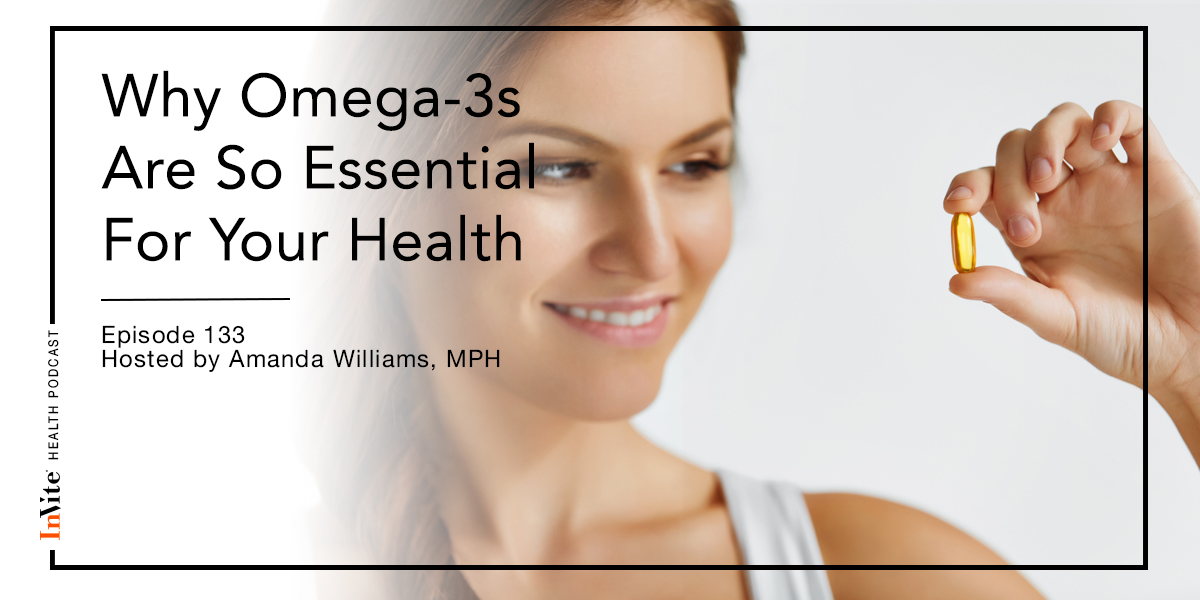
Why Omega-3s Are So Essential For Your Health – Invite Health Podcast, Episode 133

Why Omega-3s Are So Essential For Your Health – Invite Health Podcast, Episode 133

Omega-3 fatty acids are in the news once again! This is because they are so critical to our overall existence, but especially for brain and heart health. Generally speaking, our bodies are lacking omega-3s, because of our standard American diets. Here’s why that is so damaging to our health.

Helpful Tips To Support Cardiovascular Health – Invite Health Podcast, Episode 126

Helpful Tips To Support Cardiovascular Health – Invite Health Podcast, Episode 126

How do you know what supplements are best to support cardiovascular health? And what else should you be doing in terms of diet and exercise? The good news is there are some basic guidelines that I can share with you that may be beneficial. 

How To Protect Yourself From Inhaled Pollution – Invite Health Podcast, Episode 119

How To Protect Yourself From Inhaled Pollution – Invite Health Podcast, Episode 119

Invite Health Podcast, Episode hosted by Jerry Hickey. Ph

Subscribe Today!

Apple PodcastsGoogle PodcastsiHeartRadioSpotify

If you are living in a major city or living next to a main road and smelling the exhaust from traffic, you are breathing in Fine Particulate Matter. These tiny particles of soot are very toxic and too much exposure can impact to your health. They can be found in:

  • Vehicle exhaust
  • Wood burning stoves
  • Coal burning stoves
  • Boilers that heat water in large buildings

Why these particles are so toxic 

  • Very small (fine particulate matter)
  • Dissolve into blood easily
  • Pumped all over the body
  • Spreads inflammation throughout our body

invite health podcast offerThis kind of pollution has been connected to 

  • Lung disease
  • Triggering asthma attacks in children
  • Lung cancer
  • Adducts (or damage) to our DNA increases risk of cancer
  • Heart attack
  • Fatty liver
  • Decreased kidney function and kidney failure
  • Contributing to the development of dementia
  • Stroke
  • Shortened lifespan
  • Hair loss

Fish Oil Benefits 

I was surprised to find a ton of research on the benefits of fish oil when it comes to pollution. In one study published in the journal Environmental Health Perspectives, researchers studied 52 elderly nursing home residents who lived in a smoggy, polluted area. Researchers tested the indoor air quality and found smug was also inside with the residence, not just outside. This is dangerous as elderly people are generally inflamed to begin with, their antioxidant-protectant enzymes are not what they used to be, and so they are more at risk of the damaging impact of pollution than younger people already. Participants took soy bean oil or fish oil – 2,000mg a day over a four month period. Researchers found that the fish oils reduced oxidative damage in the blood. In other words, researchers saw less inflammation in the participants blood. It also reduced lipid-peroxidation by 73%, when fish oil was taken over the soy bean oil. Pollution that inflames you makes the fats in your blood go bad, called lipid-peroxidation. Fish oils also increased the level of youth-related antioxidant enzyme systems and raised SOD levels by 49%.

Other Key Topics

  • Fibrinogen


Thank you for tuning in to the Invite Health Podcast. You can find all of our episodes for free wherever you listen to podcasts or by visiting www.invitehealth.com/podcast. Make sure you subscribe and leave us a review! Follow us on Facebook, Twitter and Instagram at Invite Health today. We’ll see you next time on another episode of the Invite Health Podcast.
blog disclaimer invite health

jerry hickey invite health