Bronchitis
Dr. Claire Arcidiacono, ND
Bronchitis is one of those things that you may have heard of but what exactly is it? You’ve probably heard some people say they have acute bronchitis while other people have chronic bronchitis. Is there a difference? What cause’s bronchitis? Is it contagious? These ae just a few of the questions that people call and ask about bronchitis.
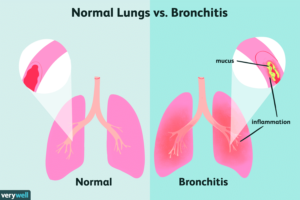
What is bronchitis? Basically bronchitis is inflammation of the tubes or airways that go into your lungs. As a result of the inflammation in the airways these passages become irritated and swell. They also became filled with mucus which triggers us to cough. (1) Please see the attached picture to compare normal a lung health vs a lung with bronchitis. (2)
While both acute bronchitis and chronic bronchitis are both inflammation in the lungs they are different. Acute bronchitis is associated with a viral infection. It normally goes away in a few weeks even without treatment. Chronic bronchitis is a cough with mucus most days of the month for 3 months of the year. This goes on for at least 2 years. (1) Chronic bronchitis is associated with irritants such as smoke, air pollution and chemical fumes. (3)
What can cause us to develop bronchitis? Well as I’ve said to develop acute bronchitis it is usually triggered by a virus. Common viral triggers include the flu, RSV, adenovirus, and Rhinovirus (common cold). In addition to viral infections certain bacteria can trigger bronchitis. These bacteria typically include Bordetella pertussis, Mycoplasma pneumonia and Chlamydia pneumonia. As I’ve stated chronic bronchitis is associated with pollution and smoking. (1)
Let’s do a quick review of the symptoms most often seen with bronchitis. The most defining characteristic is a cough. You may have a dry cough or a productive cough where you cough up mucus. There may be sinus and/or chest congestion. You may have shortness of breath and wheezing. The cough may trigger chest discomfort. There may be body aches and even chills. Many people experience fatigue. Less commonly experienced is bad breath, coughing up blood, and trouble sleeping. You may notice that you have a lack of physical endurance. (2) Other symptoms can include fever and a runny nose. (1) Now I just wanted to point out that those with acute bronchitis vs chronic are slightly more prone to certain symptoms. I’ve included a comparison chart to help highlight the differences. (2)
| Acute Bronchitis |
Chronic Bronchitis |
- Short-term illness
- Sneezing and runny nose
- Short-term illness caused by an infection lasting a few days or weeks
- Low-grade fever
- Sore throat
|
- Long-term lasting at least three months within two consecutive years
- Persistent fatigue
- Chest tightness or pain
- Swelling of ankles, feet, and (sometimes) legs
|
What are the risk factors for bronchitis? Anyone can get bronchitis but there are some risk factors that can increase your risk of developing it. Smoking and being around air pollution is one. Having asthma, COPD or other lung disorders, and GERD all increase risk of developing bronchitis. Having an autoimmune disorder also increases your risk. (1)
What are the most common complications associated with bronchitis? You can become vulnerable to other respiratory infections including pneumonia. Chronic bronchitis can strain our heart putting us at risk for heart disease or even worsening the symptoms of the disease. You may also experience bronchorrhea (excess discharge of watery mucus from the lungs). (2)
Now to the interesting question – is bronchitis contagious? NO! However the virus or bacteria that triggered the bronchitis is contagious. So while Bob may cough on you and give you his cold you can’t get his bronchitis. (1)
What can you do to help to strengthen your lungs and help reduce the signs of bronchitis? Well there are a few things that can help!
- Wet socks! I have mentioned this before as being helpful in reducing mucus. In my clinical experience this is one of those things that sounds weird but really does help. I’ve included a link with directions how to do this helpful protocol. (4)
- Menthol rubs have been found to help with the symptoms of bronchitis. (5) I am sure everyone remembers a family member using menthol rubs to help them when you were younger. And you know what? That’s because it works.
- NAC has been found to be very helpful in reducing the symptoms of bronchitis and studies suggest that it should be considered in the management of bronchitis. (6) Please see Invite’s NAC, Detox Hx and Daily Detox Powder!
- Black Seed has been found in studies to help improve our lung function and overall lung health. (7) Please see Invite’s Black Seed with Rosemary and Cordyceps formula
- Green Tea has been found to be helpful in promoting our lung health. Everyone knows how soothing tea is when you have a cough. I personally recommend 2 dropperfuls of Green Tea Tx in tea with honey and lemon to help sooth your throat when you are coughing. (8) Please see Invite’s Green Tea Tx!
- Our next product highlight will be Renalaid!
Sources:
- https://my.clevelandclinic.org/health/diseases/3993-bronchitis
- https://www.verywellhealth.com/symptoms-of-bronchitis-770332
- https://medlineplus.gov/chronicbronchitis.html
- https://draliciacole.com/wet-sock-treatment/#:~:text=The%20treatment%20involves%20wearing%20a,in%20the%20head%20and%20chest.
- https://journals.sagepub.com/doi/10.1177/030006057800600614#:~:text=It%20is%20concluded%20that%20Vaporub,effects%20of%20petrolatum%20without%20aromatics.
- https://www.ncbi.nlm.nih.gov/pmc/articles/PMC9487680/#:~:text=The%20results%20of%20the%20present,although%20this%20protective%20effect%20was
- https://www.ncbi.nlm.nih.gov/pmc/articles/PMC7452452/
- https://www.ncbi.nlm.nih.gov/pmc/articles/PMC9405266/