A majority of individuals are always looking for the next big weight loss fad. But what would you say to a new obesity treatment device that uses a surgically-placed tube to drain some of what you consumed after every meal? Well, the FDA says it’s …
According to Jun Wang, MS, Nutritional Consultant at InVite Health’s Forest Hills and Bronx store locations, “Osteoporosis is a health condition where your bones are weak and brittle. Health risks of osteoporosis may include an increase of fractures of the hip, wrist and spine. Generally …
Jerry Hickey is a pharmacist and radio personality and fills the esteemed role of Scientific Director and President of Invite Health. He has spent his professional life analyzing nutritional information and medical studies with the aim of creating the highest quality and most natural nutraceuticals for user’s maximum health benefits. Here, Jerry speaks about the benefits of Phosphatidylserine…
We’re going to talk about a brain health nutrient. It’s considered completely safe by the Food and Drug Administration (FDA) and there are about 2 ounces of it in your body, with 1 ounce residing in your brain. That’s how important it is for your brain. And it’s one of the reasons why eating fish is good for your brain; Fish oils interact with this nutrient and suck it into the brain cells, regenerating them. It’s called Phosphatidylserine.
What is Phosphatidylserine?
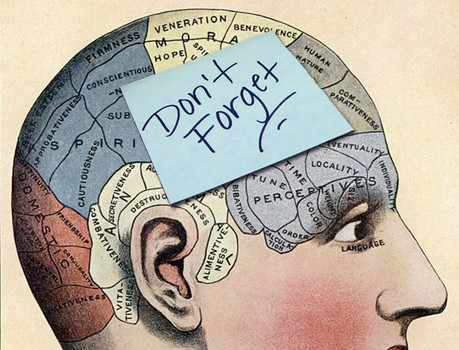
Sixty percent of our brain is made out of lipids (or fats). A very important fat in your brain is called phosphatidylserine. It’s an important player for cognitive function, for executive functions, and especially for your memory. Phosphatidylserine levels drop with age. This supplement has been clinically proven to improve your cognitive functions that have suffered due to age. You know you get that forgetfulness, that absentmindedness, you don’t remember where you put your keys, you can’t remember your friend’s name, whatever it might be. Clinical studies indicate that that it can slow down and even reverse that normal decline seen in the aging brain that has to do with memory.
The Research
image source: http://www.learning-mind.com/
Here is some research from the Journal of Alzheimer’s Disease from the University of Sherbrooke up in Quebec, Canada. They show that there is a drop in Phosphatidylserine levels in the aging brain. This is not an Alzheimer’s study; it is a study proving it really is a cocktail of nutrients that are important for the aging brain to help support normal memory functions. Low levels of Phosphatidylserine affects the health of the memory banks of the brain because it gets into the regions where the brain cells communicate which each other and it just helps restore that function.
A study from Tel Aviv Sourasky Medical Center published in a journal called Dementia and Geriatric Cognitive Disorders took 157 people who were older and starting to develop some memory issues over the course of 15 weeks. They were given Phosphatidylserine and also made sure they were either eating fish or taking fish oils. Verbal immediate recall significantly improved in less than three months. A tremendous improvement in memory and cognitive performance on different types of tests occurred, as well. Word recall, the ability to learn and remember, and the ability to copy complex figures all were improved simply by giving them this nutrient.
Here’s another study from The Israel Journal of Psychiatry and Related Sciences – for three months, they gave elderly patients who had typical cognitive decline and memory issues doses of Phosphatidylserine. It improved their brain function all around, their memory and their word recall.
Here’s a different spin on it: if you’re aging, you want to put this back in your brain and you want to eat fish. Salmon is great for the brain, and provides an antioxidant called astaxanthin that shields it. It has choline, the B vitamin involved in brain function. It has magnesium and taurine to calm down the brain and create neurotransmitters and it also has fish oils. The missing component is the Phosphatidylserine. So if you’re eating salmon two to three times a week, that’s a treat for your brain. If you add the Phosphatidylserine, it’s an amazing treat for your brain.
Another study from Angelo State University took a group of their athletes from this college and gave them Phosphatidylserine. Within two weeks, Phosphatidylserine improved the focus and brain function of these athletes. Their math scores also improved; In just two weeks, it improved their math performance time by 20% and reduced a number of errors on the math test by 40% within two weeks.
I have customers and listeners asking me, “My kid has a little trouble focusing; he’s not paying attention in school”. So I suggest two or three things that are really good for their focus. Phosphatidylserine is one of them. If you need to perform and you need to focus, start taking this nutrient two weeks in advance and you’ll find it really has an impact.
So it’s for memory functions, for focus, for concentration, for remembering, for all those executive functions such as planning a vacation, figuring out how much you have in the bank or doing math in your grocery store to figure out your change. Your ability to do all of these things are greatly improved. It also helps school kids pay attention; It helps their grades. And it helps athletes keep their eye on the ball.
According to the Alzheimer’s Foundation of America, Alzheimer’s disease is a progressive, degenerative disorder that attacks the brain’s nerve cells (neurons), which results in loss of memory, thinking and language skills, and behavioral changes. Affecting more than a million Americans, this debilitating disease has scientists …
What is Coronary Artery Disease? Coronary artery disease (also known as ischemic heart disease) occurs when cholesterol plaque builds up in arteries inside the heart stiffening them and reducing the volume of blood supplied to the heart muscle. It includes a group of diseases that …
The Anxiety and Depression Association of America (ADAA) reports that anxiety disorders are the most common mental illness in the United States, affecting 40 million adults ages 18 and older, about 18% of the population.
The Study
Published in the journal Brain and Behavior, a paper has revealed that women and young adults are suffering from anxiety in greater numbers globally than men – twice as likely, to be exact. Furthermore, individuals younger than 35 years old in North America and Western Europe are the most likely to be affected.
The paper analyzed 48 scientific papers discussing anxiety disorders from around the world, focusing on the proportion of individuals with this disorder from 1990 to 2010. Globally, the paper reports the highest proportion of individuals with anxiety is in North America, “where almost eight out of every 100 people are affected.” East Asia has the lowest proportion of individuals with anxiety – less than three in 100 people.
Lead author and doctoral candidate at the University of Cambridge in England reports, “Anxiety has not been given much importance in mental health research and in general. There has been a lot of focus on depression, which is an important mental health issue, but anxiety is equally important. It is debilitating.”
Some tips for coping with stress and anxiety by Jerry Hickey, R. Ph
Exercise is an excellent antidote for stress and anxiety. Aerobic exercise can reduce anxiety by up to 50% according to research. Exercise also improves sleep disorders. This is important because adequate rest improves the ability to respond to stress properly. The correct amount of sleep each night for most healthy adults averages 7 to 8 hours.
Decrease the amount of caffeine you consume; 2 cups of coffee doubles the amount of epinephrine (a stress hormone) your adrenal glands release. Epinephrine is a “fight or flight” hormone, and it plays a central role in the short-term reaction to stress. It is released from the adrenal glands when danger threatens or in an emergency, or if you are stressed out.
When secreted into the bloodstream, epinephrine rapidly prepares the body for action in emergency situations. The hormone boosts the supply of oxygen and glucose to the brain and muscles, while suppressing other non-emergency bodily processes such as digestion of food. Epinephrine increases your heart rate, dilates your pupils, and constricts the small blood vessels in the skin and gastrointestinal tract while dilating those in muscle improving the supply of blood and energy to muscle. Epinephrine elevates your blood sugar level. Like some other stress hormones, epinephrine has a suppressive effect on your immune system increasing your risk of upper respiratory tract infection (usually a flu or cold infection).





 Published in the journal Brain and Behavior, a paper has revealed that women and young adults are suffering from anxiety in greater numbers globally than men – twice as likely, to be exact. Furthermore, individuals younger than 35 years old in North America and Western Europe are the most likely to be affected.