What The Heck Is Collagen? – InVite Health Podcast, Episode 565
You keep hearing the buzz work Collagen? Well to learn more listen to the podcast all about collagen by Allie Might, FMC, INHC, ATT.
Nutrition. Vitamins. You.
You keep hearing the buzz work Collagen? Well to learn more listen to the podcast all about collagen by Allie Might, FMC, INHC, ATT.
The summer months can be exciting for those who had a harsh winter season. Be careful with the sun exposure and learn more to help maintain healthy skin.
dermatologist dermatologist dermatologist
Subscribe Today!


Please see below for a complete transcript of this episode.
Hosted by Jerry Hickey, Ph.
*Intro music*
InViteⓇ Health Podcast Intro: Welcome to the InViteⓇ Health Podcast, where our degreed healthcare professionals are excited to offer you the most important health and wellness information you need to make informed choices about your health. You can learn more about the products discussed in each of these episodes and all that InViteⓇ Health has to offer at www.invitehealth.com/podcast. First time customers can use promo code PODCAST at checkout for an additional 15% off your first purchase. Let’s get started!
*Intro music*
Jerry Hickey, Ph.:
[00:00:40] Vitamin B3 is a super powerful protective nutrient, but it’s also a very powerful slower of the aging process. Now, Vitamin B3 at dosages found in your multivitamins helps protect your DNA and helps repair your DNA. This, of course, is important for preventing cancer. And one of the best things you could take on a daily basis to lower your risk of cancer is Vitamin B3. You don’t need a lot. The amount you’d find, the dosage you’d find in your multivitamin is enough to help repair and protect your DNA and lower your risk of cancer.† [00:01:20]
[00:01:22] Now, this turns out to be exceedingly important for your skin. Skin cancer is increasing in incidence, especially non-melanoma skin cancers like basal cell carcinoma and squamous cell carcinoma. So welcome to my episode, Doctors and Supplements, Episode Four: Dermatologists, Also Known as Skin Doctors, Need to Use This Supplement. Hi, my name is Jerry Hickey. I’m a licensed pharmacist specializing in nutrition, which I’ve studied for many decades. You can find all of our InViteⓇ Podcast episodes for free wherever you listen to podcasts, or just go to invitehealth.com/podcast. You can also find us on Instagram, Twitter and Facebook @invitehealth, and when you listen to the podcast, please subscribe and leave us a review. That’s helpful for us. [00:02:12]
[00:02:13] Now Vitamin B3 has different names, and there’s no evidence that any one is better than the others for its common benefits, such as lowering the risk of cancer and creating NAD, which is used to create energy out of your food. So the three common forms are niacin, which is also known as nicotinic acid, to make it a little more complex; niacinamide, which is known as nicotinamide; and niacinamide riboside. So all three go to NAD+ and this is used to convert your food into energy. Now the form of B3 known as niacin is used sometimes as a prescription to lower your cholesterol. It has some safe but truly irritating side effects. It makes your skin all red. You feel a flushing effect. Your skin gets very itchy, so I don’t normally recommend it.† [00:03:14]
[00:03:16] But lacking Vitamin B3 leads to pellagra. There’s the 3 d’s of pellagra when you look at the types of symptoms. There’s dementia, which is really more mania. There’s diarrhea and other symptoms of damage to the digestive tract, such as nausea and bleeding in the mouth. But there is the sun-sensitive dermatitis. There’s dermatitis, which is inflammation and damage in the skin. We call that photosensitivity in pharmacy, meaning that when your skin is exposed to the sun, it’s very easy to get skin damage, it’s very easy to get a sunburn. So your skin, the part that’s exposed to the sun, becomes like thick and scaly. It becomes very pigmented and dark. You get this rash and eventually the skin peels and bleeds. So obviously Vitamin B3 is required for skin health.† [00:04:19]
WHY A VITAMIN B-COMPLEX IS IMPORTANT – INVITE HEALTH PODCAST, EPISODE 476. Listen Now>>
[00:04:21] So let’s look at studies that came from Procter and Gamble. They have these labs in Cincinnati where they study dermatology and they found out applying a 5% topical niacinamide product, you know, a cream, a lotion, an ointment, is really good for blocking the aging effects, the effects aging has on your skin. So in 2004, they already published studies that the… Using niacinamide on the skin helps with wrinkling and fine lines. They had published this in the International Journal of Cosmetic Surgery. And in 2006, they took it a step further. The journal Dermatologic Surgery and they applied to people… It was a very interesting study. It was 50 ladies with older skin that was damaged. And on one side of the face they used the niacinamide 5% topical product. So I don’t know if it was a cream or an ointment. And on the other side of the skin, they just applied the vehicle, which would have been the same product, but lacking the niacinamide. So that served as the placebo which we used to call a sugar pill. So it was a placebo-controlled, randomized, double-blind human clinical trial. That’s a gold standard state of the art trial. And they found out it was really safe. It was very safe to apply it to the skin. And there’s a lot of studies showing this, by the way. It was very well tolerated, which means it wasn’t causing side effects. In fact, it was as safe as the placebo. And it improve the health and the appearance of the skin. It was reversing the effects of aging on the skin. For instance, it reduced fine lines, things that will be deep wrinkles. It reduced wrinkles. It reduced the red blotchiness you get when you can get older. It reduced hyperpigmented spots, you know, we get these dark spots in our skin as we age. It was reducing skin sallowness, that’s yellowing of the skin, and it improved the skin’s elasticity. So it was getting rid of all the damage and the discoloration and the blotchiness and it, and, and it was making the skin look healthier and it was getting rid of fine lines and wrinkles and the discolorations. So that’s an awful lot to show.† [00:06:49]

[00:06:51] So in the journal Skin Pharmacology and Physiology. Pharmacology is how drugs work and physiology is how the body works. They found the mechanisms of action for niacinamide and dermatology. They put it all together. This is Martin Luther University over in Germany, their dermatology department. And they said, well, in the skin, the niacinamide reduces inflammation. Well, that’s great. And it stops itching and it kills microbes like, like the microbes that could cause acne and pimples and fungal infections. It’s vasoactive, it improves circulation to the skin, which makes the skin younger and helps the, the skin create its collagen, which is the dominant ingredient. Your skin is 70% collagen. It’s photoprotective. In other words, it was blocking ultraviolet radiation from the sun from damaging the skin. It’s sebostatic. Wow. Well, that’s that’s that’s a pharmacy term. It was reducing oily skin, in other words, always reducing the sebum release. And it was lightning, the skin. And it was doing this by inhibiting NF-kappa b, which is a very important finding. When you go out in the sun and your skin, skin reddens and you’re getting a sunburn and it’s getting damaged, and this is true even when you’re getting a suntan, you release NF-kappa b that strongly inflames the skin. In fact, that’s one of the precursors to skin cancer. So this finding is a very important finding. By the way, later in life, NF-kappa b is released in larger amounts and it starts to act in a weird way that acts differently in your skin and accelerates aging of the skin. So finding that niacinamide, applying it to the skin inhibits NF-kappa b in older skin is a really good finding.† [00:08:40]
COLLAGEN LOSS MAY ACCELERATE AGING – INVITE HEALTH PODCAST, EPISODE 226. Listen Now>>
[00:08:41] But what about swallowing niacinamide? Do you really need to apply niacinamide? Well, the New England Journal of Medicine in October 2015 published a phase three clinical trial. A phase three clinical trial is really powerfully fact finding. Phase one and phase two is to find out if something has a benefit for you. If it’s safe, if it’s dangerous, you know, what’s a possible dosage? So phase three is like, now we’re there. We know that in this case, niacinamide is good for the skin. Let’s do a big study. So they did. It was a phase three clinical trial. It was a state-of-the-art human clinical trial, double-blind, randomized, placebo-controlled study of 386 participants who had suffered with two skin cancers over the last five years. So these people, of course, are strongly at risk of skin cancer. That’s how the body works. A person who has a stroke is the person most likely to have a stroke in the future. A person who’s had a heart attack is the person most likely to have another heart attack in the future. A person who had an asthma attack, of course, is likely to be the candidate to most likely have another asthma attack and the same with skin cancers. These are non-melanoma skin cancers. They’re looking at basal cell carcinoma. Basal cell carcinoma starts out as like, you’ll see this weird, like, discoloration and graininess of the skin and it gets, like, itchy and it feels, just doesn’t feel right. And eventually it turns into a cancer that can bleed and the bleeding never goes away. And it’ll just grow and grow and grow and grow. But it normally doesn’t travel throughout the body. So normally if you take care of it, it’s not lethal. So basal cell carcinoma, basically, you go to the skin doctor, they do Mohs surgery where they really outline the cancer and remove it and then it generally doesn’t come back if they do a good job. And, you know, like I said, it’s not usually lethal unless you let this thing grow into the size of, you know, a grapefruit or something. So get rid of it. But then there’s squamous cell carcinoma, and this is easily treated in the early stages, but that one can spread. It is a common cause of head and neck cancers, and they’re caused by ultraviolet radiation, the sun’s ultraviolet radiation. So this is the Department of Dermatology, University of Sydney, the Department of Tissue Pathology and Diagnostic Oncology, University of Sydney and the Melanoma Institute in Australia. So here’s what they found. They applied the niacinamide. Oh, excuse me. So this is what they found. They swallowed niacinamide 500mg twice a day for a year, or they swallowed placebo and it was as safe as placebo, which us pharmacist we used to call sugar pills. And dermatologists AKA skin doctors examined their skin every three months over an 18 month period, so for six months after stopping taking the niacinamide. Within 12 months, the rate of skin cancers, new skin cancers had decreased by 23%. That’s a real value. So, you know, you apply your, your sunblock like your SPF 50, that covers UVA and UVB, and you take niacinamide and it is protective. Also, new actinic keratosis was down by 13%. Well, that’s interesting because actinic keratosis are the things that can convert into the skin cancer. That’s the kind of grainy, whitish thing you’ll see before skin cancer. Now, the supplement was as safe and as well tolerated as placebo, which is a, you know, an inactive pill.† [00:12:53]
[00:12:55] So how do you protect yourself? Well, take a multivitamin. The amount of niacinamide we use in our multivitamins is enough for you to generate energy out of your foods and it’s enough to protect your DNA and help repair your DNA, which lowers your risk of cancer. Multivitamins have a number of things that lower your risk of cancer that the body uses to protect your DNA. Now, don’t use a niacin supplement because they make the skin itchy and red and flushed. You really don’t want that. There really isn’t a lot of evidence that nicotinamide mononucleotide is any better than niacinamide, so I wouldn’t pay that extra money right now. If you have skin issues, ask the doctor, or you have aging skin, ask the doctor about applying a 5% niacinamide product like a cream or a lotion or an ointment to your skin once a day. And to protect your skin from the sun, here are some nutrients that’ll do that besides nicotinamide. The red stuff in tomatoes, lycopene. I would do 5 to 10mg of lycopene every day. It gets into your skin and helps shield it. Milk thistle. Milk thistle is very good for the liver and it’s helpful for the kidneys. It’s also very effective in protecting your skin. Using grape seed extract, about 250mg a day after about one month gets into the skin and helps shield which come from the sun. Of course, applying a sunscreen 50, an SPF value of 50. And then there is the SPF-blocking clothing. I wear that. I have shirts and I have hats that protect my face and my skin from the sun. I have that Irish skin going on. If you want to take niacinamide to protect your skin from the sun, and it’s safe, you need to take 500mg twice a day. Discuss that with your doctor.† [00:14:55]
[00:14:57] In any event, thanks for listening to today’s episode. You can find all of our episodes wherever you listen to your podcasts, and that’s for free. Or you could go to invitehealth.com/podcast and please leave us a review and subscribe. Of course, I think you’ll do that if you like it anyway. I want to thank you for listening and hope to see you next time on a future InViteⓇ Health Podcast. Jerry Hickey signing off.† [00:14:57]

In the face of the COVID-19 pandemic, immunity has been on everyone’s mind. But how much do you know about the immune system? Learn about the basics of how your body defends itself from pathogens and invaders in this episode of the InVite Health Podcast.
Biotin is well-known for its ability to support healthy hair and skin, but did you know it is also needed for energy production?
Invite Health Podcast, Episode hosted by Amanda Williams, MPH
Subscribe Today!
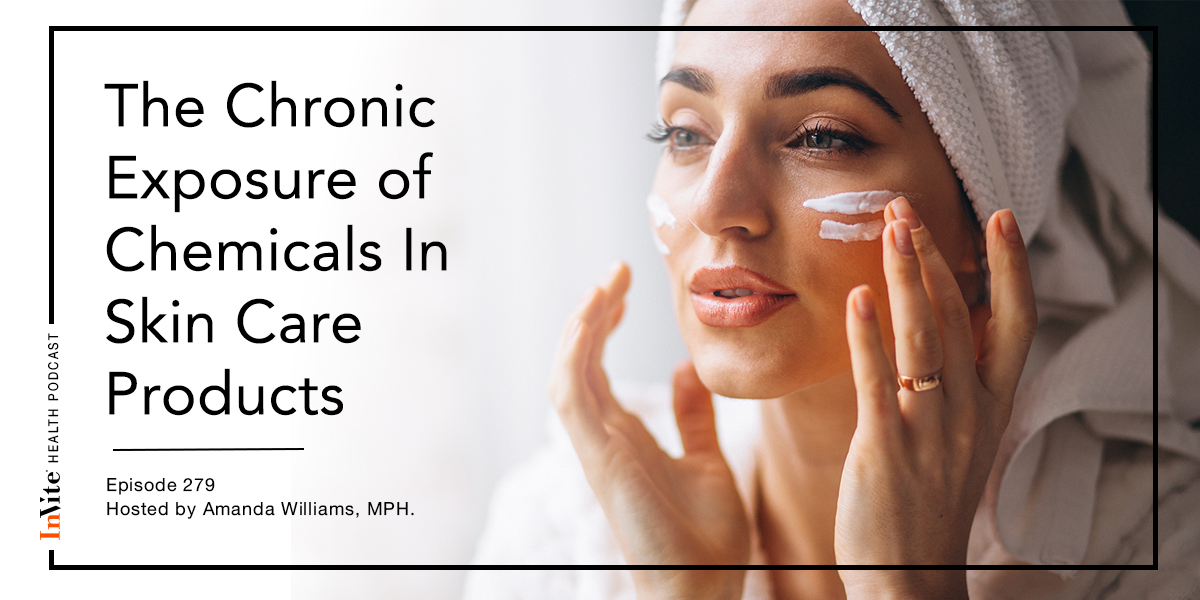
When we think about our skin, we have to realize that this is a really integral part of our overall health. When we recognize all the ways in which the skin is utilized to support our existence, it really is quite pronounced. It’s not just the external protection that we think of. Our skin also plays a really critical role in terms of temperature regulation, sensory detection and toxin removal.†
We also have to realize that the skin is something that we have to protect from environmental pollutants and harmful chemicals that we are perhaps applying to our skin. That is why I want to talk about those chemicals and the science of what that actually means when we are applying some of these harmful chemicals topically to our skin. What does it mean when these chemicals get absorbed in and now the liver has to deal with it? This is a major problem and not just for women. We can find a lot of harsh chemicals in shaving creams, shaving gels and other products that are geared more towards men. This is something that I think needs to be addressed.†
How To Manage Eczema and Psoriasis – InVite Health Podcast, Episode 272. Listen Now >>
Endocrine disruptors
Many of these different beauty products contain multiple chemicals that can really adversely impact our health. Some of these ingredients include phthalates and parabens. Another one is formaldehyde, which is often thought of as embalming fluid. It’s interesting that manufacturers are putting formaldehyde into products that we are applying to our skin. What about lead, mercury and so many other harmful endocrine-disrupting chemicals that we expose ourselves to, oftentimes unknowingly, each and every single day? Exposure to these chemicals over the course of weeks, months and years can lead to full-blown endocrine disruption.†
Endocrine disruption is related to our hormone system. We can affect the sex hormones. We can impact the pancreatic hormones, like glucose and insulin. We can affect our thyroid hormone.†

These cosmetic and beauty products contain a wide range of these different harmful chemicals that we’re exposed to each and every single day. We need to know which substances are actually dangerous. We now know that many of them are and we can even get into the whole world of fragrances. Fragrances, which do not have to be disclosed by the manufacturer, are basically blends of different harsh chemicals.†
The dangers of phthalates
We need to be very, very smart about how we approach the products that we purchase and use. When you look at the preservatives that are used, this is when you get into the whole world of parabens and phthalates. There’s this very widely used group of chemicals known as phthalates that are endocrine disruptors, meaning that they pose a significant, relevant and validated risk to reproductive health, fertility and thyroid function. This has been studied time and time again. Phthalates are detected in nearly every single American, from babies all the way to people who are 100 years old. The CDC did a large national survey looking at phthalate levels in women of childbearing age and they were very surprised to see that those phthalate levels were incredibly high.†
Collagen Loss May Accelerate Aging – InVite Health Podcast, Episode 226. Listen Now >>
Phthalates are not just listed on labels. They are just common ingredients that you find in everyday cosmetic and body care products, so you’re not generally going to recognize that there are phthalates in them. Companies are not required to list them because they can fall under the category of fragrance.†
The Environmental Working Group tested a whole slew of brand name products and more than three quarters of them contained phthalates. It’s widespread. We know that phthalate exposure has been linked to hormonal changes in children, reduction in sperm production in men, DNA changes, increase in obesity and a greater likelihood of developing type 2 diabetes.†
Tune into the full podcast episode to learn more about the chemicals found in skin products and how they can impact the body.
Thank you for tuning in to the Invite Health Podcast. You can find all of our episodes for free wherever you listen to podcasts or by visiting www.invitehealth.com/podcast. Make sure you subscribe and leave us a review! Follow us on Facebook, Twitter and Instagram at Invite Health today. We’ll see you next time on another episode of the Invite Health Podcast.