Tag: skin

Skin and Oral Care Tips While Wearing a Mask – InVite Health Podcast, Episode 179

Skin and Oral Care Tips While Wearing a Mask – InVite Health Podcast, Episode 179

For so many of us, wearing a mask has become second nature. But are you noticing your breath may not be as pleasant as you thought? Or are you experiencing breakouts around your chin due to wearing the mask? Natural oral and skin care solutions can help!

Soothing Your Skin After Constant Hand Washing – Invite Health Podcast, Episode 77

Soothing Your Skin After Constant Hand Washing – Invite Health Podcast, Episode 77

Your skin is certainly feeling the impact of constant hand washing. And we definitely encourage that you are practicing those healthy guidelines. But, this can be very harsh on the skin itself. Here are different techniques and nutrients that may be beneficial during this time. 

Dry, Damaged Hair? Here are 4 Products You Need Before Spring

Dry, Damaged Hair? Here are 4 Products You Need Before Spring

Photo by Tim Mossholder on Unsplash

Winter brings dry, rough weather and that directly impacts your hair. As the seasons are starting to change and the weather is starting to follow suit, here are four products you should make sure are part of your hair care routine that feature natural, non-GMO ingredients that can have your hair back to its bouncy, youthful strength in no time!

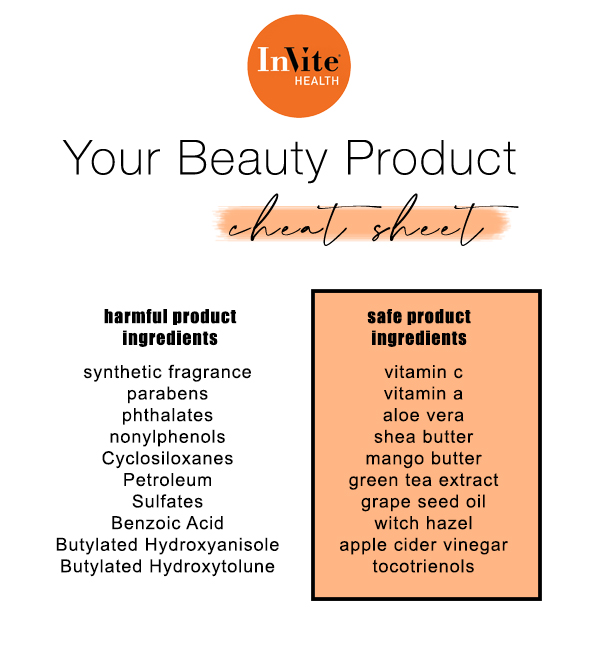
The Impact of Chemicals From Commonly Used Beauty Products

You likely have been exposed to scores of chemicals in personal hygiene and beauty products. Did you know that you absorb up to 60% of what you apply on your skin? You may not notice immediate reactions to your beauty products, but overtime the toxic burden will build up and impact your health negatively.

Listen to Episode 29 of the InVite Health Podcast Now, “Your Beauty Products Are Toxic to Your Breast Health”. Click here >>

beauty cheat sheetHair Repair Treatment Mask

InVite®’s Hair Repair Treatment Mask is a deep conditioning treatment for dry or damaged hair. This hair repair product is the perfect combination of anti-frizz control and deep penetrating moisture. As an additional conditioning treatment after regular shampoo and massage, Hair Repair Treatment Mask is enriched with thick and luxurious natural oils to tame frizz, curls and kinks. Enriched with Avocado, Shea Butter, Olive Oil, Egg Oil and Vitamin E for penetrating strength into the hair shaft. Light, bright scent of natural lemongrass, Chamomile, Sage, and Rosemary. Nettle nourishes and protects hair and and soothes scalp.

Directions: Apply a generous amount after shampooing with InVite® Herbal Stimulating Shampoo. Massage onto hair and scalp and leave on for 15 minutes before rinsing. Use once or twice a week in place of InVite® Moisturizing Conditioner.

Herbal Shampoo

InVite®’s Herbal Shampoo is a specially formulated natural shampoo designed for all types of hair. This special formulation gently cleanses and nourishes the hair and hair follicle with natural ingredients that provide antioxidant protection for the scalp, as well. Enriched with plant-based ingredients Green Tea cleanses and protects the scalp, Aloe Vera softens and facilitates a healthy scalp, Witch Hazel balances moisture, Avocado Oil moisturizes and nourishes, apple cider vinegar cleans and balances pH, Dead Sea Salt preserves, Peppermint Oil stimulates the scalp and mildly scented herbal extracts derived from Chamomile, Sage, Nettle, and Rosemary round out the shampoo’s silky effects.

Directions: Shake well before using. Rinse hair and apply generously. Massage InVite® Shampoo into scalp and rinse. For best results, use with InVite®’s Moisturizing Conditioner.

Moisturizing Conditioner

InVite®’s Moisturizing Conditioner is a rich formula designed for all hair types. Formulated with natural ingredients, our conditioner is safe to use daily to hydrate and strengthen your hair. Our moisturizing conditioner is naturally enriched with a customized combination of Green Tea, Walnut Seed Oil, Aloe, Silk Protein, Vitamin B5, Lemongrass, Apple Fruit Powder, Chamomile, Sage, Nettle, Rosemary and Vitamin E for strong, shiny hair and healthy scalp.

Directions: After using InVite® Herbal Shampoo, apply InVite® Moisturizing Conditioner generously onto wet hair and scalp. Let settle for a few minutes, and rinse.

Hair & Scalp Stimulant

InVite®’s Hair & Scalp Stimulant is the ultimate circulation formula for the hair follicle. This product acts as an energizer for circulation and hair follicle growth. Healthy circulation to the scalp is essential in order for vital nutrients to be absorbed into the roots of the hair, as well as to support hair follicle activity. This product is enriched with natural ingredients and plant extracts, including: Green Tea, Aloe Vera, Witch Hazel, Apple Cider Vinegar, L-Arginine, Caffeine, Menthol, Lemon Peel Oil, Sage and Nettle Extracts, and Essential Oils from Thyme, Rosemary, Cedarwood Bark, and Lavender.

InVite® Hair & Scalp Stimulant is created with all-natural herbal ingredients, plant extracts, and antioxidants, and is safe to use on all types of hair. This formula provides excellent antioxidant protection for the hair, scalp and follicles. It is an effective circulation formula for the scalp, supporting blood flow to this entire area so essential nutrients can be delivered and absorbed into the hair’s roots. Some studies show that using these natural ingredients to increase blood circulation to the scalp increases hair growth.

Directions: Shake well before using. After shampooing and conditioning, spray area and allow product to settle. Let sit over the course of the day, or overnight. For best results, use with InVite® Herbal Shampoo and InVite® Moisturizing Conditioner.

What is your go-to hair care routine as the seasons change? Leave us a comment below to join in the conversation!

INVITE® HEALTH CURRENT SALE

Your New Winter Skin Care Routine – Invite Health Podcast, Episode 26

Your New Winter Skin Care Routine – Invite Health Podcast, Episode 26

In the winter your skin turns dry, flaky, dull and itchy. Change up your winter skin routine when colder weather strikes and these steps will earn you a rich winter glow!

All About Hydrolyzed Collagen – Invite Health Podcast, Episode 23

All About Hydrolyzed Collagen – Invite Health Podcast, Episode 23

On today’s episode, Amanda Williams, MPH provides information about one of the most popular proteins and supplements, Collagen and why Hydrolyzed Collagen is best to supplement with.

Why Beta-Blockers Can Cause Skin Inflammation and Nutrient Depletions

Why Beta-Blockers Can Cause Skin Inflammation and Nutrient Depletions

Photo by @freepik

Often used to treat high blood pressure and other cardiovascular conditions, beta-blockers are medications that help to block the effects of the hormone epinephrine, also known as adrenaline. This causes your heart to beat more slowly and with less force in order to lower your blood pressure. Beta-blockers also help to improve blood flow through your veins and arteries.

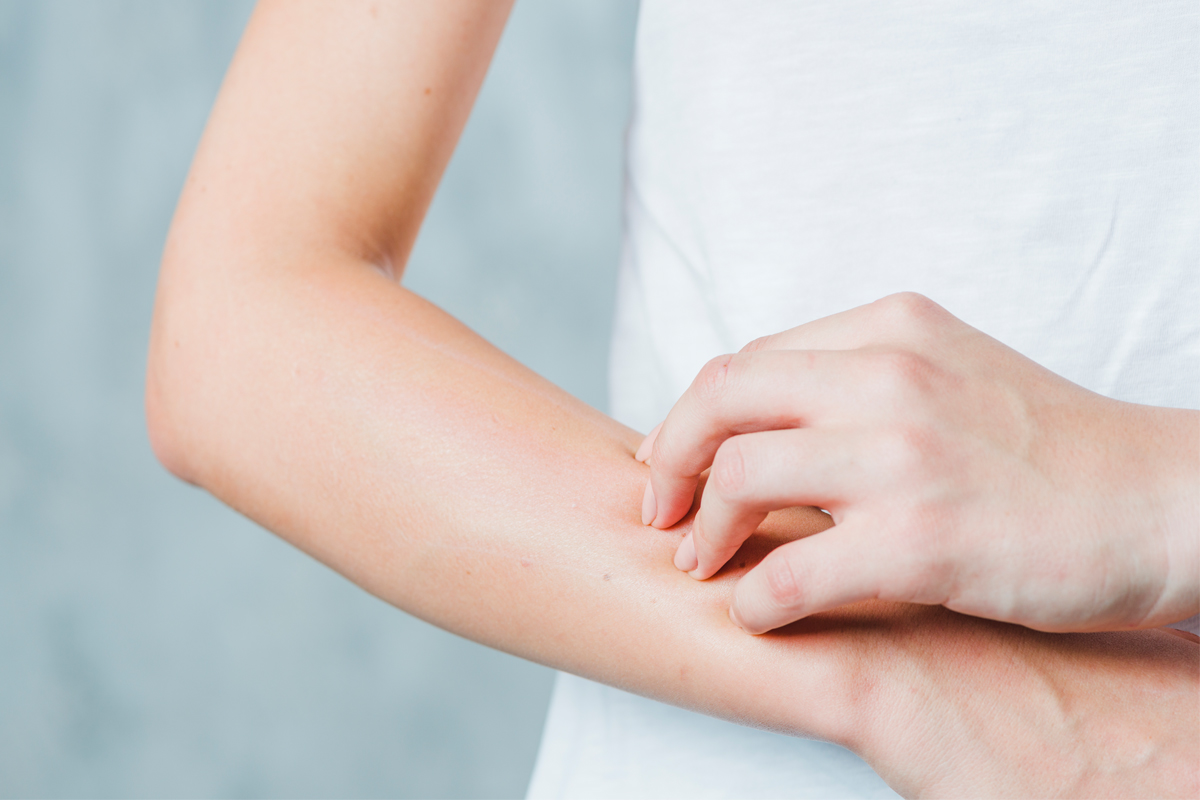
But beta-blockers have been shown to often trigger or exacerbate psoriasis. A new study from scientists at the University of Bonn and Freie Universität Berlin have found a possible cause for this.

According to the study, it appears that beta-blockers can interfere with the breakdown of defective cell components. “In return, the cells release messengers that trigger immune-mediated inflammatory reactions.”

The Study

The scientists studied an active substance called propranolol and found that the inflammatory side effects are probably due to a combination of two factors: “Propranolol is both fat-soluble and slightly alkaline,” explains Prof. Dr. Günther Weindl from the Pharmaceutical Institute at the University of Bonn.

It’s fat-soluable property enables it to cross biomembranes – thin, fat-like membranes that enclose the cell. Its alkalinity ensures that propranolol becomes positively charged in an acidic environment, meaning the substance can no longer return through the membrane.

This is problematic, as the cells use bubbles from the biomembrane as a ‘recycling bag’, removing defective proteins and decomposing enzymes which break down and release the individual building blocks back into the cell, acting as a natural recycling plant. But because the enzymes can only do their work in this ‘perfect recycling, slightly acidic’ environment, when a propranolol molecule randomly finds its way through the membrane into the “bag”, it is positively charged and trapped. This causes it to accumulate and disrupts the processes in the cell. As a result, according to scientists, it “releases inflammatory messengers, in particular the so-called interleukin-23, which is mainly secreted by immune cells. The consequence are the observed skin problems.”

The researchers now hope to further investigate how exactly these processes are related at molecular level.

Nutrient Depletions Caused By Beta-Blockers

Jerry Hickey, Ph. Scientific Director and Pharmacist at Invite Health has developed a Drug-Induced Nutrient Depletion Chart to better help you understand what depletions are happening in your body when you are on a prescription drug.

According to this chart (which can be found by clicking here), beta-blocking drugs including Atenolol, Corgard, Lopressor, Tenormin, Toprol XL, and Metoprolol may deplete Coenzyme Q10, Chromium and/or Melatonin. Here’s why –

Beta-blockers have been shown in numerous studies to block the production of Coenzyme Q10 in the liver. “In just a year’s time, this can result in an over 40% in reduction in serum and cellular levels of CoQ10, which may further result in fatigue, weakened muscles, lethargy, and overall lack of energy.”†

Chromium is a mineral that has been shown to support healthy metabolism and blood sugar already within a normal range. When on a beta-blocker, taking this mineral may offset the drop in HDL, shown in a early study performed by the School of Public Health. The study showed, two months of chromium supplementation resulting in a “clinically useful increase in HDL cholesterol levels in men taking beta-blockers.”†

Melatonin helps to mediate your circadian rhythm, or more commonly known as your ‘Sleep/Wake cycle”. It is produced in the pineal gland mainly at night but beta-blockers can cause sleep disturbances, which impact this cycle. Findings from the Department of Medicine’s study on the influence of beta-blockers on melatonin release indicate that “beta-blockers decrease melatonin release.” This can impact your quality of sleep, your mood, and even your immune system.†

Speak with a certified healthcare professional like an Invite Health Nutritionist today to figure out the best supplement routine for your needs. Questions about the link between beta-blockers and skin conditions? Do you need help understanding what nutrient depletions you may have? Leave us a comment below.

Resources

University of Bonn. “Why beta-blockers cause skin inflammation: Possible cause of a known phenomenon.” ScienceDaily. ScienceDaily, 7 November 2019. .

Lukasik, Robert J., DCN, FACACN. “Statin, Beta-blocker, Diuretic Drug Induced Coenzyme Q10 Deficiency.

School of Public Health, Department of Epidemiology, University of North Carolina. “Effects of chromium supplementation on serum high-density lipoprotein cholesterol levels in men taking beta-blockers. A randomized, controlled trial.” US National Library of Medicine National Institutes of Health, 1991.

INVITE® HEALTH CURRENT SALE