Joint Health as We Age
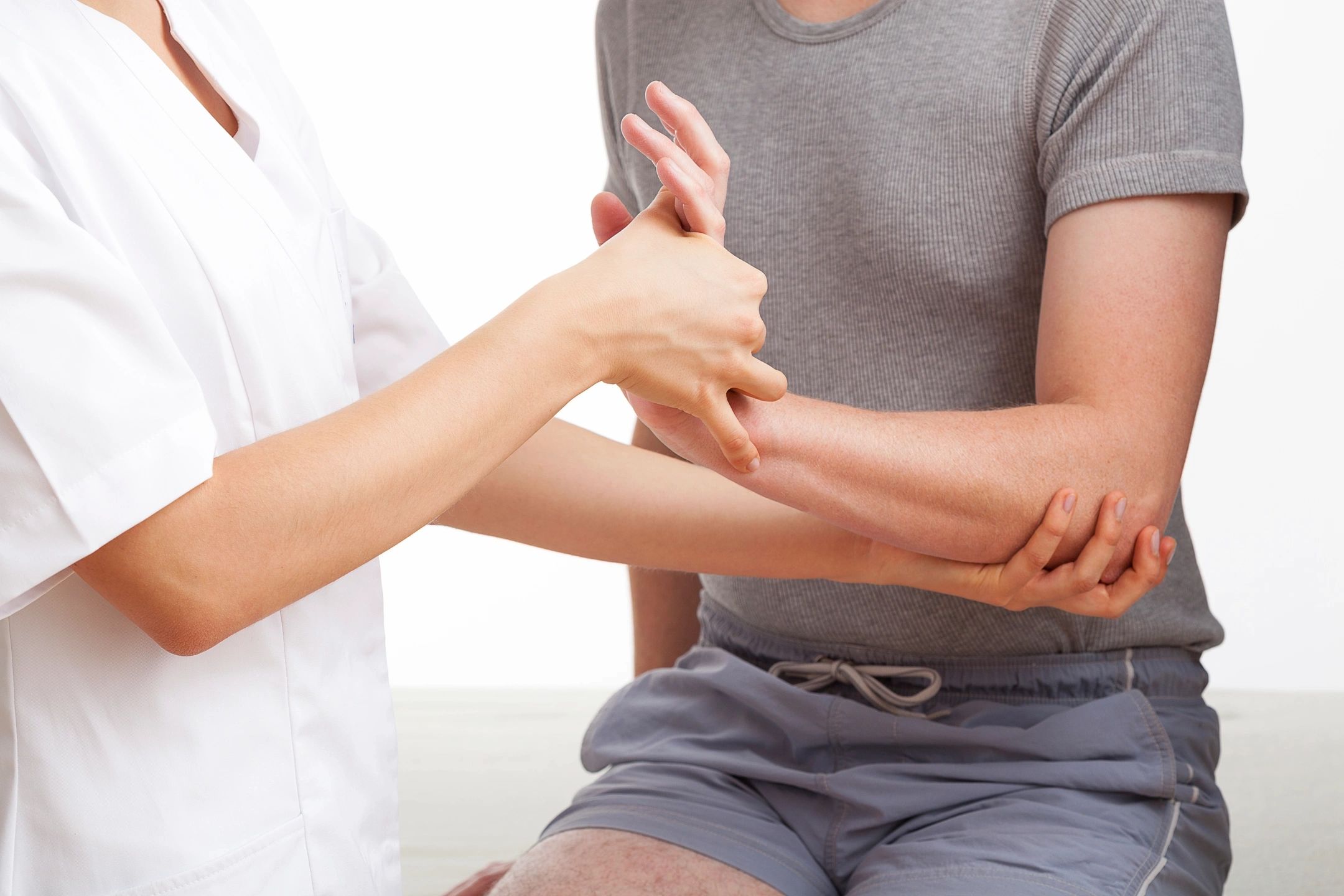
Joint Health as We Age
Dr. Claire Arcidiacono, ND
One of the most common type of questions I get asked is about joints. Whether it be about joint pain, joint stiffness or even “creaky” joints the topic of joints is a common concern. Many people call me because while their joints may be healthy now, they are concerned with maintaining joint health as they age. Others call because they have problems with their joints and want to know what they can do. So just what can you do to keep your joints healthy or even fight off existing joint pain? It is a lot to cover so let us get into it, shall we?
What do most people mean when they say that their joints hurt or are stiff? To put it simply joint pain or stiffness is pain that affects one or more of your joints. You can think of the joints as the “bendy parts” in between bones. For example, when you sit down the part of your leg that bends is your knee. The joints most associated with joint discomfort include the knees, hips, spine and hands/feet.
Joint pain can be described in a few separate ways. In some cases, your joints may have a burning, throbbing or grating feeling. In other cases, the pain can present as an ache or sore sensation. Rather than being out right painful your joints may just feel stiff or make a “creaky” sound. Joint pain may be constant or can come and go in flare-ups. Many seniors (and some not so seniors) can tell you that they know when rain or snow is coming because their joint pain flares up. While some people may find that they feel stiff in the morning but loosen up as they move around other people find too much movement makes them feel worse!
What can lead to joint pain or stiffness? In my clinical experience the most common cause of joint pain or stiffness is any form of arthritis. This can include Osteoarthritis, Rheumatoid arthritis, and even Psoriatic arthritis. Gout is another condition that can cause pain and swelling in the joints! I know what you are thinking. Isn’t gout just in my big toe? While gout often presents in the big toe if left untreated it can and does affect other joints! Both bursitis and tendinitis can lead to joint pain. In addition, these conditions having depression, anxiety or being chronically stressed can affect your joints. Having prior injuries to a joint or repeatedly overusing a muscle can also increase risk of joint pain. Being overweight or obese can lead to greater wear and tear on your joints leading to an increased risk of joint pain. Lastly as you can guess as we age the joints simply start to experience wear and tear from being used. Thus, age is a risk factor for joint pain. (1)
When it comes to our joints it is important to be proactive. This can mean starting nutrients for your joints before you need them. For example, for anyone who has a family history of arthritis or autoimmune disease it can be a great idea to start joint supplements before you need them. Why do I mention autoimmune disease? Autoimmune diseases occur when your immune system becomes confused and attacks itself. These autoimmune diseases are all linked together. It is quite common if you have 1 autoimmune disease to develop other autoimmune conditions. For example, a person with Rheumatoid Arthritis may develop Sjogren’s syndrome. (2) I also recommend that anyone who is an athlete or has had prior joint injuries begin joint health nutrients. Finally, I suggest anyone 45 or older start with joint health supplements. As they say, an ounce of prevention is worth a pound of cure!
So, what can you do to help if you have joint pain or even just want to protect your joints?
- If you have joint pain, I recommend going to your doctor to find out what is causing the pain. For example, you may have Osteoarthritis or Rheumatoid arthrosis or even Lupus! Finding out exactly what is going on can help you get the best treatment as fast as possible.
- If you are overweight or obese, losing weight can help reduce pressure on the joints and reduce pain. (1) Green Tea has been found to be helpful in losing weight. (4) Please see Invite’s Green Tea Hx and Green Tea Tx.
- Treat any underlying conditions such as anxiety or depression. (1) Please check out blogs on depression and anxiety for more help on these complex conditions.
- Alternate placing a cold or hot cloth on the affected area. This is a form of hydrotherapy that many find helps with their inflammation and pain. (1)
- Low impact exercise and gentile stretching can also help joints. (1)
- Physical or occupational therapy can also help with joint pain and stiffness. Supportive aids such as knee brace can also help by supporting the joint. (1)
- Turmeric has been found in studies to help in autoimmune conditions by regulating inflammatory cytokines (5). Studies have also found that due to the antioxidant and anti-inflammatory property of turmeric it is as effective as certain medications in addressing the symptoms of autoimmune and inflammatory conditions. (6) Working on the autoimmune aspect will often help with the different manifestations of joint health. In laymen’s terms it will help with the painful aspect of joint concerns such as osteoarthritis as well as rheumatoid arthritis. Additionally, studies have found that turmeric has been found to help with the swelling and pain of psoriatic arthritis. Even for someone who may not have arthritis but has “achy joints” turmeric often helps relive the discomfort. (7) Please see Invite’s Biocurcumin- 5 -Loxin, Turmeric with Ginger and Curcumin blend.
- Ginger has been found to help with both the inflammation and pain associated with autoimmune or the inflammation and pain that occurs with wear and tear on the joints. (8,9) By reducing inflammation and moderating the immune system ginger is amazing for pain in the joints that occur for any reason. (8) Please see Invite’s Turmeric with Ginger.
- Omega 3s are helpful for inflammation found in any autoimmune disease and also to help protect the brain, memory, anxiety/depression as well as the heart. (10, 11) Additionally omega 3s have been found in studies to be very helpful with the pain associated with osteoarthritis. (12) In my experience for those who experience stiff joints or “creaky” joints omega 3s are necessary! Please see Invite’s Fish Oil, Krill Oil and Biomega!
- Collagen/cartilage has been found effective at reducing the symptoms of osteoarthritis in studies! (13) Primary studies indicate that collagen may help to make beneficial changes in the quality of cartilage in osteoarthritis. (14) Collagen has been found to help with the symptoms of rheumatoid arthritis. (15) I like to describe collagen as the “goo” that makes us up. It is a basic part of so many systems in our bodies. But it is crucial for joints and so it is the basis for all of my joint health plans. For anyone who is looking to maintain joint health before they have a joint problem, I always find myself recommending collagen. Please see Invite’s Collagen Hx, Collagex HA, and Cartilage Hx.
- Hyaluronic Acid has been found to be anti-inflammatory in studies which is helpful in so many joint concerns. (16) Additionally hyaluronic acid has been found to improve joint lubrication as well as reduce the inflammation found in osteoarthritis. This means that for those who have morning stiffness Hyaluronic acid can be extremely helpful! This is also a supplement I suggest for those who are looking to be proactive and help keep their joints healthy before they have a problem. (17) Please see Invite’s Hyaluronic Acid with Devils Claw as well as Invite’s Collagex HA.
- Diet – no article on inflammatory conditions/ autoimmune would be complete without talking about diet. An anti-inflammatory diet is necessary when there is any sort of autoimmune disorder. A Mediterranean diet is associated with reduced symptoms of autoimmune disease activity (such as Lupus and RA) as well as reducing the heart damage that is seen in those with an autoimmune condition. (18)
Sources
- https://my.clevelandclinic.org/health/symptoms/17752-joint-pain
- https://islandrheumatology.com/the-link-between-autoimmune-diseases-and-rheumatic-conditions/
- https://islandrheumatology.com/the-link-between-autoimmune-diseases-and-rheumatic-conditions/
- https://link.springer.com/article/10.1007/s44187-025-00628-8#Sec14
- https://pubmed.ncbi.nlm.nih.gov/17569223/
- https://www.tandfonline.com/doi/abs/10.1080/10408398.2020.1850417?journalCode=bfsn20
- https://www.ncbi.nlm.nih.gov/pmc/articles/PMC7750830/#:~:text=Practical%20Applications&text=This%20study%20found%20that%20acupuncture,joints%20afflicted%20with%20psoriatic%20arthritis.
- https://www.ncbi.nlm.nih.gov/pmc/articles/PMC7137811/
- https://pubmed.ncbi.nlm.nih.gov/11710709/
- https://www.healthline.com/nutrition/17-health-benefits-of-omega-3#TOC_TITLE_HDR_6
- https://pubmed.ncbi.nlm.nih.gov/12480795/
- https://pubmed.ncbi.nlm.nih.gov/pcm/articles/PCM3963282/
- https://pubmed.ncbi.nlm.nih.gov/30368550/
- https://pubmed.ncbi.nlm.nih.gov/21251991/
- https://pubmed.ncbi.nlm.nih.gov/9485087/
- https://www.sciencedirect.com/science/article/abs/pii/S0144861721010869#:~:text=As%20a%20critical%20component%20of,%2Dlike%20receptors%20(TLRs).
- https://www.ncbi.nlm.nih.gov/pmc/articles/PMC5814393/
- https://pubmed.ncbi.nlm.nih.gov/32594173/