Recent Posts

How We Lost Focus of Nutrition as the Keeper of Health – InVite Health Podcast, Episode 246

How We Lost Focus of Nutrition as the Keeper of Health – InVite Health Podcast, Episode 246

It is alarming when you see the lack of nutritional understanding and nutritional planning when it comes to traditional physicians and those in healthcare in general.

Green tea targets inflammation and more – InVite Health Podcast, Episode 245

Green tea targets inflammation and more – InVite Health Podcast, Episode 245

We’ve all heard about the potential benefits that go along with green tea, but do you really understand what it is about that green tea that makes it so incredibly unique and special to your overall health? I want to talk about that today. 

Helping The Heart Stay Healthy – InVite Health Podcast, Episode 244

Helping The Heart Stay Healthy – InVite Health Podcast, Episode 244

I think it’s safe to say that most Americans strive to live long, healthy lives. However, many people do fall short of that and chronic disease becomes a major problem. We see this becoming more of an exponential growth over time and there are many different factors that play into this. We can look at diet and our exposure to different pollutants that can have a negative impact on heart health and brain health. 

Today, I want to focus in on heart disease specifically because we know that this is a major problem in the United States. Heart disease is the leading cause of death for men and women throughout the United States and close to 700,000 Americans die from heart disease each year. That’s one in every four deaths throughout this country, or we can break it down and say one person dies every 36 seconds in the United States from cardiovascular disease. I think we should bring attention to why we should be more proactive when it comes to heart health rather than reactive. We don’t want to wait until something is wrong with our heart before we take action. 

Heart disease and heart attacks

We can break heart disease into different subsections. We can look at coronary artery disease, which is the most common type of heart disease. 

We can also look at heart attacks. Roughly around 800,000 Americans each year have a heart attack. For many people, heart attacks are a silent process and there is significant damage done to the heart muscle itself, even though you may be unaware that you actually had a heart attack. About one in five heart attacks is actually known as a silent heart attack, where there is significant damage done, but yet you are unaware of that. Maybe it’s a situation where you do have some shortness of breath, some heaviness within the chest area and then that passes, and it wasn’t ever to the degree of severity that you felt the need to go seek medical attention. 

invite health podcast offer

This is why we certainly like to be able to understand more about this. When we look at Americans who are at a greater risk for the development of heart disease, this is where the problem really comes in because we understand the trifecta of things such as high blood pressure, high cholesterol, diabetes, metabolic syndrome and obesity.

For more information about the increased risk for heart disease, tune into the full podcast episode.

What can we do to protect our heart health?

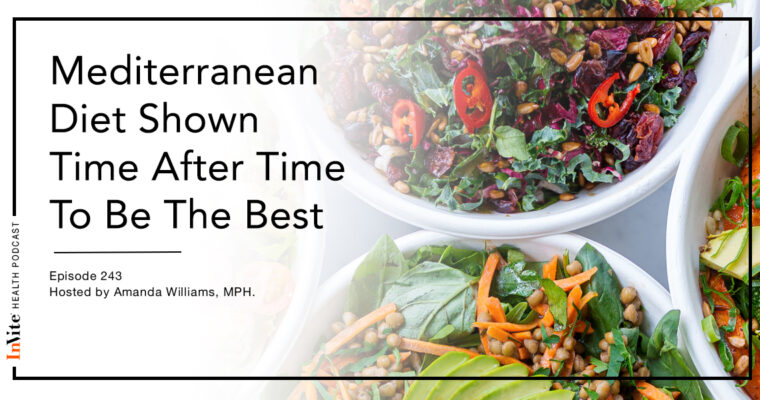
I want to talk about some of the different things that you can be doing when it comes to lifestyle modifications, making sure that you are doing things such as heart-healthy foods, which in turn would brain-healthy foods, which in turn would be whole-body healthy foods. This is why I’m such a stickler about sticking to the Mediterranean diet because the Mediterranean-style diet really does encompass all of those main nutrients that the body needs at that cellular level in order to thrive. Getting that full spectrum of vitamins, minerals and antioxidants, along with good, healthy fats and proteins, is important. This is why adherence to that Mediterranean-style diet has been shown time after time in terms of scientific research as being the best choice when it comes to overall health. When we look at the cardiovascular studies done with the Mediterranean diet, we recognize just how beneficial that is for the heart. 

Tune into the full podcast episode for some studies relating to heart disease and overall heart health. 

Mediterranean Diet Shown Time After Time To Be The Best – InVite Health Podcast, Episode 243

Mediterranean Diet Shown Time After Time To Be The Best – InVite Health Podcast, Episode 243

Every single week, there is a new study released that continuously reinforces the importance of adhering to a Mediterranean-style diet.

How Aged Garlic Supports The Immune System – InVite Health Podcast, Episode 242

How Aged Garlic Supports The Immune System – InVite Health Podcast, Episode 242

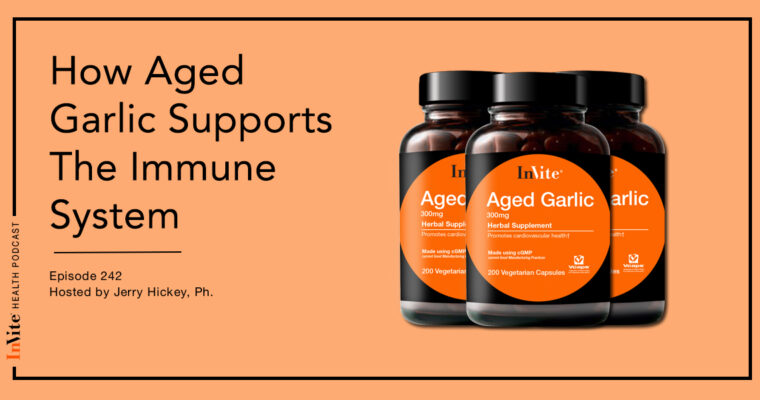
You don’t want inflammation all the time. You just want it highly-focused and used when you need it. You also want the immune system to be functioning well so that it takes out any viruses, bacteria, yeasts and parasites that are infectious. Aged Garlic helps on both fronts.

Ways to Address Chronic Constipation – InVite Health Podcast, Episode 241

Ways to Address Chronic Constipation – InVite Health Podcast, Episode 241

constipation

Invite Health Podcast, Episode hosted by Amanda Williams, MPH.

Subscribe Today!

Apple PodcastsGoogle PodcastsiHeartRadioSpotify

Most of us have probably been given a lot of wise wisdom from a family member somewhere along the way that has told us about the importance of having prunes and how beneficial that can be for bowel function. I want to talk about that specifically today, not prunes, but I want to talk about constipation because we know that constipation is a major problem in this country. It affects so many people, so I want to talk about the pathophysiology behind constipation, along with different things that you can be doing to address this issue because it isn’t something that’s normal. We shouldn’t accept constipation as a normal part of your life. Our diet plays a major role into this. 

The science behind constipation

When we look at chronic idiopathic constipation, what we’re actually looking at is an unsatisfactory system in terms of proper defecation. Chronic idiopathic constipation affects upwards of 20% of the adults in the United States. That’s a huge amount of the population that is dealing with constipation. We have to think about what is functionally going on within the body. 

What Research Reports About Irritable Bowel Syndrome – InVite Health Podcast, Episode 213. Listen Now >>

We have to first look at the diet. When we think about our family members recommending prunes, why do they do that? It’s because of the fiber content. This is where we fall incredibly short as Americans. We know that we should be getting roughly 30 grams of fiber every single day and the average American struggles to come close to getting 10 grams. When we look at something like prunes for example, a cup full of prunes can yield you 12 to 15 grams of fiber, so there is a lot of truth to the fact that prunes can be beneficial. But it’s not like you can just have prunes every day and that’s going to solve all of the issues. We have to look at a comprehensive way to address this problem, so we have to recognize that it’s all the foods that we are eating. 

We have to make sure that we have proper hydration. A majority of Americans walk around in a state of dehydration, which is not beneficial for your bowel movements. We have to look at hydration and consistent high-fiber in our diet each and every single day. 

invite health podcast offer

This fiber that we’re taking in from our foods includes green leafy vegetables, vegetables in general and fruits. We have to start to incorporate this. When they did the National Nutritional Survey, they recognized that over 75% of Americans do not get the required amount of fruit per day, which is one to two cups. That’s not a hard feat to achieve, but yet 75% of Americans cannot do that. Then we look at the even more alarming number when it comes to vegetable intake. We should be taking in two to three cups per day and over 85% of Americans fall short of that, which is really a major issue. So, if your predominant source of fiber is coming from things like fruits or vegetables and we are not getting it, then no wonder why 20% of the adult population in the United States suffers from chronic idiopathic constipation.

What to do about chronic constipation

The first thing we can do to combat chronic constipation is adhere to a Mediterranean diet, which is going to incorporate those key nutrients, so you’re going to get that broad spectrum of high-fiber foods along with healthy fats and good protein. This is why the Mediterranean diet is so incredibly beneficial for the entire body, for every single system. 

Key Nutrients for Common Digestive Health Concerns – Invite Health Podcast, Episode 114. Listen Now >>

We also have to make sure that we are staying hydrated and hydrated in the right way. We cannot look at diet soda and regular soda as a means for hydration. We have to put those sugary drinks off to the side and we need to replace that with things like water, which is the body’s best friend. If you don’t like the taste of water, there are ways to skirt around that. You can add in things like the Green Tea Tx or the White Tea Tx. There are ways that you can get that liquid into your system and make sure that you have proper hydration

We can also use things such as Probiotics to support our microbiome. That’s why having fermented foods, for example, is very beneficial because that microbiome really thrives on those types of foods. We can also incorporate in a daily Probiotic, such as Probiotic Hx, which has been shown in human clinical trials to be incredibly supportive for those who deal with chronic constipation.    

Tune into the full podcast episode for more tips on how to combat chronic constipation. 

Thank you for tuning in to the Invite Health Podcast. You can find all of our episodes for free wherever you listen to podcasts or by visiting www.invitehealth.com/podcast. Make sure you subscribe and leave us a review! Follow us on Facebook, Twitter and Instagram at Invite Health today. We’ll see you next time on another episode of the Invite Health Podcast.


invite health podcast disclaimer

amanda williams invite health