Learning about the SUPER in Superfoods
Are you tired of all these marketing schemes to get you to purchase “superfoods”? Let me explain to you what superfoods are and why you should purchase them from InVite Health.
Nutrition. Vitamins. You.
Are you tired of all these marketing schemes to get you to purchase “superfoods”? Let me explain to you what superfoods are and why you should purchase them from InVite Health.
One supplement every diabetic should be taken is Coenzyme Q10. This supplement is extremely beneficial for a diabetics health.
Digestive health
Written by Dr. Claire Arcidiacono, ND
For further questions or concerns email me at carcidiacono@invitehealth.com
Digestive Health affects practically everyone who eats and goes to the bathroom. But what is a healthy digestive system? It’s important we start at the beginning.†
The digestive system is a separate system from the rest of the body. It has its own immune system, nervous system and enzymes. Anything you consume, such as food stays in the digestive system. For example, if you eat an apple, it stays in your digestive system and doesn’t float around in your blood somewhere. The digestive system is made up of a “roadway” called the gastrointestinal tract or GI tract. The GI tract is made up of the liver, pancreas and gallbladder; pictured below. (1) Since this is a complex topic, I will focus mainly on the digestive tract.†
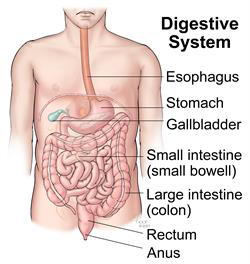
The Gastrointestinal tract starts in the mouth. Our teeth are the first and important part of the digestive process. They help the salivary glands in the mouth help to breakdown food, especially complex carbohydrates. If you chew on a cracker for long enough, the enzymes in your mouth will break it down so it will taste sweet! (2) It is important to keep your mouth healthy and clean by brushing your teeth twice a day! Once you break down your food, you swallow it, where it enters the next part of the digestive system.†
The swallowed food travels through the esophagus. A gateway called the lower esophageal sphincter, separates the stomach form the esophagus. When you eat or drink, this triggers the sphincter to open; so the food can enter the stomach. However, sometimes there is an issue with the sphincter not closing properly; causing acid in the stomach to flow into the esophagus leading to “heartburn”. (3) Once you’re done eating, the sphincter closes, entering the stomach.†
The stomach is basically a blender, containing digestive enzymes and acid. The acid in the stomach is important for the enzymes to work properly. (4) It mixes the food, enzymes, and acid together to breakdown the food; killing any pathogens that may be present.†
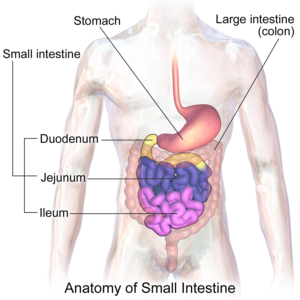
After the stomach, the food travels to the small intestine which is only small due to its width; its length being 22 feet long! Much like the stomach, the small intestine (SI) continues to breakdown food. The SI receives enzymes from the pancreas and bile from the liver. Unlike the stomach, the SI is also in charge of the absorption of nutrients. It’s broken down into the following parts: duodenum, jejunum and ileum, pictured below:†
FATTY LIVER DISEASE IS ON THE RISE – INVITE HEALTH PODCAST, EPISODE 349 >> Listen Now!
The duodenum or first section of the SI is responsible for the breakdown of food. While the jejunum and Ileum are mostly responsible for the absorption of nutrients. In other words, semi solids enter the small intestine and get mixed with water, bile, enzymes and mucus to become semi liquid.†(5)
From there, the food will travel to the Large intestine or LI. This is also known as the colon. The colon (pictured below) is made up of the cecum which is connected to the SI, the ascending colon, transverse colon, descending colon and the sigmoid colon which connects to the rectum and then finally the anus.
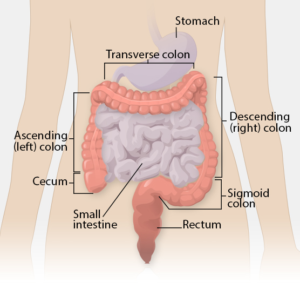
The colon absorbs water and produces waste material known as stool or feces; which is food debris and bacteria. Good bacteria in the colon help us by making certain vitamins and protecting us from pathogens. The rectum is connected to the anus, the final part of the digestive tract. The anus has sphincter muscles that allow us to control bowel movements. Normally, they allow us to hold stool until our body is ready to release it.† (6)
The GI tract is just one part of the digestive system. Next week we will move on to the organs outside of the digestive tract; which will include the pancreas, liver and gallbladder.†
https://my.clevelandclinic.org/health/body/7041-digestive-system
https://my.clevelandclinic.org/health/body/21765-mouth
https://my.clevelandclinic.org/health/body/21728-esophagus
https://my.clevelandclinic.org/health/body/21758-stomach
https://en.wikipedia.org/wiki/Small_intestine
https://en.wikipedia.org/wiki/Large_intestine

Do you struggle with always having low energy? Are you tired of being tired? Well listen now to Amanda Williams, MD, MPH podcast about ways to help rejoice with energy again!
Feeling low energy and you don’t know what to do to help yourself? Learn more about key nutrients to help increase energy levels in just days!
Ketogenic diet
Subscribe Today!


Please see below for a complete transcript of this episode.
Hosted by Melissa Bistricer, MS, RDN
*Intro music*
InViteⓇ Health Podcast Intro: Welcome to the InViteⓇ Health Podcast, where our degreed healthcare professionals are excited to offer you the most important health and wellness information you need to make informed choices about your health. You can learn more about the products discussed in each of these episodes and all that InViteⓇ Health has to offer at www.invitehealth.com/podcast. First time customers can use promo code PODCAST at checkout for an additional 15% off your first purchase. Let’s get started!†
*Intro music*
Melissa Bistricer, MS, RDN: [00:00:39] Hello and welcome back to another podcast here at InViteⓇ Health. Today we’ll be talking about a diet. You may know about it. You may not. It’s pretty popular. It’s called the ketogenic diet. You may be on it or you may roll your eyes when you hear about it. We will talk all about the ketogenic diet and all the details.† [00:00:59]
[00:00:59] But first, my name is Melissa Bistricer and I am a registered dietitian. I am so excited to bring to you the nutritional aspect of nutrient here at InViteⓇ Health. Nutrition, food for thought: our food should be our medicine and our medicine should be our food. InViteⓇ Health promotes an integrative approach and providing vitamins into your daily life to increase your quality of life. In conjunction with nutrient. It is also important to learn and include other lifestyle modifications like nutrition, exercise and sleep. These practices with the use of vitamins will promote optimal benefits in your daily life. † [00:01:38]
[00:01:39] Well, let’s get talking about the ketogenic diet. Some of you may know it as the keto diet. This has been proven to be a therapeutic diet designed to help treat children with epilepsy that continues to spike even with medication. The ketogenic diet has helped about 40 to 50% of children who have started with 50% less seizures. And approximately 10 to 20% of these children achieve more than 90% reduction in seizures. This diet is recommended for all the younger age population, even infants. It is not recommended for adults as the options are extremely limited and it’s very hard to maintain the diet for long term. † [00:02:22]
KEEPING THE WEIGHT OFF AFTER THE KETO DIET – INVITE HEALTH PODCAST, EPISODE 61 >> Listen Now!
[00:02:23] The keto diet consists of high fat, adequate protein and very low carbohydrates. That diet ratios generally consist of 70 to 80% fat, 20% protein, and 5 to 10% carbohydrates. The ketogenic diet helps to reset our body use of food. Carbs in the diet, as we know as sugars and starches, are generally our main source of energy. The reduction of carbs will put our body in a metabolic state called ketoacidosis. Though the ketogenic diet, the lower amount of carbs will train your body eventually that the new energy source will be from fat instead of carbs. It will turn the fat into ketones in the liver, which will help to supply energy for the brain. As we have previously discussed, Carb is the body’s main energy source. If we do not consume carbs, the fat in our body will be used for energy. But our body will fall into ketoacidosis. Ketoacidosis is when the body reduces the consumption of carbs, limiting the body’s supply of glucose, otherwise known as sugar, which is the main source of energy for the cells. In the ketogenic diet, protein is consumed moderately. Protein can be converted to glucose and if consumed in higher amounts, they may slow your transition into ketoacidosis. † [00:03:44]
[00:03:45] Being in a state of ketoacidosis, especially at an older age, can lead to lower blood pressure, high cholesterol, kidney stones, constipation, nutrient deficiencies and an increased risk of heart disease. But is being in ketoacidosis bad for our bodies? Well, being in ketoacidosis for a long period of time may lead you to have vitamin deficiencies. The keto diet often is lacking in sources of water soluble vitamins, including B vitamins, which are essential for healthy nervous system and energy metabolism. Being in a ketoacidosis state is not recommended for longer than six months. Therefore, using the keto diet is not sustainable for the long term. If someone is looking for weight loss, they may achieve that goal really quickly by going on a keto diet. But then down the line six months later, when you try to reintroduce carbs back into their diet, they likelihood of them gaining all, some or even more weight is very high. Because carbs naturally have water, which means they’re increasing their weight right away.†[00:04:53]

[00:04:55] Though research has been suggesting that following a keto diet may have some benefits, such as weight loss, type two diabetes, and blood sugar control. There are several adverse effects to be aware of. The adverse effects can be muscle cramps, bad breath, changes in bowel, keto flu, and the loss of energy. The keto flu is basically temporary side effects of starting the keto diet with symptoms such as headaches, foggy brain, fatigue, nausea, difficulty sleeping, and constipation. This can last about a week or so, but in extreme cases it can last up to a month. Think of it like this going on the keto diet is essentially giving yourself the flu which most of us are trying to avoid or prevent from happening.†[00:05:41]
[00:05:43] The overall challenge that we find by following a low carbohydrate diet is limiting your intake of vegetables, fruits, grains, and increasing your fat intake. In a sense this is truly detrimental to your health in the long run, a low carb diet and increased fat consumption will stimulate inflammatory pathways, oxidative stress, and promote biological aging. The biggest issue is that it is so hard to sustain a diet that is low in carbs and high in fat. People love the initial weight loss, it’s excellent for diabetes control, but slowly they’ll get bored of eating the same foods day in and day out. Then they go back to eating carbs and their weight gain is increased and their diabetes is no longer under control. † [00:06:30]
[00:06:31] The main key takeaway here is that moderation is key. While learning the proper tools to eat a healthy, well-balanced diet for the long term. In the long term a diet plan will help to be able to sustain, be less risky, and hopefully prevent diseases such as cardiovascular or certain cancers. So you may be asking, what does it mean when I say moderation is key? Well, I’m going to keep it super simple for you guys. Remember this having a plate, half of it should be vegetables. A quarter of the plate should be protein and a quarter carbs. But there’s a little bit more detail. The vegetables that should be half the plate should be non-starchy vegetables. For example, that could be lettuce, cucumbers, tomatoes, broccoli, Brussels sprouts and if you want the full list of non-starchy vegetables. Feel free to email mbistricer@invitehealth.com and I will provide for you the Non-Starchy Vegetable Guide. A quarter of the plate should be protein, preferably lean proteins or plant based proteins, chickpeas, lentils, stuff like that. And a half of the plate should be carbohydrates, but try to stick to whole grains like brown rice, faro, quinoa or starchy vegetables such as sweet potatoes, potatoes and butternut squash. If you can stick to having your lunch and dinners looking like this, then you just learn what moderation is rather than following a keto diet. But the potential for health risk factors from the keto diet. Again moderation is key and you just learned what that means.†[00:08:12]
[00:08:13] Unfortunately, people who do not experience epilepsy have been going on the bandwagon to follow the keto diet because it’s become the fad diet of the month, year and so forth. They’ve found out that the keto diet helps them to lose weight quickly. They did not look to see the long term effects and issues that can bring up consuming such a high fat diet and a low carb can lead to serious medical conditions. The keto diet can cause individuals to have disordered eating and is not safe for individuals without epilepsy. But even individuals with epilepsy should be following the keto diet with health care providers by their side to monitor. The diet has side effects for the long run. As children with epilepsy grow up, we want to make sure that it’s not interfering with their growth spurts or brain or brain function. It is crucial to follow the keto diet with health care providers. If your child has epilepsy, please consider to talk to a health care provider before going to follow the ketogenic diet on your own. If you do not have epilepsy, please consider just learning about a healthy, balanced lifestyle diet to eliminate the long term risk factors. If you would like to talk to a health care provider here at InViteⓇ Health free to go on our website at invitehealth.com for any further questions you can always chat with me as a nutritionist or any of our healthcare providers to assist you here at invitehealth.com or email me at mbistricer@invitehealth.com.† [00:09:40]
[00:09:42] I am Melissa, RDN, ready to share the knowledge to help you modify your lifestyle to live a happier and more successful life. I’m looking forward to continuing to provide you with educational podcasts and blog posts. Again, nutrition food for thought: our food should be our medicine, and our medicine should be our food. Have a great day and tune in for the next podcast coming your way soon. †[00:09:42]
*Exit Music*