The Real Impact of Pandemic-Related Stress and Anxiety – InVite Health Podcast, Episode 206
There have been a slew of scientific research studies looking at the implications of the stress and anxiety in just this month alone.
Nutrition. Vitamins. You.
There have been a slew of scientific research studies looking at the implications of the stress and anxiety in just this month alone.
What are the long-term impacts of stress and how can you manage your stress in a much more efficient way? So many people deal with stress on a daily basis. It can come in different forms and be caused by a variety of things. Let’s talk about what you can be doing to help mitigate the impacts of stress.
Invite Health Podcast, Episode hosted by Amanda Williams, MPH
Subscribe Today!


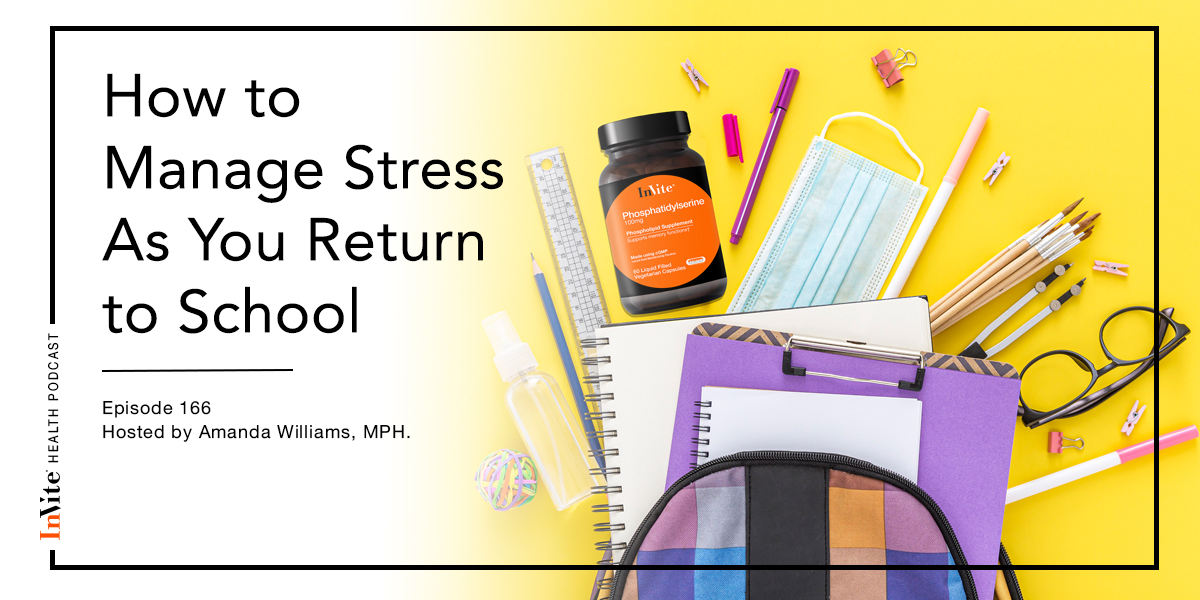
For many people, this is an extremely stressful time. On top of living through a global pandemic, students and employees are heading back to school and work. For the schools that are already open and welcoming students back, there have already been reported cases at their locations. So, it’s completely understandable that both students and parents returning to school or employees returning to work are feeling the extreme impact of stress. A very important nutrient you should know about is called Phosphatidylserine.
What is Phosphatidylserine?
This is an essential brain nutrient, as it helps the brain and its neurons to support memory function and neuroplasticity. Neuroplasticity is the ability to clean up minor damage that may have occurred due to oxidative stress and inflammation. It is the capacity to replace damaged neurons and make new ones. Phosphatidylserine plays an essential role in this.

This nutrient surrounds the inner portion of the brain, around all of the neural tissues. This is key because our brain is composed of many different fats, including omega-3 fatty acids and Vitamin D. But we have to also look at phospho-lipids and the most important is Phosphatidylserine. The issue is that, under times of stress, the body does not have enough innate ability to utilize this important nutrient’s stores. This can impair our ability to focus and retain new information. Stress can also impair our memory, both short term and long term. Many college students going back to school in a virtual environment or even back to school physically may drive up more stress. This is especially true for freshman college students.
Normally, through diet alone, many do not obtain this nutrient in adequate amounts. So this because a crucial brain health nutrient, especially during the aging process. The natural production and exposure of Phosphatidylserine declines with age and chronic stress.
Why 5-HTP Has Been Studied for Depression, Anxiety and Stress. Listen Now >>
Clinical Studies
Published in the Journal of Nutrition, researchers were assessing the roles and importance of Phosphatidylserine as a phospho-lipid, as well as a dietary supplement in the brain. They looked at over 137 different published research studies and found that it had a positive effect when it came to cognitive ability and retention.
Thank you for tuning in to the Invite Health Podcast. You can find all of our episodes for free wherever you listen to podcasts or by visiting www.invitehealth.com/podcast. Make sure you subscribe and leave us a review! Follow us on Facebook, Twitter and Instagram at Invite Health today. We’ll see you next time on another episode of the Invite Health Podcast.


5-HTP easily enters your brain and is quickly converted into serotonin. Serotonin is known as the ‘happiness molecule’ and is a very important neurotransmitter. This is why 5-HTP has been studied for its benefit for mood and overall brain health.

A new study has revealed that resveratrol displays anti-stress effects by blocking the expression of an enzyme related to the control of stress in the brain.

A team of researchers from the Shanghai Mental Health Center at Shanghai Jiao Tong University School of Medicine, set out to investigate if there was evidence to support improvement of anxiety symptoms by regulating intestinal microbiota, or gut bacteria.
Bacteria is commonly thought of as negative. There are plenty of harmful bacteria that can lead to a number of risks when it comes to bacteria inside of your body. But with harmful bacteria comes beneficial bacteria called Probiotics. Probiotics are friendly bacteria that make up the microbiome in your gut or digestive tract and are the key to good health, especially digestion and regularity. Bacteria, though naturally present in the body, accounts for two pounds of bio-mass in your intestines, which need a balance of beneficial bacteria to promote good health.
The Anti-Anxiety Diet You’ve Been Searching For! Click here >>
Levels of probiotics decrease with age and can also be affected by other factors, including a poor diet and obesity. As levels of probiotics decrease, problematic bacteria in the gut thrive, which can lead to digestive probiotics like bloating and gas.
Researchers reviewed 21 studies of 1,503 individuals collectively, where 14 people had chosen probiotics as interventions to regulate intestine microbiota, and 7 chose non-probiotic ways, like adjusting their diet.
Can High-Fat Diets Manipulate Gut and Brain Activity? Click here to read more >>
Overall, 11 of the 21 studies showed a positive effect on anxiety symptoms by regulating intestinal microbiota, “meaning that more than half (52%) of the studies showed this approach to be effective.” Of the 14 studies, more than a third (36%) found them to be effective in reducing anxiety symptoms.
The researchers conclude, “We find that more than half of the studies included showed it was positive to treat anxiety symptoms by regulation of intestinal microbiota.”