Tag: inflammation

IBS and IBD

IBS and IBD

IBS and IBD Written by Dr. Claire Arcidiacono, ND  A question I am often asked is, “what is the difference between Irritable Bowel Disease and Irritable Bowel Syndrome?” Aren’t they the same? Well not really. While both are digestive conditions involving irritation in our digestive 

SIBO and Diverticulitis  

SIBO and Diverticulitis  

SIBO and Diverticulitis   Dr. Claire Arcidiacono, ND In this blog I wanted to talk about 2 conditions that may not seem related at 1st glance but are more closely related than you may think! These conditions are diverticulitis and SIBO (small intestinal bacterial overgrowth). In both 

Pulled Back Muscles or Muscle Strain 

Pulled Back Muscles or Muscle Strain 

Pulled Back Muscles or Muscle Strain 

Dr. Claire Arcidiacono, ND   

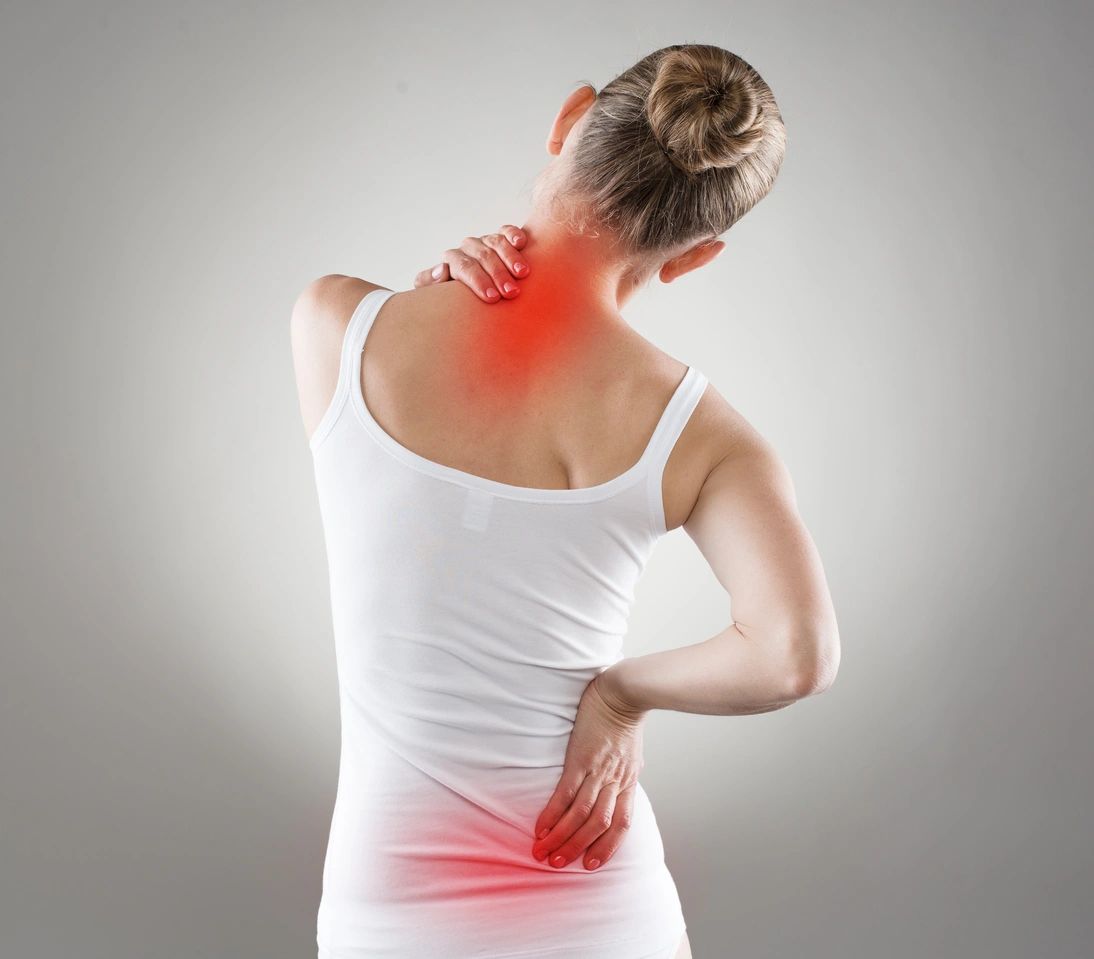
Experiencing a pulled muscle or muscle strain is probably one of the causes of back pain that almost everyone has heard of. Whether you’ve experienced it yourself or know someone who has experienced it a muscle strain is probably one of the most well-known causes of back pain. What are the symptoms of a pulled muscle? What are the risk factors for pulling or straining the muscles in the back?  And lastly what can you do to help reduce the painful symptoms? Let’s get into it, shall we? 

To start off, what types of symptoms can you experience with a strained muscle? The first signs of a pulled muscle or mild muscle strain are usually pain or tenderness as well as limited motion. You may notice getting in and out of bed or even shifting into a seated position triggers pain. In addition to the pain there may also be muscle weakness. On the surface the skin may appear red and, in some cases, even swollen. In some case’s bruising may occur. (1) Muscle strains are usually classified as either acute or chronic. In an acute strain the symptoms usually occur at once as compared to a chronic strain where the symptoms develop slowly over time. (2) 

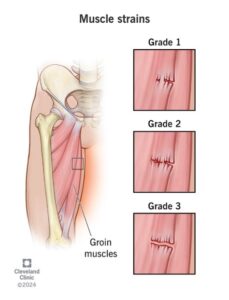
Before I get into the risk factors for pulled or strained muscles, I want to talk about what exactly a pulled or strained muscle is. Basically, a muscle strain is an injury to a muscle/tendon. Typically, strains are most common in the lower back and in the hamstrings (in the legs). They can range from minor (simply an overstretched with only a few muscle cells torn) up to severe which can involve partial or even completely torn muscles. Muscle strains are usually assigned a rating on a scale from grade 1-3. In this blog we are focusing on grade 1. (1) Please see the following pictures for a strained or pulled muscle. (2)  

I would like to point out that minor strains may be treated at home however if the symptoms worsen despite treatment or if there is numbness/ tingling or intolerable pain it is important to see a doctor. (1) 

Risk factors for a muscle strain can include taking part in contact sports such as soccer, football and boxing. Acute strains can be caused by lifting something heavy. (1) Poor flexibility or sudden movements can also trigger a muscle strain. (2) In my clinical experience awkward motions can trigger a muscle strain and pain. For example, recently one of my Invite customers reported a muscle strain after he dropped a fork and “stood up funny” after reaching to pick it up. A strain may also be caused by not warming up properly or by just too much overall physical activity/ effort. Over training may overwork and even weaken the muscles. (2) Repetitive motion may also trigger chronic muscle strain. (1) Lastly, earlier injuries may increase the risk of a muscle strain. (2) So, what can you do? 

  • Ice is helpful for the first 3 days. After that you can alternate ice and heat.  
  • Rest! Rest the muscles that hurt so that they have time to heal. (3) 
  • Gentle stretching can also help improve symptoms. (4)  
  • Magnesium has been found to help reduce muscle soreness and inflammation! (5) For a pill form Invite Health has Magnesium Citrate and Glycinate.  Invite also has a powdered Magnesium called Bio Avail Magnesium that can be mixed into menthol rub and used topically. You can also mix a few scoops into a warm bath.  
  • Turmeric has been found in studies to help reduce muscle inflammation and pain. (6) Please see Invite’s Biocurcumin 5 Loxin and Osteo-Lube! Osteo-Lube can easily be added to a menthol rub for topical use.  
  • Green lipped muscle has been found to help pain and inflammation. (7) Please see Invite’s InflamMune 
  • Bromelain is an amazing supplement! Please see my blog on this fantastic nutrient.  


 Sources: 

  1. https://www.mayoclinic.org/diseases-conditions/muscle-strains/diagnosis-treatment/drc-20450520 
  1. https://my.clevelandclinic.org/health/diseases/22336-muscle-strains#management-and-treatment 
  1. https://www.mountsinai.org/health-library/injury/strains 
  1. https://www.nhsinform.scot/illnesses-and-conditions/muscle-bone-and-joints/neck-and-back-problems-and-conditions/exercises-for-back-pain/#:~:text=Lying%20on%20your%20back%2C%20place,in%20line%20with%20your%20shoulders. 
  1. https://www.mdpi.com/1422-0067/25/20/11220#:~:text=Clinical%20studies%20have%20shown%20that,and%20patients%20with%20various%20conditions. 
  1. https://www.uoc.edu/en/news/2025/turmeric-a-promising-supplement-for-the-relief-of-muscle-inflammation-following-vigorous-exercise#:~:text=A%20review%20of%20the%20scientific,and%20improving%20subjective%20pain%20perception 
  1. https://pmc.ncbi.nlm.nih.gov/articles/PMC8638931/ 

Healing After Dental Work 

Healing After Dental Work 

Healing After Dental Work  Dr. Claire Arcidiacono, ND When it comes to dental health one of the most frequent questions, I get asked is what should I take after I get dental work? In this blog I will be reviewing supplements that promote dental health 

How Osteo-Lube™  Supports your Health!

How Osteo-Lube™  Supports your Health!

How Osteo-Lube™  Supports your Health! Dr. Claire Arcidiacono, ND  I wanted to take the time to talk about a product that in my mind just does not get nearly enough attention! This product is called Osteo-Lube™. I bet you are thinking Osteo-Lube™ what the heck 

Hepatitis Part 2

Hepatitis Part 2

Hepatitis Part 2

Dr. Claire Arcidiacono, ND

In our last blog on this topic, we began with some background information such as just what is hepatitis? What causes hepatitis? And what are the symptoms you might experience with hepatitis? If you haven’t read the first part of this 2-part blog series on hepatitis I’d suggest reading that part first. So, moving on let’s get into important lab testing.

What lab tests can help to rule out or even diagnosis hepatitis? To start with your doctor will perform a physical exam. This may include pressing against your abdomen to determine if there is any swelling or pain in the liver. The doctor will also check for any signs of jaundice. In addition to a physical exam the doctor will ask important questions about our health, including your alcohol intake. Blood tests can help evaluate liver function and even determine if there is an infection. (1) Blood work can help differentiate between alcohol induced hepatitis and other types of hepatitis because in alcohol induced hepatitis there is usually an elevation of AST and ALT is normal. This is the opposite of other liver disorders. Another blood test for alcohol induced hepatitis is carbohydrate- deficient transferrin. The latest studies have found that CRP is a good marker of alcohol induced hepatitis. (2) An ultrasound can help confirm if the liver is showing signs of inflammation. There are some doctors who will suggest transient elastography which is an advanced imaging test. Other tests the doctor may recommend include an MRI, CT scan and liver biopsy. (1) As a PSA I want to emphasize how important it is to be honest about your alcohol intake. Being honest will help to narrow down what is going on and lead to the correct diagnosis and even treatment faster. At the end of the day your doctor wants to help you. Being honest helps give them the tools they need to do so.

Moving on, what are the risk factors for developing hepatitis? The risk factors for developing hepatitis include exposure to the virus. Alcohol induced hepatitis can be a result of long-term exposure to alcohol or heavy alcohol intake. For more information on how one can become infected with Hep A, B, C please see Allie Might’s blog “Hepatitis – The types, the support and can it be prevented?” General health risks that increase the risk of developing hepatitis include not being vaccinated, having a virus associated with hepatitis (for example EBV), having an autoimmune disorder, or being born to a mother who has contracted viral hepatitis.  Remember only viral hepatitis is contagious since it’s actually the virus that then triggers the hepatitis that is spread and not the actual diagnosis of hepatitis or liver inflammation.  In addition to viral and alcohol exposure other risk factors can include working around chemicals, drinking or eating unsafe food and even taking certain medications. (3) Risk factors for hepatitis can also include having hyperlipidemia, being overweight or obese and even having high blood sugar. Lastly, having high blood pressure is also a risk. (4)

There can be some dangerous complications, so I’ll review those right now. Hepatitis can lead to portal hypertension which can lead to enlarged veins. These enlarged veins (varices) can eventually rupture and can cause dangerous bleeding. Long term hepatitis can also lead to cirrhosis. Please see my 2-part blog series on this topic for more information! Chronic hepatitis can also lead to liver cancer and even liver failure. (4)

So what can you do to help reduce the risk of hepatitis?

  • Always make sure to wash your hands, especially after you use the restroom! Also make sure to wash any fruits or vegetables before you eat them.
  • Always practice safe sex and do not share needles or other personal items such as toothbrushes.
  • Talk to your doctor about getting vaccinated.
  • Make sure to always manage metabolic factors such as cholesterol and blood sugar. Please see my blogs on these topics for help on how to manage these concerns.
  • Only drink alcohol in moderation. (4)
  • One of the most well studied supplements is NAC. Studies have found that NAC can help to limit Hep B viral replication. (5) Studies have also found that NAC is the only proven therapy for ischemia hepatitis. (6) Lastly NAC has also been found to help alcohol induced hepatitis. (7) Please see Invite’s NAC. Detox Hx, and Daily Detox powder!
  • Milk Thistle has been shown in studies to help lower liver enzymes in those with hepatitis. (8) Milk Thistle has also been shown to help those with Hep C who did not respond to conventional medication. (9) Please see Invite’s Milk Thistle, Hepatox, and Daily Detox powder.
  • Glutathione has been found to improve liver function in those with hepatitis. (10) Please see Invite’s Glutathione lozenges and Gluta Hx.
  • For more information on Hepatox and Daily Detox please check out my blogs on these important nutrients!
  • Olive Leaf has been found to have antiviral benefits against the hep virus. (11) Please see Invite’s Olive Leaf extract.

Our product highlight will be Colon Hx!

Sources:

  1. https://nyulangone.org/conditions/hepatitis/diagnosis
  2. https://www.ncbi.nlm.nih.gov/books/NBK470217/
  3. https://www.verywellhealth.com/hepatitis-causes-and-risk-factors-4689127
  4. https://my.clevelandclinic.org/health/diseases/hepatitis
  5. https://www.sciencedirect.com/science/article/abs/pii/0166354295009779
  6. https://academic.oup.com/milmed/article/184/9-10/565/5366281
  7. https://www.nejm.org/doi/full/10.1056/NEJMoa1101214
  8. https://www.ncbi.nlm.nih.gov/books/NBK11896/
  9. https://www.mountsinai.org/health-library/herb/milk-thistle#:~:text=Milk%20thistle%20is%20widely%20used,after%2014%20days%20of%20therapy
  10. https://pmc.ncbi.nlm.nih.gov/articles/PMC5470607/
  11. https://www.sciencedirect.com/science/article/abs/pii/S0378874109004073