Recent Posts

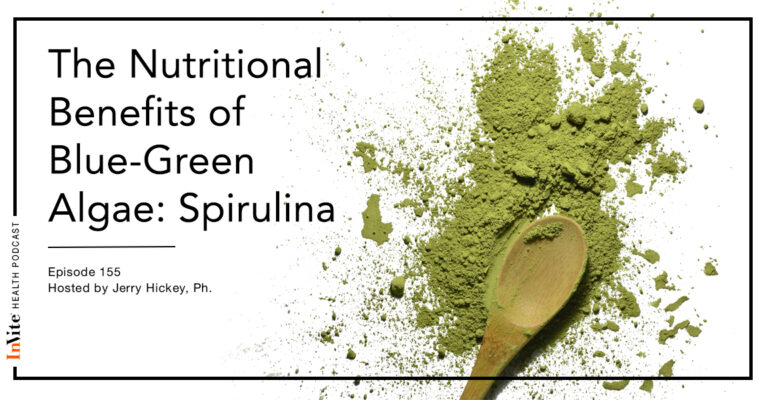
The Nutritional Benefits of Blue-Green Algae: Spirulina – Invite Health Podcast, Episode 155

The Nutritional Benefits of Blue-Green Algae: Spirulina – Invite Health Podcast, Episode 155

Blue-green algae are extremely primitive microscopic bacteria that have been shown to have protective effects for the liver and support natural detoxification processes. Here’s what you need to know about one of the most popular algae called Spirulina.

Why Carnosine Is An Important Factor For Healthy Aging – Invite Health Podcast, Episode 154

Why Carnosine Is An Important Factor For Healthy Aging – Invite Health Podcast, Episode 154

Throughout the aging process, there are certain enzymes, amino acids, neurotransmitters, and pathways that start to diminish in terms of their normal activity. So, what can we do to replenish them? There is one di-peptide called Carnosine that can greatly benefit our cells.

How SAMe Can Help Against Depression – Invite Health Podcast, Episode 153

How SAMe Can Help Against Depression – Invite Health Podcast, Episode 153

Invite Health Podcast, Episode hosted by Jerry Hickey. Ph

Subscribe Today!

Apple PodcastsGoogle PodcastsiHeartRadioSpotify

SAMe, or S-Adenomethionine, is a compound that we naturally make in the human body. Our highest concentrations are in our liver and our brain. SAMe has been shown to help maintain a stable mood and to support joint and liver health. But this compound has also been studied for its benefit against depression. Depression effects about 15 million Americans each year. The annual cost for treatment is about $50 billion.

What is SAMe’s role in the body?

This compound does a bunch of things in the human brain. It has an anti-inflammatory effect because it raises the level of a very key antioxidant called Glutathione. Glutathione levels vary from person to person and they drop with age. It breaks down peroxides which is important for the brain. Your brain is a super, high-energy organ. There is a great deal of circulation needed, in order to carry all of the calories from your food to your brain so you can use that for energy. In fact, is it thought that your brain takes 20%  of all of the calorie content from each meal! Yet, your brain is only 2% of the dry weight of your body. As a byproduct of using sugar for energy, the cell releasing peroxide. This can damage and destroy the cell, so the body has to have ways to find the peroxide, which is where Glutathione comes into play.†

SAMe has to be enteric coated (an additional coating) in order to get past the stomach acids and the intestinal enzymes, which can deactivate and breakdown SAMe.

Besides this nutrient helping to restore antioxidant levels in the brain, it also creates neurotransmitters. We know of about 100 neurotransmitters in the brain. Some are needed for energy, others are needed for sleep and the immune system. SAMe is involved with four key neurotransmitters†:

  1. Serotonin
  2. Melatonin
  3. Dopamine
  4. Norepinephrine

Clinical Research on SAMe

An arm of the government that is within the Department of Health and Human Services is called The Agency for Healthcare Research And Quality. Their job is to collate evidence so that different organizations and agencies can base clinical guidelines off of them. When it came to SAMe and depression, researchers compiled 28 human clinical trials in their meta-analysis. In all 28 trials, SAMe worked; it improved the Hamilton Rating Scale for depression (a questionnaire that helps doctors judge how severe depression is and how to guide them regarding treatment).

invite health podcast offer

The Department of Psychiatry at the University of Pennsylvania School of Medicine, The Department of Psychiatry at New York Medical College, Baylor Research Institute in Dallas, The Department of Psychiatry Michigan State University, Browne University Department of Psychiatry, The Department of Psychiatry UCLA, Columbia University Medical Center and Harvard Medical School in Boston published a review of SAMe for clinicians in the Journal of Clinical Psychiatry. The review included 115 human clinical trials and found promising evidence of the efficacy and safety of SAMe, when used as mono-therapy (used with an anti-depressant).

Published in the American Journal of Psychiatry from the Center for Treatment Resistant Depression from Massachusetts General Hospital and Harvard Medical School. Researchers added SAMe to the SSRI drugs of 73 patients who had major depressive disorder. They found that if they added SAMe to the drug (in patients where the drug was not working), the drugs started to work. It was far superior to placebo.

Questions about SAMe for Depression? Leave a comment below to join the discussion!

Thank you for tuning in to the Invite Health Podcast. You can find all of our episodes for free wherever you listen to podcasts or by visiting www.invitehealth.com/podcast. Make sure you subscribe and leave us a review! Follow us on Facebook, Twitter and Instagram at Invite Health today. We’ll see you next time on another episode of the Invite Health Podcast.

invite health podcast disclaimer

jerry hickey invite health podcast

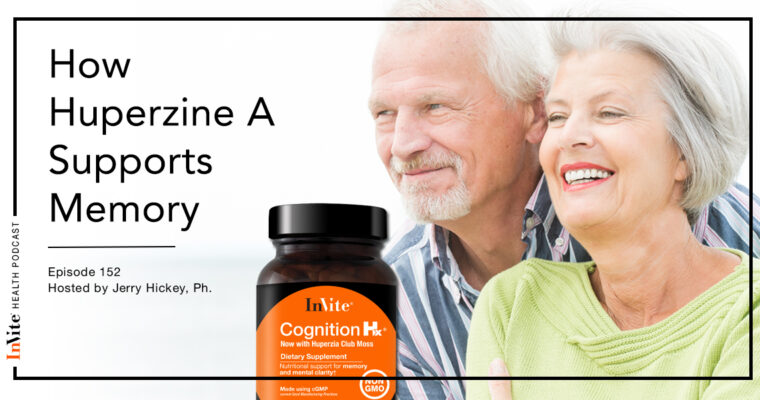
How Huperzine A Supports Memory – Invite Health Podcast, Episode 152

How Huperzine A Supports Memory – Invite Health Podcast, Episode 152

Huperzia serrata is a plant extract. Huperzine A is an alkaloid extracted from the plant that provides a substantial effect on brain function and memory, specifically by protecting the nerve cells of the brain. Here’s what you need to know.

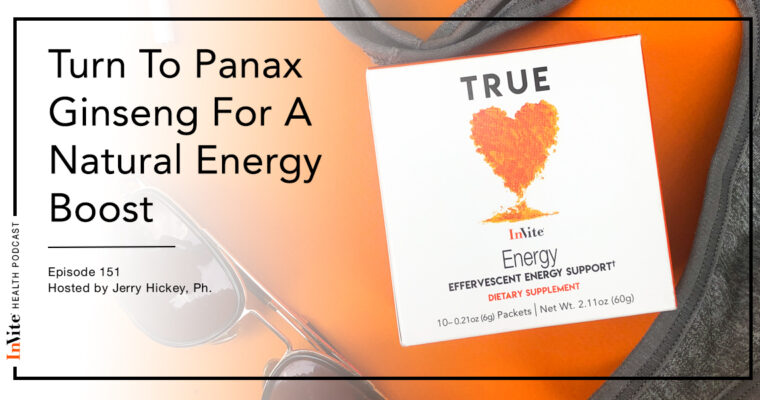
Turn To Panax Ginseng For A Natural Energy Boost – Invite Health Podcast, Episode 151

Turn To Panax Ginseng For A Natural Energy Boost – Invite Health Podcast, Episode 151

If you are trying to power through your virtual classes or even trying to get in your evening workout after you put the kids to bed but do not have the energy, Panax Ginseng might be your answer.

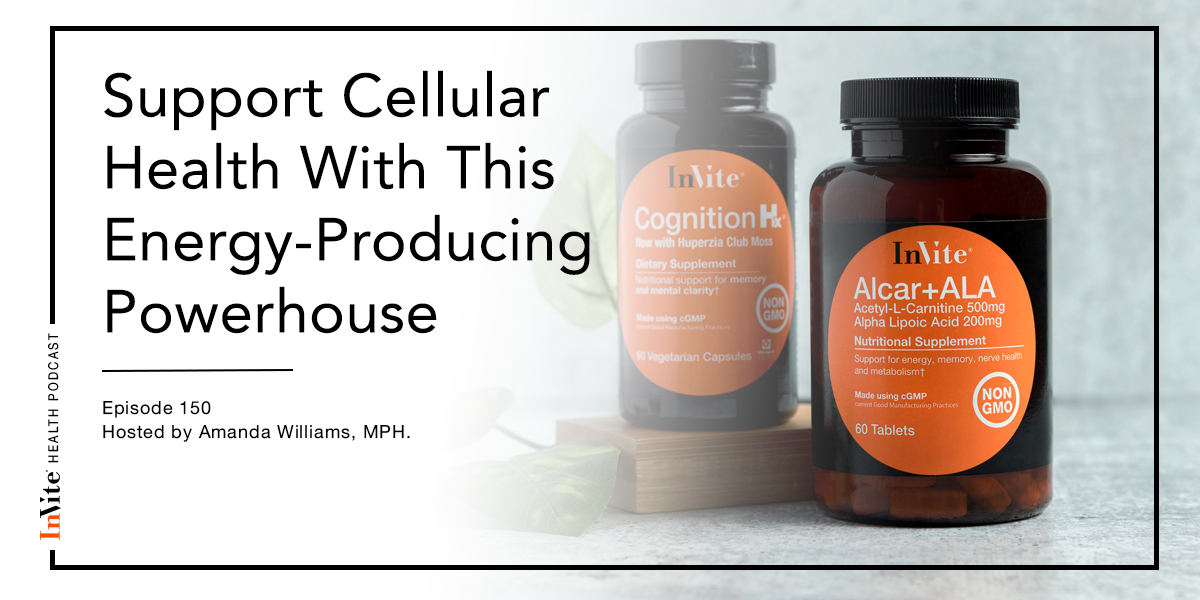
Support Cellular Health With This Energy-Producing Powerhouse – Invite Health Podcast, Episode 150

Support Cellular Health With This Energy-Producing Powerhouse – Invite Health Podcast, Episode 150

Invite Health Podcast, Episode hosted by Amanda Williams, MPH

Subscribe Today!

Apple PodcastsGoogle PodcastsiHeartRadioSpotify

One today’s episode, we are going to discuss a really common nutrient that oftentimes gets overlooked. It plays an important role in what happens at a cellular level through the aging process. We will be discussing what we can all be doing to make sure we are maintaining the health of our cells.

Most of us know someone who has some type of a chronic disease. Maybe your know someone who is effected by diabetes, heart disease, hypertension, high cholesterol or arthritis to name a few. In a very simplistic approach, if we look at our cells as being either deficient in something or toxic in something, then we can have a better way to target what our cells are actually needing. We have a toxicity coming from free radicals assault on the cell, then we can start ridding the body of all of those bad free radicals and start to replenish the good.

The Benefits of L-Carnitine

Let’s look at a few different examples. We can start by looking at the amino acid L-Carnitine. Now, this particular amino acid is incredibly important. It acts as a taxi driver by picking up the fatty acids that are on the outside of your cell and it gives them a ride to the inside of the cell. Inside of the cell is your mitochondria. It is at that point that they can be converted into an energy source. Now, the really interesting part about all of this, is if we add an acetyl group to the amino acid L-Carnitine, we have facilitated the easy crossing of L-Carnitine over the blood-brain barrier. This is why Alcar, or acetyl-l-carntine, has been studied so extensively for its support of the neurons and for its free radical fighting properties.

invite health podcast offer

What exactly is Alcar?

Alcar is acetyl-l-carnitine. This is an indoginous (naturally-occurring), mitochondrial membrane compound that helps to maintain the mitochondrial bioenergetics. It is an energy-producing amino acid. Acetyl-l-carntine has also been shown to lower the increased oxidative stress that is associated with aging. It plays an essential role in thermogensis (or fat burning), memory support, and glycation reactions.

A study from Stanford University School of Medicine looked at the effects of acetyl-l-carnitine on patients who had been diagnosed with Alzheimer’s disease. This was a double-blind, placebo controlled trial where they found that Alcar was actually slowing the progression of Alzheimer’s disease. This is because Alcar demonstrates protective effects against neurotoxicities, such as beta-amaloid plaque build up. The University of Pittsburgh performed a small study back in 1995 that showed all of the beneficial effects on the clinical presentation of Alzeheimer’s disease looking at different neurochemical markers. It was from there that researchers from Stanford University took off with their further research on the protective effects in the human brain.

Learn about the many brain benefits of Alcar with ALA. Listen now >>

If we are lacking carnitine, in terms of dietary intake, and if our naturally-occurring amount of acetyl-l-carntine is not where it should be, then we are leaving ourselves more prone to nerve damage, to cognitive decline, to fat burning.

Other Key Topics:

  • Mitochondrial decay of aging, or the acceleration of aging
  • Alpha-Lipoic Acid is a great partner or acetyl-l-carntine


Thank you for tuning in to the Invite Health Podcast. You can find all of our episodes for free wherever you listen to podcasts or by visiting www.invitehealth.com/podcast. Make sure you subscribe and leave us a review! Follow us on Facebook, Twitter and Instagram at Invite Health today. We’ll see you next time on another episode of the Invite Health Podcast.
invite health podcast disclaimer

amanda williams invite health