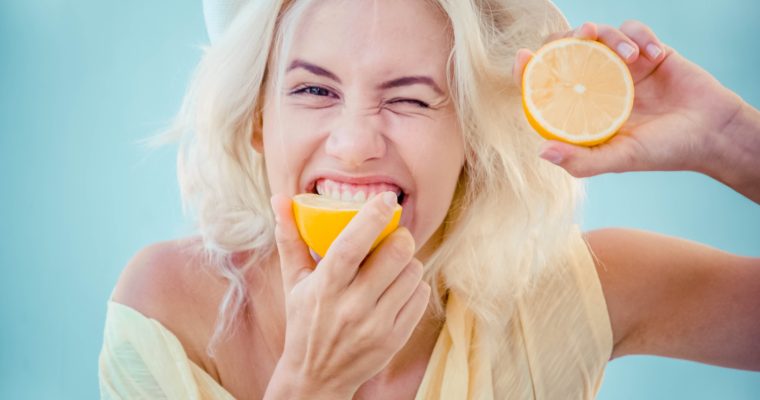
The Foods You Should Be Eating For Glowing, Healthy Skin
What if we told you that healthy, glowing skin actually comes from within? Here are 9 superfoods that can support healthy, young looking skin.
Nutrition. Vitamins. You.
What if we told you that healthy, glowing skin actually comes from within? Here are 9 superfoods that can support healthy, young looking skin.

You’ve made the decision to become more physically active. But where do you begin? Did you know that there are five components to fitness? Here’s what you need to know in order to optimize your workout and, ultimately, your overall health.

New research from Oregon State University (OSU) reports that blue wavelengths produced by light-emitting diodes (a light source that emits light when current flows through it, like LEDs) damage cells in the brain as well as retinas.
The study, published in Aging and Mechanisms of Disease, involved the widely used organism, the common fruit fly, because of the cellular and developmental mechanisms it shares with other animals and humans.
Researchers set out to examine how flies responded to daily 12-hour exposure to blue LED light, which is similar to the blue wavelength in devices like phones and tablets. To the researchers surprise, results showed that light accelerated aging.
Flies subjected to daily cycles of 12 hours in light and 12 hours in darkness had shorter lives compared to flies kept in total darkness or those kept in light with the blue wavelengths filtered out. “The flies exposed to blue light showed damage to their retinal cells and brain neurons and had impaired locomotion – the flies’ ability to climb walls of their enclosures, which is natural very common behavior, was diminished.
Some flies that were part of the experiment did not even develop eyes and yet still displayed brain damage and locomotion impairments, suggesting flies did not have to see the light to be harmed by it.
Researchers set a clear differentiator between exposure to natural light and artificial light. Natural light, Jaga Giebultowicz, researcher at OSU notes, is crucial for the body’s circadian rhythm — the 24-hour cycle of physiological processes such as brain wave activity, hormone production and cell regeneration that are important factors in feeding and sleeping patterns.
“But there is evidence suggesting that increased exposure to artificial light is a risk factor for sleep and circadian disorders,” she said. “And with the prevalent use of LED lighting and device displays, humans are subjected to increasing amounts of light in the blue spectrum since commonly used LEDs emit a high fraction of blue light. But this technology, LED lighting, even in most developed countries, has not been used long enough to know its effects across the human lifespan.”
In the meantime, there are a few things people can do to help themselves that don’t involve sitting for hours in darkness, the researchers say. Eyeglasses with amber lenses will filter out the blue light and protect your retinas. And phones, laptops and other devices can be set to block blue emissions.
According to certified healthcare professionals and numerous studies, there are also specific nutrients that can support healthy eyes after exposure to blue light.
Karan R Gregg Aggarwala, MS, PhD, Nutrition Consultant at Invite Health holding a Master’s of Science in Vision Science, explains, “Lutein, a known nutrient for vision health, has now emerged as a major player for brain health, supporting memory functions throughout our lifespan, especially during childhood and the aging process. In our retina, an essential region for crystal clear vision, the concentration of two carotenoids – Lutein and Zeaxanthin are essential for ongoing vision health.†
Healthy, robust macular tissue, rich in Lutein and Zeaxanthin, has key functions, including filtering out blue light and focusing on objects for our sharpest vision (such as in reading a newspaper). Blue light is unstable and exposure is everywhere, even on your cell phone or TV screen. If it penetrates deep into our eyes, it damages the many small organs in our retina that are required for vision. Having a thicker macular tissue shields from blue light and this robustness is largely due to its Lutein and Zeaxanthin content.†

A new study from the Technical University of Munich reports that the cause of atopic dermatitis, also commonly known as eczema, could be salt. Here’s what you need to know.

Photo by Icons 8 on Unsplash It’s no secret that getting an adequate amount of sleep is important. But did you know that sleep disruption has harmful effects on your metabolism? Published in the Journal of Lipid Research, researchers at Pennsylvania State University report that …

New research published in the European Respiratory Journal in July 2019 suggests that air pollution may contribute to the aging process and adds to evidence that breathing in polluted air can harm your lungs.
Though it is understood lung function naturally declines as we age, researchers set out to determine the impact air pollution plays on lung health and examine whether pollution exposure was linked to changes in lung function.
Anna Hansell is Professor of Environmental Epidemiology in the Centre for Environmental Health and Sustainability at the University of Leicester, UK, reported, “There are surprisingly few studies that look at how air pollution affect lung health. To try to address this, we accessed more than 300,000 people using data from the UK Biobank study to examine whether air pollution exposure was linked to changes in lung function, and whether it affected participant’ risk of developing COPD.” COPD is a long-term condition linked to reduced lung function that causes inflammation in the lungs and a narrowing of the airways, making breathing difficult.
An air pollution model was used to estimate the levels of pollution that people were exposed to at their homes when they enrolled in the UK Biobank study between 2006 and 2010. The pollutants the researchers investigated included particulate matter, fine particulate matter, and nitrogen dioxide. Using spirometry and detailed health questionnaires, researchers conducted simple tests used to help diagnose and monitor certain lung conditions by measuring how much air can be breathed out in one forced breath.
Professor Hansell explained: “In one of the largest analyses to date, we found that outdoor air pollution exposure is directly linked to lower lung function and increased COPD prevalence. We found that people exposed to higher levels of pollutants had lower lung function equivalent to at least a year of aging.
According to Archana Gogna, MS, CNS, MBA, we live in an increasingly polluted environment, loaded with toxins; the soil we grow our food in is often nutrient-depleted and many consume processed, factory-made foods supplying scant nutrients. Ironically, our bodies wind up requiring even more vitamins and minerals to effectively metabolize nutrient-depleted foods. Add that depletion with less time spent outdoors, minimal exercise, prescription drugs and medications, and chronic stress, and the result is that many individuals are truly nutritionally deficient. “For these reasons, healthcare professionals are advising their patients to start taking a safe, reliably-made, high-quality multivitamin mineral formula on a daily basis to fill the nutritional deficits in their diet.”