Jerry Hickey is a pharmacist and radio personality and fills the esteemed role of Scientific Director and President of Invite Health. He has spent his professional life analyzing nutritional information and medical studies with the aim of creating the highest quality and most natural nutraceuticals …
Jerry Hickey is a pharmacist and radio personality and fills the esteemed role of Scientific Director and President of Invite Health. He has spent his professional life analyzing nutritional information and medical studies with the aim of creating the highest quality and most natural nutraceuticals …
A new study published in the journal Neurobiology of Aging from the Department of Psychiatry at the University of Cambridge reveals that middle-aged adults who were overweight had reduced white matter volume in the brain, which, researchers say, represents around a decade of brain aging.
Professor Paul Fletcher, senior author of the study, says, “We’re living in an aging population, with increasing levels of obesity, so it’s essential that we establish how these two factors might interact, since the consequences for health are potentially serious.”
The Study
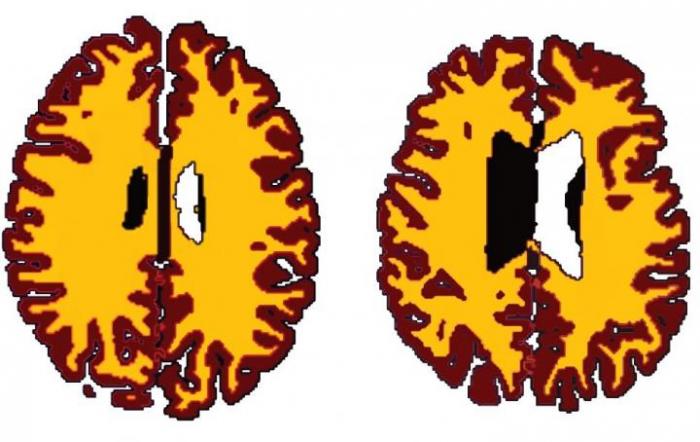
Example of grey and white matter segmentations – a) lean (56 years, BMI 19.5) and (b) obese (50 years, BMI = 43.4).
Researchers conducted a cross-sectional study where they analyzed data from 473 cognitively healthy adults between the ages of 20 and 87. Based on the BMI (body mass index) of the 473 participants, 246 were classified as lean, 150 were classified as overweight, and 77 were classified as obese. Using magnetic resonance imaging (MRI) researchers also analyzed the participants white and gray matter of the brain.
Results
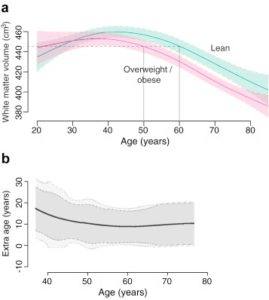
Compared to the participants that were classified as lean, those who were overweight or obese were found to have significantly reduced white matter volume. Researchers also found that overweight and obesity appeared to have “the most detrimental impact on the brains of middle-aged adults.”
Age-related change in white matter volume in overweight and obese subjects estimated to equate to an average increase in brain-age of 10 years compared to controls.
According to the study, middle-aged adults who were overweight or obese has a white matter volume that was comparable to those of lean adults who were 10 years older.
Prof. Paul Fletcher stated, “The fact that we only saw these differences from middle age onward raises the possibility that we may be particularly vulnerable at this age. It will also be important to find out whether these changes could be reversible with weight loss, which may well be the case.”
What are Soy Isoflavones? Soy Isoflavones are antioxidant and phytoestrogen plant-derived components from the soybean plant. Commonly consumed through soy-based foods like soy flours and soy proteins, soy isoflavones are also found in dietary supplements. A new study conducted by Arak University of Medical Sciences …
By Nicole Crane, BS, NTP Working out is hard work! Whether you get up early, hit the gym during lunch, or pound the pavement before or after dinner, exercise takes time and dedication. That hard work also comes with significant rewards and health benefits. Just …
The Center for Disease Control (CDC) reports that insufficient sleep is associated with a number of chronic diseases and conditions that especially threaten the health of the U.S. population, as high numbers of the population suffer from diabetes, cardiovascular disease, obesity, and depression. A new meta-analysis published in the Biological Psychiatry reports that getting too much or too little sleep also seems to be associated with inflammation, further contributing to depression and other illnesses.
The Study
A team from the Cousins Center for Psychoneuroimmunology at UCLA Semel Institute for Neuroscience in California reviewed 72 existing studies, which included over 50,000 participants from population-based and clinical studies, in order to find associations between sleep and inflammatory markers. The analysis shows that poor sleep quality or participants who complained of insomnia (classified as sleep disturbances) and participants who slept more than 8 hours per night (classified as long sleep duration) were associated with high levels of CRP and IL-6. CRP is a C-reactive protein and IL-6 is an interleukin, both of which predict adverse health conditions like hypertension and type-2 diabetes. These factors were used as indicators of inflammation. Shorter sleep duration was associated with increased levels of CRP. No associations were found with TNF? Tumor necrosis factor, another indicator of inflammation.
In short, sleep disturbance and long sleep duration were associated with increases in these markers for inflammation. Short sleep duration was not found to be associated with inflammation.
Image: Huffington Post
According to Michael Irwin MD, one of the researchers from UCLA, sleep disturbance or insomnia should be regarded as behavioral risk factors for inflammation, similar to the adverse effects of a high-fat diet or sedentary behavior. Treatments targeting sleep behavior could be a strategy for reversing the inflammation and reducing the risk of inflammatory illnesses. “Together with diet and physical activity, sleep health represents a third component in the promotion of health-span,” said Dr. Irwin.
Inflammation
Nicole Crane BS, NTP, Director of Nutrition at InVite Health, explains, “Once the [inflammation] flame has been lit, poor food choices, stress, and poor sleep patterns only fuel the fire. While we cannot always control stress or sleep quality, food choices and essential nutrients are entirely in your hands. The type of fat, the amount of sugar, and the form of carbohydrates you eat are some of the main determining factors in whether you will suffer chronic inflammation or maintain overall wellness. The good news, though, is that nature has provided us with several powerful inflammation regulators, like Omega-3 fatty acids found in fish and krill oil, plus herbs like turmeric and Boswellia. These work by producing immune cells, so you can finally end the damaging cycle of chronic inflammation.”