Processed foods are all around us – from our very own kitchens to our favorite supermarkets. Many processed foods have a high level of sugar and contain many different artificial ingredients. You’ve seen their convenient packaging and tried to pronounce the ingredients that they are …
FEATURED IN INVITE® HEALTH’S SUMMER 2015 CATALOG Suddenly, one morning you wake up with a stiff, swollen, and painful joint. You most likely have arthritis. In the United States, more than 50% of individuals over 60 years of age have osteoarthritis, the most common form …
The answer to the age old question of, “Can I use my prescription drugs past their expiration dates?”, has usually been answered by healthcare professionals with a stern “No.” To figure out why you can’t use your old drugs after they are said to expire, it is first important to understand how the system that determines when the product will expire works.
When did expiration dates become a requirement?
In the late 1970s, the FDA began requiring prescription and over-the-counter medications to have expiration dates clearly printed on the bottle or box of the product. The agency states, “To assure that a drug product meets applicable standards of identity, strength, quality and purity at the time of use, it shall bear an expiration date determined by appropriate stability testing.” The FDA permits manufacturers of these medications and prescriptions very little say in this and is very strict in determining the presence of an expiration date on a label stating, “As long as the medication that is marketed in the U.S. contains between 90 to 110 percent of the amount of active ingredient claimed on the label”, it must provide an expiration date to patients and consumers.
The FDA’s legal code also states that manufacturers “must account for storage conditions (and reconstitution conditions for certain drugs) in the expiration date.” Pharmacy Times reports that the expiration date of most medications is 12 to 60 months after it has been manufactured. However, the Pittsburgh-Post Gazette reports that “pharmacists further shorten the time a medication can be used when they add their own “discard after” or “beyond-use” date to the prescription label itself to provide maximum safety.”
Here is an informative video, uploaded to the FDA’s YouTube account on Expiration Dates:
The Extension of Expiration Dates
However, in the mid-1980s, in an article in Biosecurity and Bioterrorism, the FDA approved the extension of expiration dates of certain drugs that the Air Force wanted to stockpile for future use for both military and civilians. The process, though very expensive, involved the planning, storage and replacing of the expired drugs over time. The program tested 56 drugs and found that it was possible to safely extend their shelf-life. By 2006, a program named SLEP had investigated the shelf-life of 122 different drug products that resulted in a “lifespan extension of at least one year beyond the original expiration date for 88 percent of the lots. The average additional time added to each drug was 66 months.”
In 2009, The Medical Letter, a non-profit organization that provides recommendations to professionals on drugs, decided to review the recent data regarding the safety of extending expiration dates for shelf life. In their study, the authors found one reported case of a patient harmed by taking an expired drug. They also discovered that storage in heat and high humidity shortened the “life-expectancy” of a drug. However, the authors of the study reported, “Many drugs stored under reasonable conditions in their original unopened containers retain 90 percent of their potency for at least 5 years after the expiration date on the label and sometimes much longer.”
Expiration Date Benefits
According to Harvard University Medical School’s website, The Family Health Guide reports, “The expiration dates are very conservative to ensure you get everything you paid for. And, really, if a drug manufacturer had to do expiration-date testing for longer periods it would slow their ability to bring you new and improved formulations. The next time you face the drug expiration date dilemma, consider what you’ve learned here. If the expiration date passed a few years ago and it’s important that your drug is absolutely 100% effective, you might want to consider buying a new bottle. And if you have any questions about the safety or effectiveness of any drug, ask your pharmacist. He or she is a great resource when it comes to getting more information about your medications.”
For as long as many can remember, three was the magic number when it came to answering the question of, “How many meals should I eat in one day?” The common thinking was to eat breakfast right after you woke up, eat another meal around …
Ninety-five percent of diabetes cases in adults are type 2 diabetes. Though several studies have shown that a healthy diet and regular physical activity can prevent diabetes all together, only a small amount of studies have been performed on the link between type 2 diabetes …
Have you ever wondered why you can never eat just one French fry or just one chip? According to a new study performed on rats, researchers studied the link between gut and brain activity and found that a high fat diet changes the populations of bacteria that reside in your gut and also alters signaling to the brain. This causes the brain’s sense signals for fullness to shut down and causes the overeating that can lead to obesity.
The Study
Krzysztof Czaja, DVM, PhD, associate professor of neuroanatomy at the University of Georgia’s College of Veterinary Medicine and a principal investigator on the study stated, “When we switch the rats to a high fat diet, it reorganizes brain circuits. The brain is being changed by eating unbalanced foods and it induces inflammation in the brain regions that are responsible for feeding behavior.” The study, conducted on rats by researchers at the University of Georgia, Washington State University and Binghamton University, found immediate negative effects when the rats were fed a diet high in fat.
Results
“Suddenly,” Dr. Czaja explains, “different nutrients are changing the microenvironment in the gut and some bacteria begin to overpopulate. So, introducing a significant change in the gut microenvironment triggers a cascade of events that leads to this population switch.” The inflammation caused by these changes can damage nerve cells that carry the “full” signal from the gut to the brain (gut-brain miscommunication). And scientists do not know if this damage can be reversed or cured.
Dr. Czaja suggests that all the components and receptors in our body are interconnected and should always work together. However, disrupting that connection can leave the brain very confused and have you finishing that order of French fries faster than it took you to order them, even though you were not even hungry.
Source: www.sciencedaily.com/
What do you think about this study on the link between gut and brain activity? Leave us a comment to join the conversation!





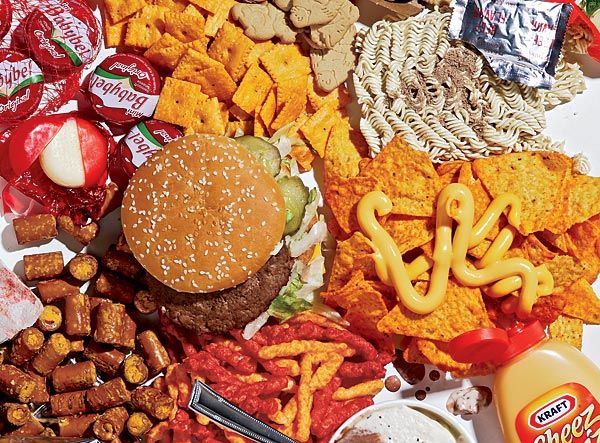
 Krzysztof Czaja, DVM, PhD, associate professor of neuroanatomy at the University of Georgia’s College of Veterinary Medicine and a principal investigator on the study stated, “When we switch the rats to a high fat diet, it reorganizes brain circuits. The brain is being changed by eating unbalanced foods and it induces inflammation in the brain regions that are responsible for feeding behavior.” The study, conducted on rats by researchers at the University of Georgia, Washington State University and Binghamton University, found immediate negative effects when the rats were fed a diet high in fat.